All published articles of this journal are available on ScienceDirect.

Conceptual Framework of A Career Module to Address Career Thinking Dysfunction, Enhance Career Maturity, and Career Adaptability among Pre-University Students
 iD
Ku Suhaila Ku Johari1
iD
iD
Ku Suhaila Ku Johari1
iD
Authors Info & Affiliations
Abstract
Pre-university students often face various challenges in making career decisions due to dysfunctional career thinking, low career maturity, and limited career adaptability. Literature analysis suggests that existing career interventions often lack theoretical integration and are fragmented, thereby limiting their effectiveness.
This concept study is based on content analysis, involving a review of previous studies on career thinking dysfunction, career maturity, and career adaptability among adolescents. Relevant articles and books were sourced from databases using keywords like “career thinking dysfunction,” “career maturity,” and “career adaptability.
This study presents a conceptual framework for an integrated career module that combines three foundational theories, such as Cognitive Information Processing (CIP), Crites’ Career Maturity Model, and Career Construction Theory (CCT). The proposed module addresses cognitive, emotional, and adaptability domains simultaneously. It aims to reduce dysfunctional thinking, enhance decision-making skills, promote emotional readiness, and strengthen adaptability. The module’s design enables students to navigate transitions with greater clarity, confidence, and control. It is also flexible for use across cultural and institutional contexts.
The framework is designed to be responsive to diverse student needs and is adaptable across various cultural and institutional contexts. Further studies, such as expert validation, pilot testing, and quasi-experimental research, are also suggested to ensure the effectiveness of the module in real educational contexts and ensure the module’s suitability for various student backgrounds.
1. INTRODUCTION
The transition from secondary education to higher education marks a significant turning point for pre-university students, particularly concerning their career decision-making processes. Problems such as unclear career thinking, lack of maturity, and low adaptability are crucial because they affect how confidently students can plan and decide on their future careers. Dysfunctional Career Thinking (DCT) is defined as negative thinking and cognitive distortion of career choices that disrupt decision-making effectiveness [1]. While engaging in these dysfunctional thoughts, students may also demonstrate low career maturity in their ability to deal with the career decision-making process. Career maturity refers to understanding oneself and one’s environment as well as making informed career choices. As such, weaknesses in this skill can intensify the difficulties that students encounter in this phase of their development [2].
DCT often stems from a combination of personal, family, and societal influences. Students may find themselves under pressure to choose a path that meets external expectations rather than aligns with their personal interests or abilities [3]. This confusion is particularly prevalent among those who lack a supportive environment or mentors, ultimately leading to increased anxiety and hesitation in making career decisions [4]. There is a need for targeted interventions to address students who experience dysfunctional career thinking, as these thoughts significantly complicate their career selection process [5]. Without addressing this dysfunctional pattern, students are at higher risk of developing negative self-concepts regarding their ability to navigate future career paths, which can negatively impact their academic satisfaction and overall career outcomes [1].
Career adaptability refers to the readiness to cope with both predictable tasks, such as preparing for and participating in the work role, and with unpredictable adjustments prompted by changes in work and working conditions [6]. It encompasses dimensions such as concern for the future, control over one’s career path, curiosity about opportunities, and confidence in one's abilities [7-10]. Enhancing career adaptability through structured career education programs, such as online modules tailored to students’ needs, can significantly improve students' employability and career readiness [11]. Such programs facilitate self-exploration and provide actionable insights into the career landscape, empowering students to combat dysfunctional thoughts and achieve a higher degree of career maturity [11-13]. Furthermore, career adaptability serves as a buffer against academic and emotional stress, allowing students to navigate challenges more effectively [14].
The interaction of dysfunctional career thinking, career maturity, and career adaptability forms a complex framework within which pre-university students operate. Addressing DCT is crucial for fostering career adaptability and enhancing students’ confidence in their decision-making abilities. By enhancing career maturity through targeted educational interventions, students can be better equipped to navigate their future career paths with clarity and assurance. This holistic approach not only prepares them for immediate career decisions but also fosters the skills needed for lifelong career development.
This study will begin with a review of theoretical foundations, followed by an analysis of key findings from recent studies, and conclude with implications for practice and future research.
The review begins by exploring theoretical perspectives related to career development. It then examines the interaction between dysfunctional thinking, maturity, and adaptability. The study concludes with implications for educators and suggestions for future interventions and studies.
2. LITERATURE REVIEW
2.1. The Importance of Early Intervention in Career Development
2.1.1. Promoting Career Readiness and Maturity
Early intervention in career development plays a crucial role in shaping the future pathways of students, equipping them with the necessary skills, knowledge, and resources to navigate their future workplaces successfully. Studies have shown that students who undergo early career guidance exhibit higher levels of career maturity, which is pivotal for informed decision-making regarding their educational and vocational choices [1]. For instance, research by Chen et al. [15] highlights that career-related parental support and a future-oriented perspective have a significant impact on adolescents’ career maturity. This indicates that environmental factors such as encouragement or support from parents, along with internal individual factors like how students view and plan their future, are interrelated in shaping students’ career direction and maturity. Recent findings by Chim and Lai [16] emphasize the long-term benefits of early career construction interventions that combine psychosocial and goal-setting components, especially when implemented during upper secondary education. Such programs have shown positive outcomes in improving students' engagement and clarity regarding future academic and vocational goals.
Moreover, given the increasingly complex labour market dynamics, students benefit profoundly from understanding available learning opportunities and the skills required to seize them. By implementing early intervention strategies, educational institutions can help students develop realistic career goals and the confidence needed to pursue them, addressing common issues such as fear of failure and uncertainty that heavily influence career-related choices among young people.
2.1.2. Reducing Career Confusion
Career confusion remains one of the most significant psychological and developmental barriers encountered by pre-university students, often manifesting as increased anxiety and indecision about future career paths. Addressing this issue requires more than generic support; it necessitates early, structured interventions that guide students through a process of reflection, exploration, and informed decision-making. Research has shown that early career guidance can effectively reduce this confusion by providing students with clearer direction and improved understanding of their personal career goals [17]. These interventions, which typically include workshops, counselling sessions, and online resources, are specifically designed to support career exploration in ways that resonate with students’ individual values and aspirations.
The effectiveness of such structured approaches is further demonstrated in a study by El-Gazar et al. [18], which found that job-crafting and student-centered programs significantly improved decision-making clarity among secondary-level learners. This finding highlights the critical role of personalized and holistic guidance in supporting students’ psychological readiness for career planning. Similarly, Alnajjar and Abou Hashish [19] emphasize that well-structured guidance boosts students’ perceived readiness for the job market, particularly in professional fields such as nursing. These early interventions are not only instrumental in developing students’ goal-setting and self-efficacy, but they also provide necessary social support systems that facilitate a smoother transition from academic environments into the workforce [20].
2.1.3. Enhancing Psychological Well-being
The psychological impact of early intervention in career development extends beyond career maturity and readiness. Research consistently links a lack of career guidance to increased levels of stress, anxiety, and depression among students [20, 21]. For instance, Dodd et al. [22] note that young people facing prolonged transitions to the workplace may experience heightened mental health issues, largely mitigated through continuous and relevant career support during their schooling years.
Initiatives that enhance students' self-awareness and resilience can create a more favourable psychological environment for their career exploration and decision-making. Through early intervention, students learn effective coping strategies, fostering a sense of agency over their careers, which can counteract feelings of helplessness and anxiety related to career choices [23]. This aligns with a recent study by Dodd et al. [22], which validated the impact of sustained career guidance on improving students’ psychological resilience and career readiness, measured through standardized instruments.
2.2. Beyond Boundaries: Integrating Holistic, Multidisciplinary, and Evaluative Strategies in Career Growth
2.2.1. Limited Focus Holistic Integration
Holistic integration in career interventions involves considering multiple aspects of an individual's life, including health, education, social, and economic factors, to support their career development comprehensively. Several studies have highlighted the importance and benefits of such an approach. Limited focus holistic integration for career intervention is a comprehensive approach that considers various aspects of an individual's life and context to enhance career adaptability and employability [22, 23].
Existing career development programs often address specific components in isolation rather than offering an integrated approach. Chang et al. [24] explore how job design integrates proactive behaviour that further develops career commitment, and their findings imply the necessity of a more multifaceted approach, which includes career guidance for students. This indicates a significant gap in the literature, as comprehensive career modules should encompass elements such as emotional intelligence, decision-making readiness, and adaptability skills.
Moreover, Osborn et al. [25] underscore the value of computer-assisted career guidance systems that enhance students’ knowledge and readiness for career decisions. However, these systems often fail to integrate broader holistic strategies that encompass emotional and social dimensions alongside cognitive knowledge. This presents a significant gap, highlighting the need for modules that not only provide information but also cultivate the necessary skills for effective career navigation.
2.2.2. Insufficient Multidisciplinary Approaches
Another inadequacy found in career development interventions is the lack of interdisciplinary strategies. Varghese et al. [26] discuss a mentoring program that targets specific risk factors through an interdisciplinary lens. However, such initiatives remain limited in number and often lack thorough evaluation. Albien [27] and more recently Xu et al. [28] have argued that combining basic psychological needs theory with career adaptability frameworks offers a powerful multidisciplinary lens to scaffold long-term engagement in career planning. Broad-based career modules should integrate other disciplines, such as psychology, sociology, and education, helping to prepare students for the wide array of issues they may face in their careers.
Existing literature often underrepresents the role of multidimensional approaches in career development, particularly those that integrate social and emotional learning within career decision-making processes. In their research, Xu et al. [28] note that satisfaction of basic psychological needs significantly promotes career adaptability and decision self-efficacy among college students. However, they fail to discuss how these findings could be systematically translated into a comprehensive career development module that incorporates various psychological and social structures.
Furthermore, the pilot study on Rational Emotive Behaviour Therapy (REBT) by Kulcsár et al. [29] demonstrates a significant reduction in career decision-making difficulties, highlighting the need to incorporate psychological constructs within career modules. However, this research also indicates a lack of comprehensive integrated frameworks that effectively marry psychological interventions with career development strategies [29]. This signifies a gap where emotional and cognitive aspects must converge within the same educational module.
2.2.3. Lack of Evaluation Mechanisms for Integrated Intervention
A significant gap exists in evaluating the effectiveness of integrated career interventions across educational settings. El-Gazar et al. [18] highlight specific interventions (like job crafting) but do not assess their overall effectiveness within a larger career development framework. Evaluating these interventions in terms of comprehensive career modules that assess not just immediate outcomes but also longer-term impacts on career success and psychological well-being is essential and currently lacking in the literature. Gu et al. [30] have advocated for the integration of longitudinal assessment tools into school-based career education programs, aiming to capture not only short-term improvements but also adaptive long-term outcomes, such as increased self-efficacy and sustained career clarity.
Research also highlights the role of structured interventions in improving career readiness. However, it mostly discusses the effects of certain programs without providing systematic approaches for incorporating assessment and feedback into career education [30]. Such comprehensive frameworks that include strict testing procedures are essential in order to determine what is effective in different types of education.
In summary, the literature reveals significant gaps in the form of integrated interventions, specifically comprehensive career modules. Enhancing these frameworks requires a multi-dimensional approach that encompasses emotional, psychological, and social dimensions of career development. By addressing these gaps, educational institutions can create holistic career guidance programs that effectively support students in their career decision-making processes, ultimately leading to improved educational and occupational outcomes.
Based on the reviewed literature, it is evident that current career interventions are limited in their scope and integration. Most programs do not sufficiently address the interplay between dysfunctional career thinking, career maturity, and career adaptability. This indicates a pressing need for a comprehensive and theoretically grounded career module that can offer targeted, multi-domain support to pre-university students as they navigate critical career decisions.
In response to these gaps, this study is guided by the following objectives:
- To identify gaps in the literature related to the development of integrated career modules that address aspects of career thinking, career maturity, and adaptability among pre-university students.
- To propose a career module design based on theoretical findings and current practices that support integrated career development in pre-university education.
3. METHODOLOGY
This conceptual study employed a qualitative content analysis approach to explore and synthesize existing literature related to dysfunctional career thinking, career maturity, and career adaptability among adolescents and pre-university students. Relevant studies were identified through searches in Web of Science (WOS), Scopus, Google Scholar, and selected academic books using combinations of keywords such as “career thinking dysfunction,” “career maturity,” “career adaptability,” and “adolescent career development.” The selection of literature was guided by relevance to the target population and conceptual alignment with the objectives of this study.
Thematic patterns were explored using a narrative synthesis approach, guided by the general principles of thematic content analysis as outlined by Braun and Clarke [31]. This process focused on identifying conceptual patterns across the selected literature, rather than applying formal coding procedures or software-based analysis. Given the conceptual nature of this study, the interpretation was conducted at a descriptive and theoretical level to inform the development of the proposed framework.
Given the conceptual nature of this study, the interpretation was conducted at a descriptive and theoretical level to inform the development of the proposed framework. The review was not designed to meet the standards of a systematic review or empirical data collection. Instead, it aimed to integrate existing knowledge to support the construction of theoretical models. No primary data were collected, and formal coding procedures were not applied.
4. THEORETICAL FRAMEWORK
4.1. Rationale for Theoretical Integration
The integration of Cognitive Information Processing (CIP) Theory, Crites’ Career Maturity Model, and Career Construction Theory (CCT) is grounded in their complementary strengths in addressing the multidimensional nature of career development among pre-university students. Each theory contributes uniquely to the conceptualization of a holistic career module. CIP Theory emphasizes cognitive strategies in decision-making and problem-solving, making it particularly suitable for addressing dysfunctional career thinking [32, 33]. Crites’ Model focuses on career maturity, including both cognitive and emotional readiness [34, 35], which is crucial for students transitioning into higher education. Meanwhile, CCT highlights adaptability and identity development, aligning well with the dynamic demands of modern career paths [6, 36].
These theories were selected because they represent three critical and interrelated dimensions of adolescent career development, namely, thinking, readiness, and adaptability. Integrating them enables a comprehensive module that can systematically address both internal (cognitive and emotional) and external (contextual and transitional) challenges faced by students. The use of these established frameworks ensures theoretical robustness while supporting the development of practical, student-centered interventions.
4.2. Dysfunctional Career Thinking
Dysfunctional Career Thinking (DCT) represents a significant barrier to effective career decision-making among pre-university students. This construct is characterized by indecision, anxiety, and distorted perceptions about career pathways. Understanding the implications of DCT for this demographic necessitates the integration of CIP Theory, which provides valuable insights into how career-related decisions are formulated and the associated cognitive processes involved.
The CIP Theory suggests that making effective career decisions depends on how individuals organize and process information about themselves and their available career options. Students who systematically process career-related information are more likely to make well-informed choices. For example, research highlights that students with high levels of DCT often lack essential cognitive strategies necessary for organizing career-related information, resulting in confusion and hesitance in making career choices [32]. This is consistent with findings that interventions based on the CIP framework effectively reduce DCT, enabling a clearer and more structured approach to career decision making [3, 5, 37, 38].
Additionally, Wang et al. [39] elaborated on the implications of CIP Theory by indicating that students often face career indecision due to inadequate information processing skills, which contributes to their uncertainty and anxiety about future careers. They emphasize that by enhancing the cognitive skills necessary for processing career information, educators significantly reduce the negative effects of DCT. This idea is supported by Reardon et al. [40], who identified that career interventions, including those informed by CIP Theory, have impactful effects on improving students’ decision-making processes, ultimately aiding retention rates in educational settings.
Moreover, these cognitive processing skills are particularly relevant in the context of pre-university students who are in transitional stages of identity and career exploration. Research highlights that students who engage in career planning activities grounded in CIP Theory demonstrate enhanced levels of self-efficacy and reduced worry regarding career decisions [41]. This underscores how effective cognitive processing directly correlates with better career outcomes and reduced anxiety, thus mitigating the adverse effects of DCT.
Furthermore, the application of CIP Theory in designing career interventions has been shown to have compelling outcomes. For instance, well-structured career course curricula utilizing principles from CIP Theory effectively address negative career thoughts, suggesting a pathway toward better career decision-making for students grappling with indecision and confusion regarding their futures [42]. This highlights the necessity for educational frameworks to incorporate cognitive strategies into their career services, thereby bridging the gap between emotional distress and effective decision-making.
In summary, using CIP Theory to understand DCT helps address the challenges faced by pre-university students. Integrating cognitive strategies into career programs can help reduce students’ anxiety and indecision, leading to more informed career choices. As research grows, the role of cognitive processes in career development becomes clearer, highlighting the value of theory-based support systems.
4.3. Career Maturity
Career maturity is a crucial aspect of career development, influencing how individuals, particularly pre-university students, make career decisions and plan for their futures. The concept of career maturity can be effectively examined through Super's Life-Span, Life-Space Approach, which emphasizes the dynamic nature of career development across different life stages and contexts. This literature review synthesizes relevant studies to explore how career maturity impacts pre-university students by applying Super's theoretical framework.
Super's Life-Span, Life-Space Approach [43] explains that career development is a lifelong process influenced by various personal and environmental factors. Individuals go through several developmental stages, including growth, exploration, establishment, maintenance, and disengagement, which shape their career choices and maturity levels [44]. This perspective is particularly relevant for pre-university students, who are often at the stage of exploration. Studies indicate that the ability to navigate this stage, characterized by increasing awareness and decision-making regarding career options, directly correlates with their overall career maturity [45]. This underscores that students equipped with strong career awareness and information processing skills tend to demonstrate higher levels of adaptability and job satisfaction.
Moreover, the role of parental influence on career maturity has been extensively documented. Pratiwi et al. [46] found that parental career behavior is positively associated with the career maturity of university students. The study suggests that greater independence and parental guidance contribute to higher career maturity levels [46, 47]. This reflects Super's notion that family dynamics play a crucial role in influencing an individual's career development trajectory, particularly during the formative years preceding university.
Moreover, Super’s theory highlights how social, cultural, and educational factors shape career development. Studies have shown that quality career guidance improves students' career maturity [19, 48, 49]. Research also found that career programs for future counselors enhance their readiness and awareness [50]. This underscores the need for structured career guidance in schools to help students make better career decisions.
Ultimately, the implications of career maturity extend beyond academic achievement and personal development, significantly influencing students' readiness to enter the workforce. According to Brooks et al. [51], understanding the interplay between various roles individuals assume in their careers can have profound implications for career development interventions. Super's framework provides educators and counselors with the necessary tools to guide pre-university students as they prepare to transition into higher education and professional settings.
In summary, combining Super's Life-Span, Life-Space Approach with career maturity plays a crucial role in shaping pre-university students' career paths. Research highlights that effective interventions, parental support, and academic guidance help students make informed career decisions, improve academic performance, and prepare for future success.
4.4. Career Adaptability
Career adaptability is a crucial construct to consider for students before they enter higher education and the workplace. Career adaptability, as conceptualized within the perspective of CCT, involves the ability of an individual to deal with changing work demands and transitions so that s/he can manage to fit into the career path. As Savickas [6] describes, career adaptability is ‘a psychosocial construct that refers to individuals’ readiness and resources needed to cope with anticipated vocational development tasks, the tasks of occupational transitions, and traumas such as job loss’. The complexity of career adaptability highlights its relevance for students, as it influences the decision-making processes and career choices.
Career adaptability is closely linked to various psychological resources, particularly proactive personality traits and self-efficacy. Studies have shown that proactive individuals tend to engage more in career exploration and develop flexible behaviors that enhance adaptability [52-54]. Furthermore, self-efficacy has emerged as a key mediating factor in this relationship, with students who possess strong mastery-oriented goals and receive developmental support exhibiting greater career adaptability and enhanced decision-making capabilities [55, 56]. These findings align with CCT, which emphasizes the role of internal agency and personal resources in navigating complex career environments.
The relationship between psychological needs and career adaptability has been increasingly explored in recent literature. Xu et al. [28] found that the satisfaction of basic psychological needs significantly enhances career adaptability among university students, emphasising the importance of intrinsic motivational factors. Building on this, Wang et al. [57] argue that structured educational interventions play a vital role in preparing students for an increasingly dynamic labour market. Complementarily, Chang et al. [58] highlight the need to integrate career decision-making self-efficacy into educational curricula while promoting proactive career attitudes. These strategies collectively empower students to take charge of their career development, particularly during the critical transition from pre-university to higher education.
In conclusion, research indicates that career adaptability plays a crucial role in the career development of pre-university students. Based on CCT, education should promote adaptability, self-efficacy, and personal growth to support career success. By focusing on these areas, educators can better prepare students for future challenges.
4.5. Cognitive Information Processing (CIP) Theory
The CIP theory, developed by psychologists Peterson, Sampson, and Reardon, helps explain how people make career decisions by examining their thought processes and information processing. It started as a way to solve career-related problems and make decisions, but over time, it has grown into a complete model that blends ideas from cognitive psychology with career counseling. The main goal of CIP is to support individuals in navigating their career journeys more effectively by strengthening their decision-making and problem-solving skills [32, 59].
4.5.1. Key Components of CIP Theory
- Self-Knowledge: This component emphasizes the importance of understanding oneself in the context of career decision-making. It involves recognizing personal interests, values, skills, and limitations. Research indicates that individuals who possess a clear self-concept are better equipped to explore relevant career options and make informed decisions [24, 60].
- Occupational Knowledge: In conjunction with self-knowledge, this component involves having an awareness of the various career options available. It includes understanding job requirements, work environments, and potential career paths. Lack of information can hinder effective decision-making, making it critical for individuals to engage with resources that provide insights into different occupations and industries [61].
- Decision-Making Process: The CIP model breaks down decision-making into clear steps to help people work through their career choices more easily. It starts by helping them define the situation, generating alternatives, evaluating those alternatives, and making an informed choice. By following this step-by-step process, individuals can better organize their thoughts and clarify their career goals, which makes it easier to choose the right path [33, 62].
- Executive Processing Skills: This component refers to the cognitive skills required to implement decisions effectively. It involves skills such as goal setting, planning, and self-monitoring, essential for following through on career decisions. These skills allow individuals to assess their progress and make adjustments to their career plans as necessary [59, 60].
Additionally, CIP Theory also defines the CASVE Cycle. By understanding and applying the CASVE Cycle, students can better manage their career-related choices, ultimately improving their readiness for future career paths [32]:
- Communication involves gathering relevant information about self-knowledge and occupational options.
- Analysis focuses on evaluating this information to understand how it relates to personal goals and preferences.
- Synthesis entails integrating the analysed information to form a coherent understanding of various career paths.
- Valuing requires making judgments about the desirability of these paths in relation to personal values and life goals.
- Execution involves implementing the decisions made, including the necessary actions to pursue chosen career options [38, 63].
Research suggests that students who actively engage with each phase of the CASVE Cycle display greater career adaptability, enabling them to approach their futures with increased confidence and preparedness [64].
CIP theory helps individuals make career decisions by emphasizing self-awareness, understanding available options, and improving decision-making skills. It provides a structured approach that enhances adaptability and successful career navigation, making career choices more informed and systematic.
4.6. Crites’ Model
Crites’ Career Maturity Model was developed by Dr. William Crites in the 1970s. This approach emphasizes the importance of readiness and capacity to make informed career decisions. Crites [34], defines career maturity as an individual’s cognitive and affective readiness to apply their preparation to use.
4.6.1. Key Components of the Crites’ Model of Career Maturity
- Cognitive Dimension: This component concerns the cognitive understanding of career alternatives. It aimed to help people gain a deeper understanding of their talents, preferences, values, and the expectations and realities associated with various occupations. This cognitive awareness is vital for realizing the decisions and career expectations [35].
- Affective Dimension: Emotions, attitudes, and motivations toward a chosen occupation are part of the emotional component of career maturity. Affective factors that relate to positive emotional reactions to career exploration and decision-making can foster an individual’s readiness for involvement in their future work-life [15]. Understanding and managing emotional factors play a crucial role in how effectively individuals approach their career decisions.
- Decision-Making Skills: According to the Crites’ Model, good decision-making abilities are a requisite for career maturity. This involves being able to recognize career options, assess these options, and make decisions reflective of personal aspirations and situations [65]. Career maturity is significantly enhanced when individuals possess the skills to navigate the complexities inherent in career decision-making.
- Career Adaptability: Flexibility is an essential factor in achieving career maturity, as it enables an individual to be open to shifts in plans or direction due to environmental changes or new opportunities. In other words, it suggests the resilience toward and adaptability of career planning [44, 66]. Adaptable individuals are more capable of handling challenges such as job market changes or personal difficulties and thus show greater career maturity.
- Developmental Progression: The model acknowledges that career maturity is a developmental process, evolving as individuals gain experiences through education, work, and life transitions. Crites emphasizes that as individuals advance in age and experience, their career decision-making capabilities become more refined, leading to enhanced career maturity [67].
- Social Influence and Support Systems: Crites also notes the role of external factors, such as family support and social networks, in shaping an individual’s career maturity. Supportive environments that encourage exploration and provide resources facilitate the development of career maturity [68].
In conclusion, the Crites’ Model of Career Maturity provides a comprehensive framework for understanding the various dimensions and influences on career development. By focusing on both cognitive and emotional factors, along with the skills necessary for effective decision-making, the model illustrates how individuals can cultivate the maturity needed for successful career paths.
4.7. Career Construction Theory (CCT)
Career adaptability has become an increasingly important skill for individuals facing the challenges of today’s ever-changing work environment. At its core, career adaptability refers to an individual's ability to adjust effectively to new tasks, obstacles, and transitions related to their career path. This skill is especially crucial for pre-university students as they prepare not only for higher education but also for entering the workforce. Mark Savickas’ CCT offers a useful framework for understanding career adaptability by highlighting how personal identity interacts with social [36, 69].
4.7.1. Key Dimensions of Career Adaptability According to Career Construction Theory
Crites' Model of Career Maturity and Savickas' CCT can be seen as complementary in understanding career adaptability. Here, we explore several key dimensions of career adaptability informed by CCT:
- Concern for the Future: Concern reflects an individual's proactive mentality toward their career development. It includes awareness of the importance of planning for future career transitions and recognizing the inevitability of change. Research shows that students who demonstrate high levels of concern tend to engage more actively in career exploration and planning, leading to better preparedness for future career choices [36]. According to the research, individuals' concern for their career trajectory influences their levels of engagement in proactive career development behaviors, thereby enhancing their adaptability.
- Control Over Career Decisions: Control refers to how much a person feels they can shape and direct their own career journey. This idea closely ties into the concept of agency in CCT. When individuals believe they have control, they tend to take responsibility for their career choices and actively make well-informed decisions about their education and future jobs. Nilforooshan [70] shows that students who feel more in control are often more proactive in seeking out career information and opportunities. Ultimately, this sense of agency helps people adapt more effectively when they face challenges related to their career paths.
- Curiosity and Exploration: According to Lee et al. [71], curiosity encourages deeper involvement in career exploration, which in turn boosts both career satisfaction and adaptability. Curiosity plays a key role in helping people adapt to career challenges and find the right paths for themselves. It motivates individuals to explore new information and try out different experiences related to various careers.
- Confidence in Career Abilities: Confidence is all about believing in your ability to successfully navigate your career choices. Chen et al. [72] found that individuals with strong self-efficacy in their career skills are more likely to adapt effectively when facing changes and uncertainties. For pre-university students, having this confidence helps them approach career planning and decision-making with resilience, making it easier to handle challenges along the way.
- Adaptability Resources: Adaptability resources encompass a range of internal and external factors that support an individual’s ability to adapt to changes. These include personal attributes, social support systems, and access to career development resources. Sou et al. [69] discuss how social capital, including relationships with peers and mentors, significantly impacts career adaptability by providing students with information and emotional support. By cultivating adaptability resources, educational institutions can greatly enhance students' capacities to respond to career-related transitions and uncertainties.
In conclusion, the dimensions of career adaptability articulated in the framework of CCT significantly influence pre-university students' preparedness for future career challenges. By prioritizing concern, control, curiosity, confidence, and adaptability resources, educational institutions can proactively enhance the career adaptability of their students. Further research is needed to explore the long-term impacts of these dimensions on career success and satisfaction, providing a deeper understanding of their significance within the context of evolving job markets.
5. CONCEPTUAL FRAMEWORK
The integrated framework proposed in this study is visually represented in Fig. (1). This conceptual framework represents the implementation of a holistic career module to target three problematic areas in pre-university students, namely dysfunctional career thoughts, career maturity, and career adaptability
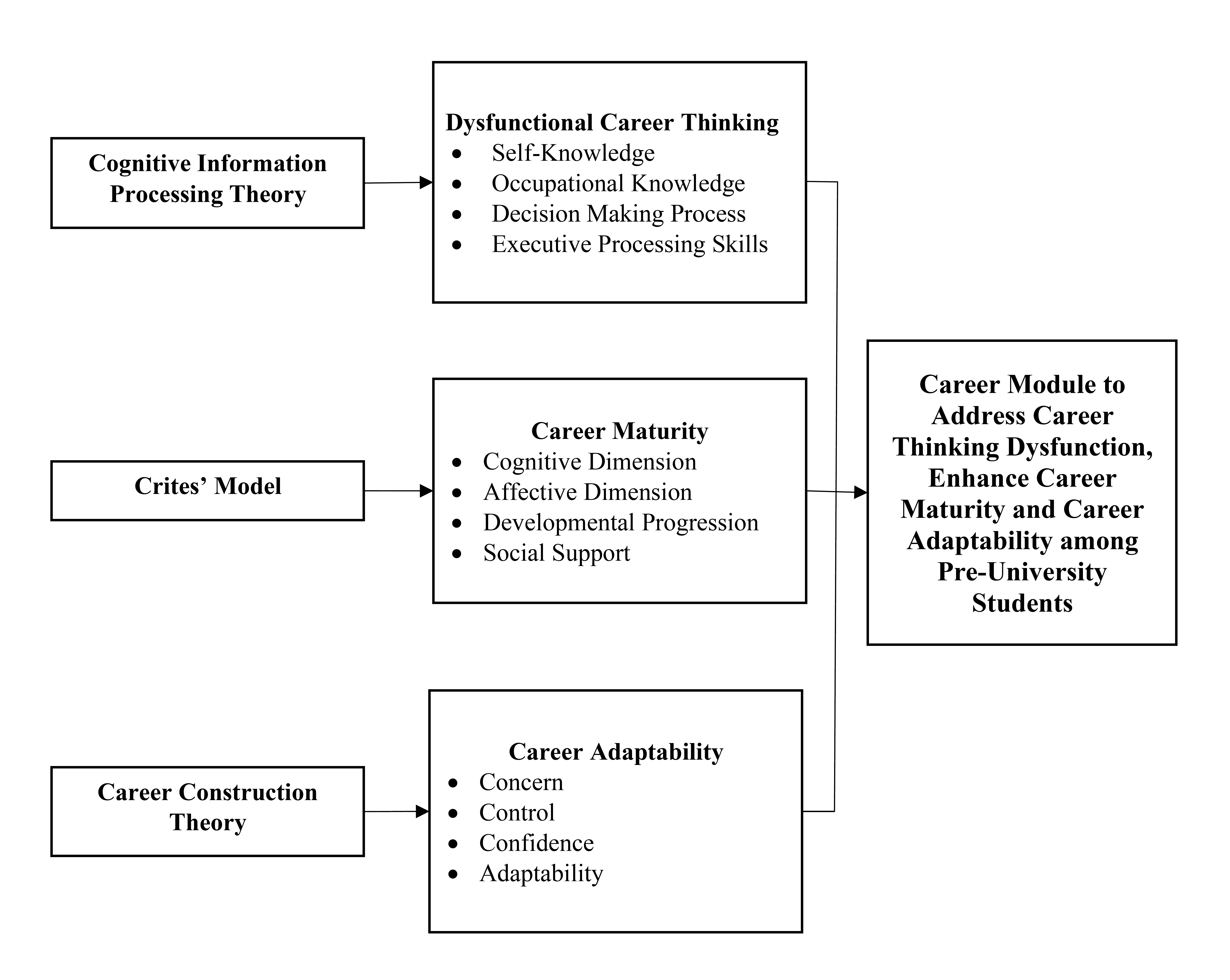
Conceptual framework of a career module to address career thinking dysfunction, enhance career maturity, and career adaptability among pre-university students.
DCT refers to thinking negatively or inefficiently when making career choices. Based on CIP Theory, this approach helps individuals improve self-awareness, understand career options, make better decisions, and develop problem-solving skills. These abilities are essential for making clear and informed career choices. The module is designed to support students in addressing limitations in these areas, enabling more productive and healthier career thinking.
Career maturity, based on the Crites’ Model, includes the cognitive, affective, and developmental aspects that the student possesses to make career decisions. This involves capacities for decision-making, emotional orientations towards career decisions, and the support they find in a social context. Enhancement of career maturity may facilitate students' better ability to participate in thoughtful, well-informed, and timely career decision-making.
Career adaptability, grounded in the CCT, addresses how students prepare for and respond to career-related challenges and changes. It involves components such as concern for the future, control over decision-making, curiosity to explore opportunities, confidence in their abilities, and the flexibility to adapt to changing work environments. Enhancing these qualities equips students to navigate uncertainties and shifts in their career paths successfully.
By integrating these three theoretical perspectives into a unified career module, the framework aims to provide a holistic intervention. This module not only addresses dysfunctional thinking but also builds maturity and adaptability, ultimately supporting pre-university students in developing a resilient and proactive approach to their career development.
6. DISCUSSION
Despite a growing body of literature on DCT [5, 32], career maturity [43, 46], and career adaptability [6, 26], most studies tend to treat these constructs as separate entities, often lacking an integrated framework that connects them meaningfully [37, 38, 47, 52]. This fragmented approach not only limits the depth of understanding but also impairs the development of comprehensive interventions that support students in managing the complexity of real-world career decisions. Therefore, this conceptual framework combines three main theories, namely CIP Theory, Crites’ Model, and CCT, into a holistic career module. This approach ensures that comprehensive support in terms of cognitive, emotional, and career adaptability is provided to students.
The integrated career module proposed in this study is designed to address the multifaceted challenges faced by pre-university students in navigating their career development. It encompasses three interrelated and foundational dimensions essential for effective career decision-making. Firstly, it targets dysfunctional career thinking, a major cognitive barrier that impedes rational and reflective choices, by incorporating interventions grounded in CIP theory, which have been shown to reduce cognitive distortions and facilitate clearer decision pathways [38, 73]. Secondly, the module supports students’ emotional development, enabling them to regulate their attitudes and responses toward career-related situations, in line with research emphasising the role of affective readiness in enhancing decision-making engagement and psychological well-being [15, 44]. Thirdly, it promotes career adaptability by cultivating students’ capacity to manage transitions, uncertainties, and evolving work contexts, as conceptualised in CCT and supported by empirical findings linking adaptability with self-efficacy, proactive attitudes, and decision-making confidence [6, 26, 74].
Through this integrative approach, the module simultaneously fosters cognitive, affective, and adaptive competencies, enabling students to form career decisions that are not only mature and informed but also sensitive to the socio-cultural and transitional realities they encounter. This alignment between theory and real-life applicability enhances the module’s practical value and reinforces the need for holistic support in educational settings. It empowers students to understand themselves holistically and make career choices that are congruent with both internal values and external realities. Furthermore, the module serves as a developmental support system that strengthens students’ self-efficacy and psychological preparedness [41], thereby facilitating their transition from academic environments to the demands of the workforce. By equipping students with these multidimensional skills and a sense of agency, the module enhances their readiness to confront challenges and seize meaningful career opportunities.
Early intervention through this module has significant potential to ease the confusion and anxiety many pre-university students face when thinking about their future careers. By offering structured guidance and psychological support, the module helps build students’ self-confidence and belief in their ability to make sound career decisions [1, 16, 18-20]. Its well-organized design allows students to better navigate the often complex career planning process, which helps reduce feelings of doubt and uncertainty. Beyond decision-making, the module also promotes psychological well-being by lowering stress levels and fostering problem-solving skills. These skills empower students to manage challenges that arise during career exploration and decision-making, ultimately strengthening their mental resilience during this critical transitional period.
However, implementing this integrated module presents several challenges that must be carefully addressed. Successful delivery requires strong collaboration among educators, counselors, and psychologists to ensure the content is both effective and relevant to students’ diverse needs. Additionally, the module must be adaptable to accommodate students from varied backgrounds, making it accessible and engaging enough to encourage active participation. It is also crucial to establish a comprehensive evaluation system to continuously monitor and assess the module’s overall impact on students’ career thinking, maturity, and adaptability.
Several follow-up studies are recommended as a subsequent step to evaluate the effectiveness and practical application of this module. The first involves validating the content of the module by presenting it to experts in the field for evaluation to assess whether the module’s components are accurate, appropriate, and valuable to reflect students’ perceptions and preferences. Experts in Career Counselling, psychology, and education should be asked to provide feedback to make amendments to the content, making it more applicable and efficient. The second type of study is a pilot study that should be conducted to gain an initial understanding of how well our students learned from the model. Such a study may reveal implementation gaps and inform iterative improvements of the model according to the successful application and approval of students, and integrate the required changes. The last suggestion is a quasi-experimental design study for empirical validation of the impact of this module on students’ career-thinking, maturity, and adaptability. This type of design enables the researcher to compare the intervention group with the control group, thereby demonstrating the actual impact of the module in real educational practices [75].
To evaluate the effectiveness and practical applications of this integrated career module, a series of follow-up studies is essential. The first step involves content validation through expert review, ensuring that the module’s design is theoretically coherent, pedagogically appropriate, and responsive to the target learners' needs. Creswell [76] emphasises the importance of expert-based content validation in establishing construct clarity and contextual fit, particularly in conceptual and intervention-based studies.
To evaluate the effectiveness and practical application of this integrated career module, a series of follow-up studies is essential. The first involves content validation by subject matter experts in career counselling, educational psychology, and instructional design to ensure the theoretical coherence, construct clarity, and contextual relevance of the module’s components [76]. Next, a pilot study should be conducted to examine the preliminary usability and reliability of the instruments employed, offering an opportunity to refine the items and delivery structure based on direct feedback and identified implementation [77, 78]. Finally, a quasi-experimental design is proposed to provide empirical validation of the module’s impact on dysfunctional career thinking, career maturity, and adaptability. As highlighted by Campbell and Stanley [79], this method allows for causal inference in non-randomised educational settings, offering a robust comparison between intervention and control groups to assess the module’s effectiveness in authentic learning environments.
Overall, this discussion underscores the need for an integrated framework that simultaneously addresses the cognitive, emotional, and adaptive aspects of career development among pre-university students. Grounded in CIP Theory, Crites’ Career Maturity Model, and CCT, the proposed module advances both theoretical and practical understanding by offering a comprehensive structure that supports informed, confident, and adaptable career decision-making. This framework addresses the multidimensional nature of career challenges faced by students and provides a platform for early intervention that fosters career readiness, psychological resilience, and future-oriented thinking. As research in this field continues to evolve, the proposed model must be systematically refined and empirically validated through expert consultation, pilot implementation, and rigorous quasi-experimental analysis. Such efforts will ensure its relevance across diverse educational contexts and its effectiveness in preparing students to successfully navigate complex career trajectories in a dynamic and unpredictable work environment.
CONCLUSION
This study introduces a career intervention module that draws upon CIP Theory, Crites’ Career Maturity Model, and Career Construction Theory. The module is structured to meet the developmental needs of pre-university students by addressing dysfunctional career thinking, fostering career maturity, and enhancing adaptability. By combining cognitive, emotional, and adaptive dimensions, the framework provides a holistic approach to help students make more informed and confident career decisions during a critical life stage.
As a concept study, this work does not include empirical data or field implementation. The proposed framework has yet to be tested in practical settings, which limits its generalisability and real-world validation. Additionally, while the content analysis was based on relevant literature, the absence of systematic review procedures may affect the comprehensiveness of the theoretical synthesis. Future research should also explore the development of a structured questionnaire based on this integrated framework. Such an instrument would operationalise the constructs of dysfunctional career thinking, career maturity, and career adaptability, enabling empirical validation of the model. Items may be adapted from established instruments aligned with the CIP theory, Crites’ Career Maturity Model, and Career Construction Theory (CCT), or newly generated based on expert input. This would help translate the conceptual model into a practical diagnostic and intervention tool for educators and counsellors.
Future research should focus on validating the proposed framework through expert consultation, followed by pilot testing to assess its usability and relevance among target student populations. Empirical studies using quasi-experimental or mixed-method designs are recommended to evaluate the module’s impact on career-related outcomes. These future efforts will be crucial in ensuring the effectiveness, adaptability, and scalability of the module in diverse educational contexts.
AUTHORS’ CONTRIBUTIONS
The authors confirm contribution to the paper as follows: N.A.R.: Study conceptualization, initial draft writing, technical and material support; M.I.M.: Manuscript review and editing, supervision and final approval; K.S.K.J.: Manuscript review and editing, supervision. All authors reviewed the results and approved the final version of the manuscript.
LIST OF ABBREVIATIONS
| CIP | = Cognitive Information Processing |
| CCT | = Career Construction Theory |
| DCT | = Dysfunctional Career Thinking |
| REBT | = Rational Emotive Behaviour Therapy |
FUNDING
This study was conducted with funding support from the Department of Education, Universiti Kebangsaan Malaysia, Malaysia, and the Education Sponsorship Division, Ministry of Education (Malaysia). The author would like to thank all research participants (Awards/Grant number: GG-2024-075 and GG-2025-001).
ACKNOWLEDGEMENTS
I sincerely extend my deepest gratitude to the Department of Education, Universiti Kebangsaan Malaysia, Malaysia, and the Education Sponsorship Division, Ministry of Education (Malaysia), for their invaluable support throughout my academic journey. Their assistance has been essential in the success of this paper.