All published articles of this journal are available on ScienceDirect.

Who Thrives and Who Struggles in Later Life? Emotional Well-Being in Kazakhstan: An Intracultural Perspective
 iD
Olga Aimaganbetova1 , †
iD
Nigora Khazratova2
iD
Berik Kazikhanov3
iD
Serik Zhantikeev4
iD
iD
Olga Aimaganbetova1 , †
iD
Nigora Khazratova2
iD
Berik Kazikhanov3
iD
Serik Zhantikeev4
iD
Authors Info & Affiliations
Abstract
Introduction
Emotional well-being is a vital indicator of the psycho-emotional state and quality of life in old age. In the multi-ethnic society of Kazakhstan, cultural values may be linked to specific manifestations of well-being. The aim of this study is to examine intracultural differences in emotional well-being and its relationship to cultural orientations (individualism–collectivism) among Kazakh and Russian pensioners in Almaty.
Methods
The study involved 83 pensioners living in the city of Almaty. Life satisfaction, psychological well-being, and depression scales were used to assess emotional well-being, as well as a method for measuring cultural value orientations. Data processing was performed using statistical software.
Results
Differences in emotional well-being were identified in relation to ethnicity and certain socio-demographic characteristics. Emotional well-being was considered an integral indicator combining life satisfaction, psychological well-being, and depressive symptoms. The results indicate a link between cultural value orientations and variations in emotional well-being in older age.
Discussion
The results obtained indicate a connection between cultural value orientations and variations in emotional well-being among older adults. In the post-Soviet multicultural society of Kazakhstan, there is a combination of individualistic and collectivist value orientations, which may be related to the peculiarities of psychological adaptation and subjective well-being in later life.
Conclusion
The results highlight the importance of cultural factors in understanding the emotional well-being of older adults in Kazakhstan's multicultural society and may be useful for further research in the field of gerontopsychology.
1. INTRODUCTION
The study of Emotional Well-Being (EWB) is becoming increasingly relevant in areas of psychological science such as gerontopsychology, developmental psychology, social psychology, and cross-cultural psychology. According to international research, active and successful aging is recognized as one of the main indicators of psychological health and successful overcoming of crisis periods throughout an individual’s life [1, 2]. Population aging is a global demographic phenomenon, and its manifestation depends on various cultural, sociological, and historical contexts that influence personal perceptions of autonomy, belonging, and aspiration [3]. The post-Soviet countries of Central Asia, in particular Kazakhstan, which has undergone many transformations and the interaction of traditional collectivist values with emerging individualistic ones, are characterized by a more diverse culture and ethnic groups, which form the diversity and totality of cultural and value orientations and life experiences of the ethnic groups living there [4, 5].
The structured model of Psychological Well-Being (PWB), developed by American scientist and psychologist Ryff [6], forms the theoretical basis, explaining these aspects and identifying six key components in its structure (autonomy, sense of control, self-actualization, positive interaction with the environment, life orientation, and self-worth), which may vary in relation to cultural and sociological factors. Triandis [7] and Schwartz [8] conducted large-scale cross-cultural studies of basic life meanings and cultural orientations. They carefully study and characterize these values, but at the same time determine their relationship with well-being, sense of happiness, and which values are priorities - individual growth or collective cohesion.
Kazakhstan, as a multi-ethnic, relatively young, and developing country that emerged from the ruins of the Russian Empire, is currently particularly attractive in terms of its socio-cultural context for EWB research on people of different age groups, especially the older generation, which has experienced many historical events and ethnic transformations. At the crossroads of Eastern and Western cultural values and traditions, in the context of cross-cultural interaction characteristic of Kazakhstani society, we can observe the intertwining of two cultural trends: collectivism, as a legacy of the Soviet era, and individualism, as a modern trend [9, 10]. According to the results of previous studies, Kazakh culture remains largely collectivist among middle-aged and elderly people, but there is a noticeable shift among Kazakhstani youth towards moderate collectivist tendencies. At the same time, Kazakhstani people of Russian ethnicity, along with Russian-speaking groups, demonstrate more individualistic or moderately collectivist values [4, 11].
According to statistics from the Kazakhstan Bureau of National Statistics [12], population dynamics (demographic aging, longevity; increase in the proportion of women and elderly people) may lead to changes in the personality and psychological profile of older people. Today's group of people of retirement age can be considered to have experienced various socio-economic and political systems (Soviet, post-Soviet), which have shaped the variability in their well-being and adaptation [13, 14].
This study aims to identify the characteristics of emotional well-being among Kazakhstani retirees in an intracultural context in order to examine the presented socio-cultural dynamics by considering factors such as socio-demographic and cultural ones. The main objectives of this study are: (1) to construct a theoretical and conceptual model of emotional well-being as an integrative construct combining three components (affective, cognitive, psychological), (2) to identify the overall level of EWB among respondents and determine the main socio-demographic factors influencing the phenomenon under study, (3) to identify the main features of manifestation between the groups under study by statistically processing the data obtained, (4) to assess the influence of cultural trends (Horizontal collectivism, Horizontal individualism, Vertical collectivism, Vertical individualism) on the formation of the level of EWB.
1.1. Literature Review
The study of human well-being occupies a central position among all the issues under consideration, as it is directly related to the mental and physiological health of a fully functioning individual in society. Keyes [15], who studied well-being from a socio-psychological perspective, defined psychological well-being as one of the most important elements of human prosperity.
Emotional well-being is one of the types of well-being classified for a healthy individual. It is considered an emotional component both within other types of well-being (subjective, psychological) and separately as an independent phenomenon, while also being one of the main indicators of successful aging. EWB has been studied by many authors in the past, but there has been no precise definition or conceptualization of the term. It was used mainly as an internal component in the structure of other constructs or as a determinant of emotional states. This term in psychological science emerged as an independent phenomenon only in 2018 by NIH researchers Feller et al. [16], who conceptualized, constructed, and accurately described a structural model of emotional well-being. According to their model, EWB is an umbrella construct linking several psychometric concepts and includes several psychological concepts and aspects, such as emotions (affects), mood, subjective happiness (affective components), life satisfaction, quality of life, meaningfulness of life (cognitive components), and psychological well-being (eudaimonic or psychological aspect). The first two aspects form subjective well-being. Thus, according to the authors, emotional well-being is a collective concept of subjective psychological well-being and positive psychological health, i.e., researchers mean by this concept not only the absence of negative psycho-emotional states, but also includes positive aspects.
According to modern cross-cultural studies, cultural and value factors are closely correlated with emotional well-being in late adulthood, and this influences their worldview on the concepts of aging, independence, and interconnectedness. Older adults with a positive psychological outlook demonstrate higher levels of life satisfaction and the ability to employ adaptive coping strategies [17]. At the same time, previous studies have identified links between sociodemographic factors, such as gender and educational level, and cultural and social factors, and subjective well-being [18].
The development of cross-cultural psychology has made it possible to comprehensively examine issues of emotional well-being and identify various cultural, social, and psychological factors that shape and influence this phenomenon. According to recent studies, a significant link has been found between well-being and cultural orientations: collectivist views are associated with successful integration into society and stronger social cohesion, although they may also be related to lower expression of individuality; individualistic values are associated with self-actualization and personal satisfaction, but may also be linked to higher levels of loneliness and anxiety [19, 20]. According to the results of a recent study, cultural orientations have been found to be associated with an individual's social activity in communication and behaviour, and with differences in resilience, self-regulation, and stress management skills at a fairly mature age [21]. In addition, studies by Booysen et al. [22] and Kwon and Kim [23] point to the interdependence of cultural orientation types and subjective well-being. Thus, horizontal individualism, through self-sacrifice, can have a positive effect on self-efficacy, while vertical collectivism reinforces conformism and interdependence, which negatively affect subjective well-being. Research conducted in post-Soviet contexts reveals a contemporary trend toward a shift from collectivism to individualism, a process that unfolds naturally, generates intergenerational tension, and contributes to increasing maladjustment among older adults [14].
The authors' research in a cross-cultural context has demonstrated the complex structure of emotional stability in people of retirement age, as it is determined by internal (individual personality characteristics) and external (sociocultural) factors. These factors ultimately contribute to the formation of personality integrity through the acquisition of rationality and group belonging [24-26]. Individualistic cultures are based on personal independence, self-actualization, and self-respect, which form the basis of their subjective well-being. Meanwhile, cultures with collectivist values are oriented towards belonging to a particular group, preserving family ties and traditions, and mutual understanding as the basis for harmonious relationships [27, 28]. Research on the Kazakhstani population in cultural dynamics reflects a unique context due to post-Soviet transformation and multinationality [29, 30].
According to researchers, Kazakhs and Kazakh-speaking Kazakhstani citizens still adhere to collectivism as their main cultural values, which are focused on family unity and hospitality towards guests [5, 9, 10]. However, both Russian-speaking Kazakhstani citizens and the majority of Russian-speaking citizens mainly exhibit individualistic characteristics, which indicates a desire for personal autonomy and achievement [31]. Kazakhstan's Individualism score (IDV) is 20 points, according to Hofstede's cultural indices, which proves the dominant collectivist character [29].
Emotional well-being in Kazakh culture is closely linked to a good social life, honor, and strong family ties, which are reflected, for example, in the traditional and cultural-moral concepts of “bet” (“face”) and “uyat” (“shame”, “conscience”). The cultural and social concept of “bet” corresponds to the notion of “face” and plays an important regulatory role, reflecting socially conditioned ideas about dignity, reputation, and compliance with norms of behaviour in interpersonal interactions. The concept of “uyat” acts as a mechanism of external and internal control and can be a cultural construct that includes feelings of shame, conscience, and social responsibility [10]. Another factor of EWB is social capital, which includes trust, participation in community life, and caring relationships. These non-material resources help reduce stress and improve the well-being of older people, which is reflected in their overall level of well-being [11]. Recent research findings indicate that intracultural characteristics have a significant impact on PWB, levels of happiness, and coping strategies in older age [32]. Given the diversity of Kazakhstan's population and socio-historical changes, the emotional well-being of Kazakhstani and Russian retirees differs in magnitude and also in composition.
1.2. Theoretical Framework
The theoretical framework, which forms the basis of the study, is clearly illustrated in Fig. (1). The theoretical framework mainly integrates central psychological concepts that reveal an understanding of the emotional well-being of retired people in Kazakhstan. These theoretical models are Ryff's psychological well-being model, Diener's subjective well-being model, and the cultural-value orientation model (Triandis).
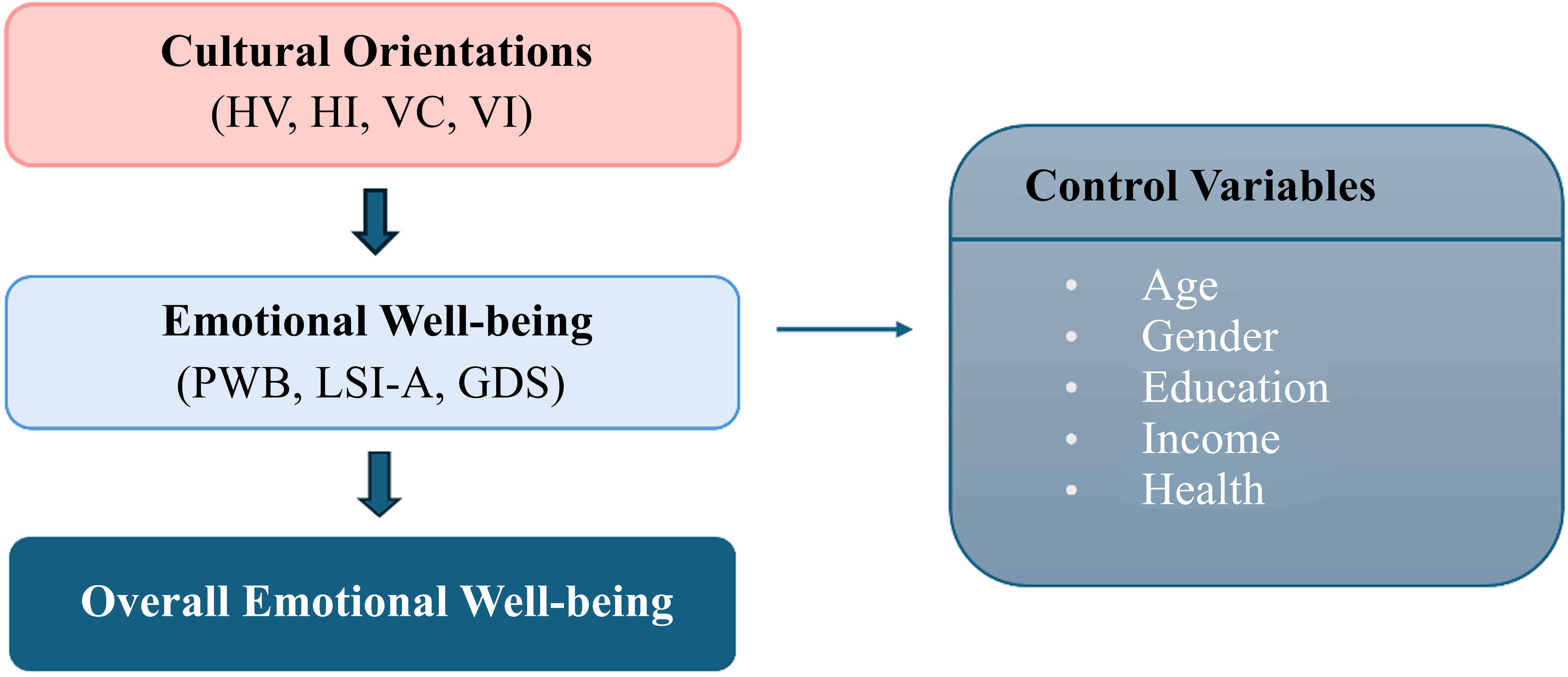
Conceptual framework of emotional well-being.
Ryff's multi-construct model and Diener's subjective well-being model primarily conceptualize a systemic understanding of emotional well-being and reflect the idea of healthy aging. This conceptualization allows us to consider the psycho-emotional health of older people in a comprehensive way, both as internal personal psychological aspects (self-acceptance, focus on growth, purposefulness) [6] and cognitive (assessment of quality of life, life satisfaction) and affective (positive and negative affective experiences) [33], which form the overall emotional well-being according to Feller et al. At the same time, these constructs help to determine not only the relationship but also the correlation with the results of cultural orientation and value orientations to confirm the reliability of the data, since high scores on scales such as autonomy, personal growth, and goal orientation may indicate that a person has more individualistic values than collectivist ones.
Triandis' concept of cultural orientations includes a typology of collectivism/individualism and horizontality/ verticality, and ultimately identifies four cultural orientations: horizontal collectivism, horizontal individualism, vertical collectivism, and vertical individualism. According to this theory, these orientations allow us to explain the relationship between behaviour, values, and cultural factors [8]. This original concept is related to Schwartz's theory of life-meaning value orientations, in which the author presents a typology of leading motivational and universal values, among which he distinguishes hedonistic (subjective) and eudaimonic (psychological) values [8]. Aka argues, in turn, that emotional regulation is shaped by the socialisation process and is closely related to cultural factors, scenarios, and value systems. Here, suppression, one of the strategies for regulating emotions, acts as a coping mechanism for adaptation in hierarchical conditions and as a way of building interpersonal communication [34]. Similarly, Deci and Ryan developed a theory of self-determination, in which they put forward the idea of basic psychological needs and their interrelationship, and how significant they are for personal well-being [35].
This theoretical framework enables a comprehensive study of emotional well-being as a socio-psychological phenomenon, examining the main cultural and socio-demographic factors associated with the well-being of older adults in Kazakhstan within a unique local context. The study also includes a biopsychosocial model of aging, i.e., according to this concept, the emotional well-being of older people is considered in the context of a combination of three factors, which increases the depth and reliability of the study [36]. This theory includes biological (chronological age, biological sex, physiological and cognitive health, physical condition), psychological (psychological and subjective well-being), and social aspects (ethnicity, cultural orientations, and values).
1.3. Conceptual Framework
Figure 1 presents the conceptual framework of this study. Within this framework, emotional well-being among older adults is conceptualized as a multidimensional socio-psychological construct. This reflects overall psychological functioning and subjective life evaluation in later life. In this study, emotional well-being is understood as a combination of three related parts: psychological well-being (measured using Ryff's Psychological Well-Being Scales), life satisfaction (assessed with the Life Satisfaction Index-A), and affective functioning, which is reflected in the level of depressive symptoms (measured using the Geriatric Depression Scale). The indicators provide an integrative measure of emotional well-being in later life by encompassing both eudaimonic (psychological functioning and personal development) and hedonic (life satisfaction and emotional state) aspects of well-being.
The conceptual model shows that cultural value orientations are the key independent variables of the study. Triandis' theoretical framework is followed, with four cultural orientations being examined: horizontal collectivism, horizontal individualism, vertical collectivism, and vertical individualism. The conceptual model shows that cultural value orientations are the core independent variables of this study. This study employs Triandis’s theoretical framework, which examines four cultural orientations: horizontal collectivism, horizontal individualism, vertical collectivism, and vertical individualism (Appendix 1).
These orientations are measured using the standardized Chirkov scale, which allows for the assessment of individual differences in cultural value orientations. As well as cultural orientations, the model takes into account several intracultural and sociodemographic factors, including ethnicity, language (Kazakh/ Russian), gender, education, and other demographic characteristics. These factors are examined as contextual variables that may be associated with variations in emotional well-being among older adults. The conceptual framework, therefore, assumes that emotional well-being is related to cultural value orientations. It is also related to sociodemographic characteristics. These characteristics are within a broader biopsychosocial context of aging. The way in which older adults interpret their life experiences, regulate their emotions, and evaluate their quality of life may be shaped by their cultural orientations and intracultural factors. Therefore, emotional well-being in this study is conceptualized as a multidimensional integrative construct that encompasses both hedonic and eudaimonic aspects of psychological functioning in older age.
1.4. Research Hypotheses
Based on the reviewed literature and theoretical framework, the following hypotheses were proposed:
H1: The emotional well-being of older adults in Kazakhstan is linked to intracultural factors, including socio-demographic characteristics and ethnicity.
H2: Cultural value orientations (horizontal collectivism, horizontal individualism, vertical collectivism, and vertical individualism) are associated with emotional well-being among older adults.
H3: The association between cultural value orientations and emotional well-being differs between Kazakh and Russian ethnic groups.
2. METHODS
2.1. Study Design
The design of this study is quantitative, correlational, and cross-sectional, aimed at identifying relationships between the main variables under study. It is also an intra-cultural study that identifies the main cultural differences among Kazakhstani retirees of different ethnicities, including the titular Kazakh nation and Russians, the largest ethnic group in the non-titular population of the Republic of Kazakhstan. The main objective of this study was to determine the emotional well-being and cultural orientations of pensioners and to identify all the interrelationships and characteristics.
2.2. Setting and Sampling
The study sample consisted of respondents from different districts of Almaty (Kazakhstan) who participated in the survey for February-April 2025. The survey was conducted in a hybrid format: online via the Google Forms digital platform, but offline in places of social activity for the elderly and others: the Center for Active Longevity in the Auezov district of Almaty; various urban recreation parks such as Gandhi Park, Panfilov Park, Presidential Park and Family Park; The study was also conducted among retired former teachers who worked at State secondary school No. 155. The method of stratified convenient sampling was used in the study to purposefully form a sample by strata, ensuring the representativeness of the two main ethnic groups (Kazakhs/Russians). The sample for the online survey was collected through a snowball and convenience sampling chain, and the survey link was shared via group chats, email, social networks, and other online spaces.
The study was conducted in full compliance with all requirements set by the Local Ethics Committee of the Al-Farabi Kazakh National University, which issued a research permit (permit no. A1045, IRB00010790). In addition, the study adheres to the principles of the Helsinki Declaration. The study followed sex and gender equity in research guidelines (SAGER) to ensure appropriate inclusion and reporting of sex related data.
83 respondents made up the final sample (N = 83, 56.6% women; 43.4% men). The obtained value is interpreted as representative and sufficient, following the evaluation criteria for small and medium effect values [37]. The sample size was also estimated using the G*Power program (version 3.1.9.7). When calculating the sample size, we proceeded from the expected average effect and the estimated average correlation strength, according to the parameters of which it is acceptable to include at least 80 people.
2.3. Inclusion and Exclusion Criteria
Inclusion criteria included several requirements, one of the main ones can be considered: elderly Kazakhstani people who have reached retirement age (from 60 years old) and up to 75 years old; citizens of the Republic of Kazakhstan who have lived in the country for at least 10 years; with a certain ethnicity: Kazakhs and Russians who speak the appropriate languages, who will be able to independently fill out the questionnaire and the survey of the study; first passed an express assessment on cognitive abilities. The study specifically targeted retirees living either independently or with family members, to capture varying patterns of social support and living arrangements, and included only individuals belonging to the Kazakh or Russian ethnic groups.
Exclusion criteria were applied to maintain the reliability and validity of self-reported data. Individuals were excluded if they were younger than 60 or older than 75 years, non-citizens or temporary residents, members of ethnic groups other than Kazakh or Russian, exhibited significant cognitive impairments, diagnosed with neurological or severe psychiatric conditions, or had visual and motor limitations that could interfere with completing the survey. An express test to assess the cognitive abilities of older people included completing certain tasks before the start of the questionnaire and survey stage. In the online research format, 5 tasks were given, and participants were also asked to indicate a certain time on the clock face in the offline format by drawing it.
2.4. Measures and Data Collection
To collect the data, the survey method was used, as well as standardized, adapted, and validated psychometric tools, which were selected based on the constructed theoretical and conceptual framework. This diagnostic toolkit fully discloses the study and demonstrates reliability. The study utilised the following standardised measures: (1) Life Satisfaction Index by Neugarten (adapted by Panina), (2) the Psychological Well-Being Scale by Ryff (adapted by Shevelenkova and Fesenko), (3) the Geriatric Depression Scale by Yesavage, and (4) the Horizontal and Vertical Individualism and Collectivism Scale developed by Chirkov. The data gathering process is illustrated in Fig. (2).
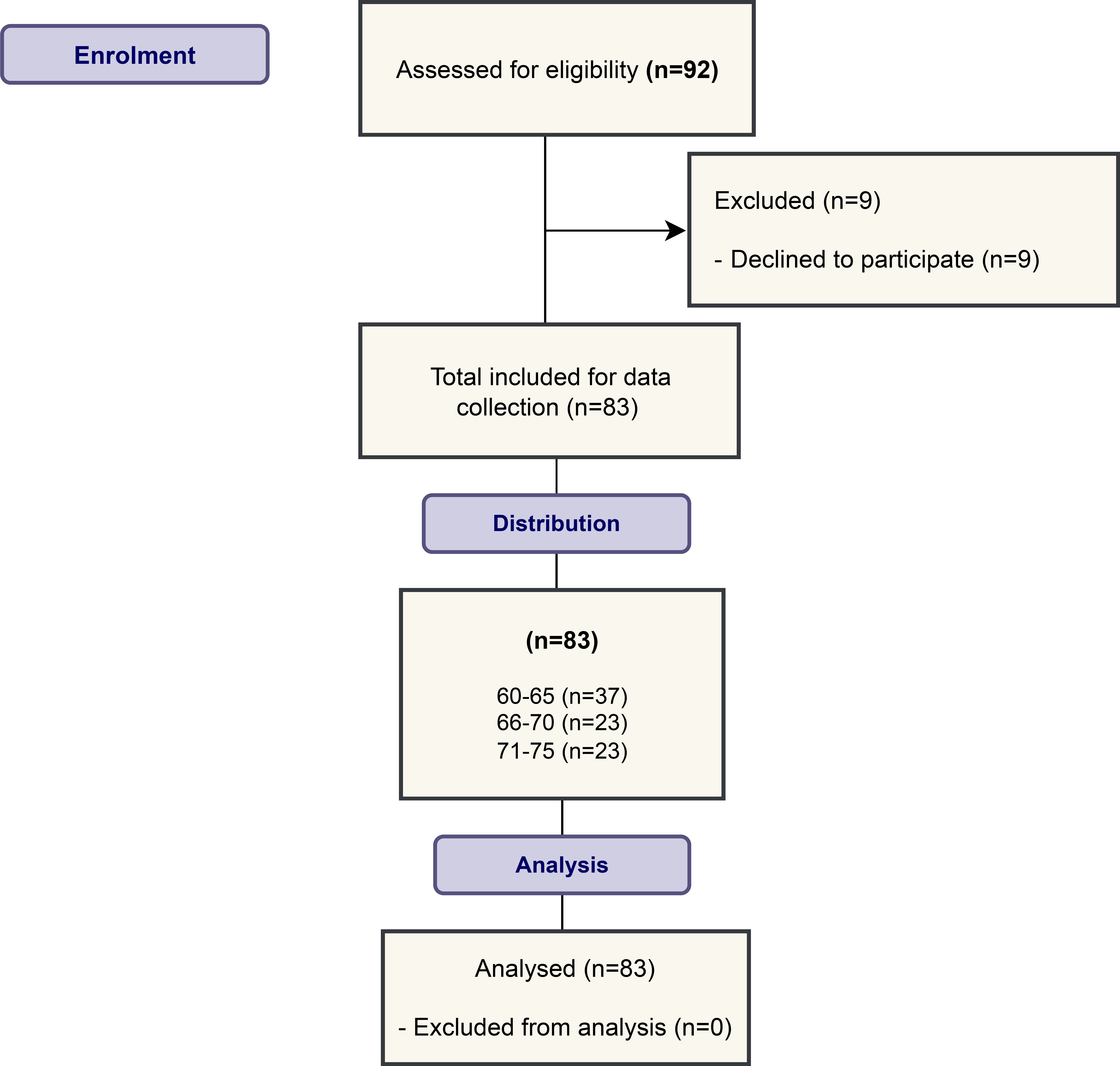
Flow diagram of participant recruitment and inclusion in the study.
2.5. Life Satisfaction Index-A (LSI-A)
Life satisfaction was assessed using the Life Satisfaction Index-A, originally developed in 1961 [38]. The instrument measures the cognitive-evaluative dimension of well-being, reflecting general life satisfaction, psychological comfort, social adaptation, and motivation for living. This tool has been extensively validated and remains a standard instrument in gerontological research. The technique retains measuring reliability when working with elderly samples, which is proven by modern research. This tool is important for research, as it allows the evaluation of the affective-emotional and subjective-evaluative spheres of personality.
2.6. Ryff Scales of Psychological Well-Being (PWB)
Ryff's Scales of Psychological Well-Being (PWBS), adapted by Shevelenkova and Fesenko in Russian, was used as one of the components determining the overall level of emotional well-being. This tool combines six subscales and also reflects the overall PWB level. The scale and its theoretical framework were originally developed in 1989 [39].
2.7. Geriatric Depression Scale (GDS)
To assess negative emotional states, namely the presence/absence of depressive symptoms, a technique called the Geriatric Depression Scale (GDS), authored by Yesavage and co-authors (1983), was used. This technique consists of 15 steps, which include screening for affective and cognitive manifestations, but not somatic ones. The technique shows high validity in accordance with the studies of aging [40].
2.8. Horizontal and Vertical Individualism and Collectivism Scale (HVIC)
Triandis’s Horizontal and Vertical Individualism and Collectivism Scale, adapted into Russian by Chirkov and colleagues, was used to determine the types of cultural orientation among respondents.
Within Triandis’s typology, horizontal and vertical dimensions reflect the degree of acceptance of social hierarchy, while individualism and collectivism characterize a person's orientation toward personal or group goals. Horizontal collectivism implies a focus on interdependence, cooperation, and maintaining harmonious relationships within the group, while perceiving its members as equals. Vertical collectivism also emphasizes the importance of group membership and collective interests, but in this case, social hierarchy, submission to authority, and the fulfillment of social roles within an established structure are allowed and even encouraged.
In turn, horizontal individualism reflects a focus on personal autonomy and independence while maintaining a belief in equality among people; individual self-fulfillment and personal choice are seen as important values, but without a pronounced desire to excel over others. Vertical individualism is characterized by an emphasis on personal achievement, competitiveness, and the pursuit of higher social status, where success and social differentiation are seen as significant elements of self-actualisation. The use of this typology allows for a more detailed analysis of differences in value orientations and identifies how different cultural attitudes may be related to the level of emotional well-being of older people in the context of socio-cultural transformations. In the context of this study, it is assumed that differences in cultural orientations may be associated with variations in the emotional well-being of older adults.
The four main areas identified by Triandis are presented in Appendix 1 (Table A1). According to the methodology, 16 statements are used to determine the dominant type. Also, as research shows, the technique shows a fairly high reliability in the context of cross-cultural research [41].
2.9. Data Analysis
Mathematical analysis of the data was performed using a special software package, IBM SPSS Statistics version 26.0. At the stage of preparation for the study, a raw matrix was prepared for analysis in the form of generalized data. After completing all the preparatory procedures, further data processing was carried out as descriptive statistics, in which socio-demographic variables were summarised for a detailed quantitative review. At the next stage, the basic methods of statistical analysis were applied to test statistical hypotheses: (1) Pearson’s correlation coefficient; (2) independent Student’s t-test; (3) one-factor ANOVA.
3. RESULTS
3.1. Sociodemographic Data
To collect socio-demographic data, the authors of the study developed an original questionnaire that includes the basic necessary information about the subjects. These data can be seen in Table 1. The study included 83 respondents of retirement age (M = 66.2, SD = 4.3). To summarise the data, 59.0% of the total number of respondents belong to the Kazakh ethnicity, and 41.0% to the Russian ethnicity; by gender, 56.6% are women, and 43.4% are men; according to marital status, 66.3% of respondents are married, 25.3% are widowed, 6.0% are single, and 2.4% are divorced.
| Variable | Category | f | % |
|---|---|---|---|
| Age group (years) | 60-65 | 37 | 44.6 |
| 66-70 | 23 | 27.7 | |
| 71-75 | 23 | 27.7 | |
| M = 66.2, SD = 4.3 | |||
| Ethnicity | Kazakh | 49 | 59.0 |
| Russian | 34 | 41.0 | |
| Gender | Female | 47 | 56.6 |
| Male | 36 | 43.4 | |
| Marital status | Married | 55 | 66.3 |
| Widowed | 21 | 25.3 | |
| Single | 5 | 6.0 | |
| Divorced | 2 | 2.4 | |
| Education level | Higher | 65 | 78.3 |
| Secondary | 12 | 14.5 | |
| Vocational | 6 | 7.2 | |
| Health status | With chronic illness | 49 | 59.0 |
| No illness | 34 | 41.0 | |
| Living arrangement | With family | 69 | 83.1 |
| Alone | 14 | 16.9 | |
| Lifestyle activity level | Moderately active | 60 | 72.3 |
| Highly physically active | 11 | 13.3 | |
| Sedentary | 12 | 14.4 | |
Nearly four-fifths (78.3%) held higher education degrees, with 14.5% having completed secondary education and 7.2% vocational training. Health conditions were common among participants, as 59.0% reported having at least one chronic illness, while 41.0% indicated no current health problems. The majority (83.1%) lived with family members, and only 16.9% lived alone. Lifestyle analysis showed that most retirees described themselves as moderately active (72.3%), whereas 13.3% reported high physical activity levels and 14.4% maintained a sedentary lifestyle.
It should be noted that the sample was obtained using convenience and snowball sampling methods and was limited to participants residing in the urban area of Almaty, which may limit the generalisability of the results.
3.2. Overall Emotional Well-Being Level
In this study, emotional well-being was operationalised as an integrative construct combining affective, cognitive, and eudaimonic dimensions of late-life mental health. Following the multidimensional framework of [6, 16, 33], the EWB composite score was derived from three standardized psychometric instruments: the Life Satisfaction Index-A, the Psychological Well-Being Scale, and the Geriatric Depression Scale (reverse-scored).
In this study, Emotional Well-Being (EWB) was operationalised as a composite standardised index reflecting the multidimensional nature of psychological functioning in older age. In line with a theoretical model that combines Ryff's model of psychological well-being and Diner's approach to subjective well-being, the EWB index combines three components: Psychological Well-Being (PWB), life satisfaction (LSI-A), and depressive symptoms measured by the Geriatric Depression Scale (GDS).
To ensure comparability of instruments with different rating ranges, raw scores were standardised using z-scores in SPSS Statistics 26.0. Since higher GDS scores indicate lower well-being, GDS values were reverse-coded before standardisation. The overall emotional well-being index was calculated as the mean of the three standardised measures (zPWB, zLSI, zGDS-rev). Cronbach's alpha for the composite index was α = 0.82, indicating good internal consistency among the three measures. For descriptive purposes only, respondents were further classified into three groups (low, medium, and high EWB) based on the percentile distribution of the composite index. This classification was used solely to illustrate the distribution of emotional well-being levels in the sample and was not considered as a separate analytical construct in subsequent statistical analyses.
The results obtained on the distribution of EWB levels are reflected in Table 2. According to these data, 28% of Kazakhstani pensioners showed a relatively low EWB percentile, 51% with a moderate result, and 21% of elderly respondents had a high EWB. These data clearly show that a significant proportion of retirement-age individuals in Almaty have an average and below-average level of overall emotional well-being, which is confirmed by the obtained indicators on the depression scale. The reliability coefficient (α = 0.82) proves the internal consistency of the EWB components.
| EWB Level | n | % | Mean (z) | SD | Description |
|---|---|---|---|---|---|
| Low | 23 | 28% | -0.85 | 0.41 | Below-average emotional resilience, higher depressive affect, and lower life satisfaction |
| Moderate | 42 | 51% | 0.04 | 0.38 | Average adjustment, emotional balance, and stable life satisfaction |
| High | 18 | 21% | 0.93 | 0.29 | Above-average emotional vitality, purpose in life, and psychological resilience |
| Total | 83 | 100% | - | - | - |
It should be noted that the categorical classification of EWB levels was used only for descriptive interpretation of the sample distribution. All inferential statistical analyses were performed using the continuous composite EWB index.
Correlations between the main components of emotional well-being were analysed using Pearson's correlation coefficient. The results showed statistically significant correlations between all variables studied (Table 3).
| Variables | PWB | SWLS | GDS |
|---|---|---|---|
| PWB | 1.00 | 0.593 ** | -0.624 ** |
| SWLS | 0.593 ** | 1.00 | -0.627 ** |
| GDS | -0.624 ** | -0.627 ** | 1.00 |
Note: PWB = Psychological Well-being; SWLS = Satisfaction with Life Scale; GDS = Geriatric Depression Scale.
** p < 0.01.
A strong positive correlation was found between psychological well-being and life satisfaction (r = 0.593, p < 0.01), indicating that higher levels of psychological well-being are associated with higher life satisfaction. At the same time, depressive symptoms show a significant negative correlation with both psychological well-being (r = -0.624, p < 0.01) and life satisfaction (r = -0.627, p < 0.01). The calculation of the coefficient of determination (r2) shows that approximately 35-39% of the variation between the components of emotional well-being is common, which indicates their close interconnection and confirms the validity of combining these indicators into a single index of emotional well-being.
The distribution of emotional well-being levels according to sociodemographic characteristics is presented in Table 4. Among respondents of Kazakh ethnicity, moderate levels of emotional well-being were most common (55.1%), while among respondents of Russian ethnicity, 26.5% reported high levels of emotional well-being.
| Socio-Demographic Variable | Category | Total (n) | Low EWB (n, %) | Moderate EWB (n, %) | High EWB (n, %) |
|---|---|---|---|---|---|
| Age group (years) | 60-65 | 37 | 11 (29.7%) | 20 (54.0%) | 6 (16.3%) |
| 66-70 | 23 | 6 (26.1%) | 12 (52.2%) | 5 (21.7%) | |
| 71-75 | 23 | 6 (26.1%) | 11 (47.8%) | 6 (26.1%) | |
| Ethnicity | Kazakh | 49 | 14 (28.6%) | 27 (55.1%) | 8 (16.3%) |
| Russian | 34 | 9 (26.5%) | 16 (47.1%) | 9 (26.5%) | |
| Gender | Female | 47 | 14 (29.8%) | 24 (51.1%) | 9 (19.1%) |
| Male | 36 | 9 (25.0%) | 18 (50.0%) | 9 (25.0%) | |
| Marital status | Married | 55 | 14 (25.5%) | 30 (54.5%) | 11 (20.0%) |
| Widowed | 21 | 7 (33.3%) | 10 (47.6%) | 4 (19.1%) | |
| Single/Divorced | 7 | 2 (28.6%) | 4 (57.1%) | 1 (14.3%) | |
| Education level | Higher | 65 | 17 (26.2%) | 34 (52.3%) | 14 (21.5%) |
| Secondary/Vocational | 18 | 6 (33.3%) | 8 (44.4%) | 4 (22.2%) | |
| Health status | With chronic illness | 49 | 15 (30.6%) | 26 (53.1%) | 8 (16.3%) |
| No illness | 34 | 8 (23.5%) | 17 (50.0%) | 9 (26.5%) | |
| Living arrangement | With family | 69 | 18 (26.1%) | 37 (53.6%) | 14 (20.3%) |
| Alone | 14 | 5 (35.7%) | 7 (50.0%) | 2 (14.3%) | |
| Lifestyle activity | Moderately active | 60 | 16 (26.7%) | 33 (55.0%) | 11 (18.3%) |
| Highly active | 11 | 2 (18.2%) | 5 (45.5%) | 4 (36.4%) | |
| Sedentary | 12 | 5 (41.7%) | 6 (50.0%) | 1 (8.3%) | |
| Total | - | 83 | 23 (27.7%) | 42 (50.6%) | 18 (21.7%) |
Similarly, a higher level of emotional well-being was more often observed among respondents who reported no chronic diseases, as well as among participants who described their lifestyle as physically active. At the same time, lower levels of emotional well-being were more common among participants with chronic somatic diseases and among respondents who led a sedentary lifestyle. The data presented is descriptive in nature and allows us to identify possible trends in the distribution of emotional well-being among various socio-demographic groups.
3.3. Cultural Orientation Profiles
The analysis of cultural orientations revealed an individualistic tendency of Kazakhstanis from Almaty (n = 61; 73.5%): 53% of pensioners (n = 44) of the total number of respondents have horizontal individualism (HI); and vertical individualistic (VI) orientation is in second place, 20% of Kazakhstanis of retirement age (n = 17). Further behind them, 16% of respondents (n = 13) demonstrated Horizontal Collectivism (HC), and 11% of participants (n = 9) demonstrated Vertical Collectivism (VC).
These results in Fig. (3) may reflect the ongoing transformation of post-Soviet society, with traditional and modern value orientations coexisting in urban Almaty. There is a noticeable tendency for individualistic culture to spread and prevail among the elderly, indicating a focus on personal harmony, independence, and the pursuit of individualistic values. However, Kazakhstani pensioners with type HI value equality and egalitarianism, equal relations, and, on the contrary, people with type VI prefer hierarchical and systemic relationships.
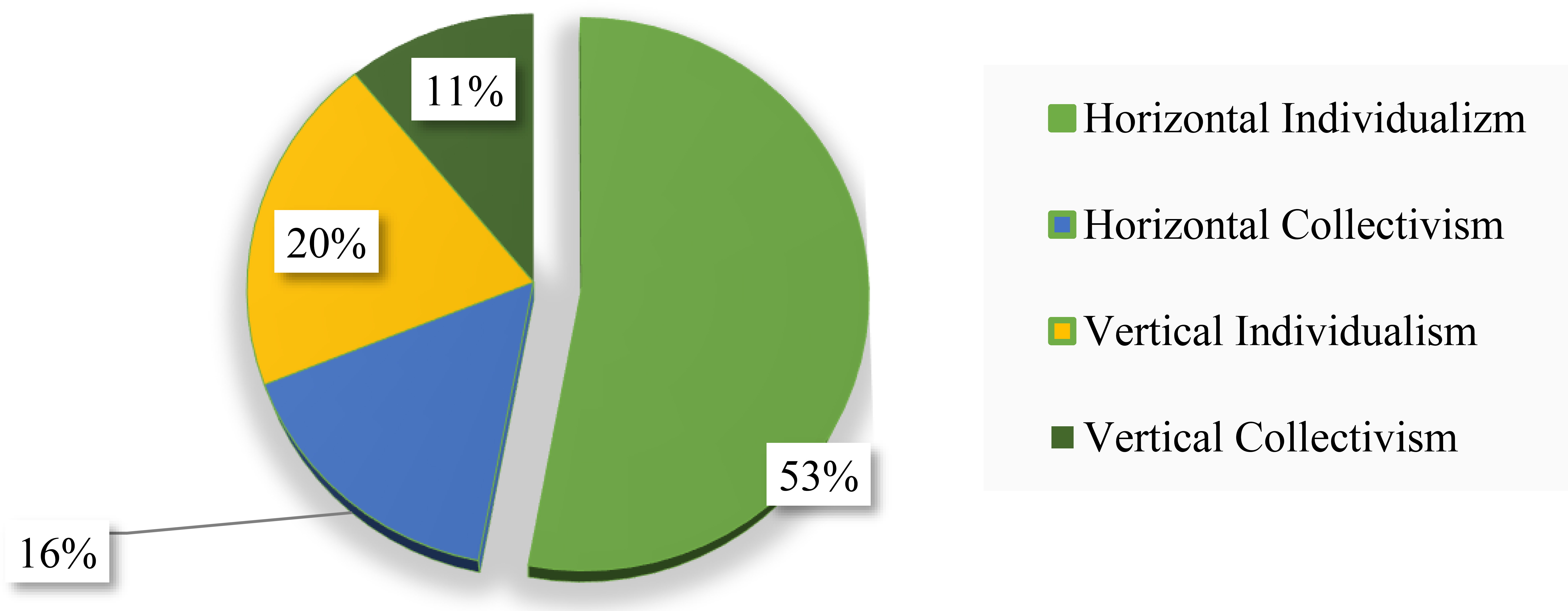
Results of the cultural orientation assessment.
The distribution of cultural orientation types by socio-demographic characteristics is presented in Table 5. Overall, the most common cultural orientation among respondents was horizontal individualism (53%), followed by vertical individualism (20%), horizontal collectivism (16%), and vertical collectivism (11%).
| Variables | Category | Total (n) | HC | HI | VC | VI |
|---|---|---|---|---|---|---|
| Total respondents | 83 | 13 (16%) | 44 (53%) | 9 (11%) | 17 (20%) | |
| Ethnicity | Kazakh | 47 | 11 (84.6%) | 19 (43.2%) | 8 (88.9%) | 9 (52.9%) |
| Russian | 36 | 2 (15.4%) | 25 (56.8%) | 1 (11.1%) | 8 (47.1%) | |
| Gender | Male | 27 | 9 (69.2%) | 18 (40.9%) | 3 (33.3%) | 6 (35.3%) |
| Female | 56 | 4 (30.8%) | 26 (59.1%) | 6 (66.7%) | 11 (64.7%) | |
| Employment status | Working | 42 | 3 (23.1%) | 25 (56.8%) | 7 (77.8%) | 7 (41.2%) |
| Not working | 41 | 10 (76.9%) | 19 (43.2%) | 2 (22.2%) | 10 (58.8%) | |
| Marital status | Married | 57 | 9 (69.2%) | 33 (75.0%) | 7 (77.8%) | 8 (47.1%) |
| Widowed | 20 | 4 (30.8%) | 8 (18.2%) | 1 (11.1%) | 7 (41.2%) | |
| Single / Divorced | 6 | 0 (0%) | 3 (6.8%) | 1 (11.1%) | 2 (11.7%) | |
| Age group (years) | 61–65 | 37 | 4 (30.8%) | 21 (47.7%) | 7 (77.8%) | 5 (29.4%) |
| 66–70 | 22 | 4 (30.8%) | 10 (22.7%) | 2 (22.2%) | 6 (35.3%) | |
| 71–75 | 24 | 5 (38.4%) | 13 (29.6%) | 0 (0%) | 6 (35.3%) | |
| Chronic illness | With illness | 50 | 8 (61.5%) | 24 (54.5%) | 8 (88.9%) | 9 (52.9%) |
| No illness | 33 | 5 (38.5%) | 20 (45.5%) | 1 (11.1%) | 8 (47.1%) | |
| Education level | Higher | 66 | 7 (53.8%) | 37 (84.1%) | 8 (88.9%) | 14 (82.4%) |
| Secondary / Vocational | 17 | 6 (46.2%) | 7 (15.9%) | 1 (11.1%) | 3 (17.6%) | |
| Physical activity | Highly active | 9 | 2 (15.4%) | 6 (13.6%) | 1 (11.1%) | 0 (0%) |
| Moderately active | 63 | 9 (69.2%) | 33 (75.0%) | 8 (88.9%) | 13 (76.5%) | |
| Sedentary | 11 | 2 (15.4%) | 5 (11.4%) | 0 (0%) | 4 (23.5%) | |
Horizontal individualism was more common among respondents with higher education (84.1%), persons of Russian nationality (56.8%), and participants who continued to work after retirement (56.8%). Vertical individualism was also relatively common among respondents with higher education (82.4%), women (64.7%), and participants who were currently not working (58.8%). Vertical collectivism represented the smallest orientation group in the sample. This orientation was more common among respondents who reported chronic illnesses (88.9%) and among participants of Kazakh ethnicity (88.9%). Horizontal collectivism was more common among respondents of Kazakh ethnicity (84.6%), as well as among men (69.2%) and respondents who were currently unemployed (76.9%). These descriptive results indicate variability in cultural orientation profiles across socio-demographic groups among older adults in the sample.
3.4. Association among Variables
To determine the relationships between variables, Pearson correlation analysis (determination of possible significant correlations) and comparison of average t-tests (comparison of groups on the studied scales) were used.
3.4.1. Pearson’s Correlation Analysis
To study the relationship between indicators of emotional well-being and cultural orientation, Pearson's correlation analysis was performed (Table 6).
| - | Psychological Well-Being (PWBS) | Satisfaction with Life Index (SWLS) | |
|---|---|---|---|
| Horizontal Individualism (HI) | Pearson Correlation | 0.339 ** | 0.224 * |
| Sig. (2-tailed) | 0.002 | 0.042 | |
| N | 83 | 83 | |
| Vertical Collectivism (VC) | Pearson Correlation | -0.279 * | -0.044 |
| Sig. (2-tailed) | 0.011 | 0.691 | |
| N | 83 | 83 | |
Note: * p < 0.05; ** p < 0.01.
The results showed a positive correlation between psychological well-being and horizontal individualism (r = 0.339, p = 0.002), indicating a weak or moderate relationship (r2 = 0.11). A negative correlation was found between psychological well-being and vertical collectivism (r = -0.279, p = 0.011; r2 = 0.08). In addition, a positive relationship was found between life satisfaction and horizontal individualism (r = 0.224, p = 0.042), although the effect size was relatively small (r2 = 0.05). These results suggest that certain cultural orientations, particularly horizontal individualism, are associated with higher levels of psychological well-being and life satisfaction among older adults in the sample.
3.4.2. Independent Samples t-tests
To study the differences between Kazakh and Russian elderly people in terms of psychological well-being and cultural orientation, t-tests for independent samples were conducted (Table 7).
| Variable | Group | M | SD | t(df) | p | Cohen’s d |
|---|---|---|---|---|---|---|
| Autonomy | Kazakh | 56.02 | 6.81 | -3.571 (81) | 0.001 ** | 0.80 |
| Russian | 61.47 | 6.88 | ||||
| Purpose in Life | Kazakh | 91.67 | 11.74 | -1.919 (81) | 0.049 * | 0.45 |
| Russian | 96.18 | 8.42 | ||||
| Horizontal Collectivism | Kazakh | 29.90 | 6.51 | 2.835 (81) | 0.006 ** | 0.63 |
| Russian | 25.76 | 6.57 |
Note: * p < 0.05; ** p < 0.01.
A significant difference was noted in autonomy, with Russian respondents scoring higher (t(81) = −3.57, p = 0.001, d = 0.80). Russian participants also demonstrated higher scores on the “Purpose in Life” subscale (t(81) = −1.92, p = 0.049, d = 0.45). In contrast, respondents of Kazakh nationality received higher scores on horizontal collectivism (t(81) = 2.84, p = 0.006, d = 0.63). These results indicate differences between ethnic groups in both psychological well-being and cultural orientation.
To examine gender differences in horizontal collectivism among older adults, an independent samples t-test was conducted (Table 8). The results showed a statistically significant difference between men and women (t(81) = 2.69, p = 0.009, d = 0.60). Men demonstrated higher levels of horizontal collectivism (M = 30.42, SD = 7.53) compared to women (M = 26.51, SD = 5.72).
| Gender | N | M | SD | t(df) | p | Cohen’s d |
|---|---|---|---|---|---|---|
| Male | 36 | 30.42 | 7.53 | 2.69 (81) | 0.009 ** | 0.60 |
| Female | 47 | 26.51 | 5.72 |
Note: * p < 0.05; ** p < 0.01.
A t-test for independent samples was conducted to examine differences between educational groups in terms of cultural orientation and psychological well-being (Table 9). The results showed statistically significant differences in horizontal collectivism (t(16) = 2.67, p = 0.017, d = 1.33) and vertical collectivism (t(16) = 2.16, p = 0.047, d = 1.04), with higher mean scores observed among respondents with general secondary education. A significant difference was also found in terms of positive attitudes (t(16) = -2.13, p = 0.049, d = 1.06), with higher scores among respondents with vocational secondary education. The relatively small size of the subgroups requires careful interpretation of the results.
| Scale | Education Level | N | M | SD | t(df) | p | Cohen’s d |
|---|---|---|---|---|---|---|---|
| Horizontal Collectivism | General Secondary | 12 | 31.50 | 6.64 | 2.673 (16) | 0.017 ** | 1.33 |
| Vocational Secondary | 6 | 23.00 | 5.69 | ||||
| Vertical Collectivism | General Secondary | 12 | 29.50 | 3.90 | 2.155 (16) | 0.047 ** | 1.04 |
| Vocational Secondary | 6 | 24.00 | 7.07 | ||||
| Positive Relations | General Secondary | 12 | 57.33 | 8.05 | -2.133 (16) | 0.049 ** | 1.06 |
| Vocational Secondary | 6 | 64.83 | 3.97 |
Note: * p < 0.05; ** p < 0.01.
3.4.3. One-way ANOVA Tests
To examine differences between ethnic groups in terms of psychological well-being and cultural orientation, a one-way Analysis Of Variance (ANOVA) was conducted (Table 10).
| Scale | F(1,81) | p | η2 | Higher Mean Group |
|---|---|---|---|---|
| Autonomy | 12.75 | 0.001 ** | 0.14 | Russian |
| Purpose in Life | 3.68 | 0.050 * | 0.04 | Russian |
| Horizontal Collectivism | 8.04 | 0.006 ** | 0.09 | Kazakh |
Note: * p < 0.05; ** p < 0.01.
The analysis revealed statistically significant differences in autonomy (F(1,81) = 12.75, p = 0.001, η2 = 0.14), with higher mean scores observed among respondents of Russian ethnicity. A smaller but statistically significant difference was also found in relation to life purpose (F(1,81) = 3.68, p = 0.050, η2 = 0.04). Conversely, horizontal collectivism was significantly higher among respondents of Kazakh ethnicity (F(1,81) = 8.04, p = 0.006, η2 = 0.09). The results indicate differences between ethnic groups in both measures of psychological well-being and cultural orientation.
4. DISCUSSION
This study allowed us to examine the characteristics of emotional well-being among Kazakhstani pensioners within the intracultural paradigm. The results of this study provide empirical support for the hypotheses put forward and contribute to the development of a conceptual model in which emotional well-being is understood as an integrative construct that includes affective, cognitive, and eudaimonic components [6, 16, 33]. The internal validity of the main construct was confirmed by Pearson's correlation analysis, and a strong correlation was found between the SWLS and PWBS (positive), GDS and SWLS, PWBS (negative) indicators (Table 3). A relationship was also found between emotional well-being and cultural orientation: higher levels of emotional well-being were associated with horizontal individualistic orientation among Kazakhstani pensioners, whereas lower levels were associated with vertical collectivist orientation.
In interpreting the data obtained and identifying intracultural differences, we came to the following conclusions: horizontal individualism was the most common orientation among respondents (53%), while horizontal collectivism accounted for 16%, vertical individualism for 20%, and vertical collectivism for 11% (Table 5). At the same time, horizontal individualism was more common among respondents of Russian ethnicity (56.8%), as well as among participants with higher education (84.1%) and those who continued to work after retirement (56.8%). In turn, horizontal collectivism was more prevalent among respondents of Kazakh ethnicity (84.6%) (Table 5). These data indicate the existence of intracultural differences in value orientations within the same social environment. These results are based on and echo Triandis's (1995) concept of basic cultural orientations [8, 9]. These findings suggest that the culture of contemporary Kazakhstan is shaped by ongoing socio-cultural transformation.
Correlation analysis also confirmed statistically significant relationships between cultural orientations and indicators of emotional well-being (Table 7). In particular, a positive correlation was found between psychological well-being and horizontal individualism (r = 0.339, p = 0.002, r2 = 0.11), as well as a positive relationship between life satisfaction and horizontal individualism (r = 0.224, p = 0.042, r2 = 0.05). At the same time, vertical collectivism showed a negative relationship with psychological well-being (r = −.279, p = 0.011, r2 = 0.08). The results indicate that value orientations associated with autonomy and equal social relations are statistically associated with higher levels of emotional well-being.
Analysis of interethnic differences also revealed statistically significant differences in a number of indicators of psychological well-being and cultural orientation (Table 8). Respondents from the Russian ethnic group demonstrated higher levels of autonomy (M = 61.47, SD = 6.88) compared to respondents from the Kazakh ethnic group (M = 56.02, SD = 6.81), t(81) = -3.57, p = 0.001, d = 0.80. A similar trend was observed on the “purpose in life” scale (t(81) = −1.92, p = 0.049, d = 0.45). At the same time, respondents from the Kazakh ethnic group demonstrated higher levels of horizontal collectivism (M = 29.90, SD = 6.51) compared to Russian respondents (M = 25.76, SD = 6.57), t(81) = 2.84, p = 0.006, d = 0.63. Similar results were confirmed by one-way analysis of variance (ANOVA) (Table 10). Statistically significant differences were found on the autonomy scale (F(1,81) = 12.75, p = 0.001, η2 = 0.14) and on the horizontal collectivism scale (F(1,81) = 8.04, p = 0.006, η2 = 0.09). The obtained η2 values indicate a moderate and high effect size for these differences.
Gender analysis also revealed statistically significant differences in the level of horizontal collectivism (Table 8). Men demonstrated higher mean values (M = 30.42, SD = 7.53) compared to women (M = 26.51, SD = 5.72), t(81) = 2.69, p = 0.009, d = 0.60, indicating a moderate effect size. Furthermore, differences related to the level of education were identified (Table 9). Respondents with general secondary education showed higher scores on horizontal collectivism (t(16) = 2.67, p = 0.017, d = 1.33) and vertical collectivism (t(16) = 2.16, p = 0.047, d = 1.04). At the same time, respondents with vocational education demonstrated higher scores on the “positive attitudes” scale (t(16) = −2.13, p = 0.049, d = 1.06). However, these results should be interpreted with caution due to the relatively small size of the subgroups.
Even though gender distinctions were not the central focus of this study, the gender makeup of the sample (56.6% women) could have influenced the models of emotional well-being we observed. For this reason, the results should be interpreted with caution in terms of their generalisability to both genders. No gender-based analysis was performed because of the limited sample sizes and the exploratory character of the study. As an outcome, potential gender differences in emotional well-being could not be studied and should be checked out in further research with larger samples.
The results obtained can be considered in the context of broader socio-cultural processes taking place in post-Soviet Kazakh society. The emergence of a more complex system of value orientations may be related to the social transformations of recent decades, including urbanisation, economic changes, and expanded educational opportunities. As a result, contemporary Kazakh society is experiencing a kind of cultural hybridization, in which traditional collectivist values coexist with growing individualistic orientations. The prevalence of horizontal individualism among a part of the elderly population, as revealed in the study, may reflect this very process of transformation of values in an urban environment. These findings highlight the importance of considering socio-cultural transformation when examining emotional well-being in later life, particularly in post-Soviet societies undergoing rapid social and economic change.
Summarising the data, cultural orientation can be considered an important culture-specific factor associated with the emotional and psychological state of older adults [28]. The current study reflects the well-being of Kazakh and Russian pensioners in the city of Almaty and can offer conclusions that are relevant primarily to the urban context. These factors cannot be ignored in multicultural countries, such as Kazakhstan, which is a post-Soviet state where different ethnic groups and different cultural orientations and values coexist. The emotional well-being of older adults in Kazakhstan is associated with intracultural factors, including socio-demographic characteristics and ethnicity. These findings underline the need to consider socio-cultural and historical contexts when examining emotional well-being in later life. Recent international research also demonstrates that broader sociopolitical environments and cultural contexts can significantly shape subjective well-being among older adults [42]. Moreover, studies focusing on Kazakhstan reveal that broader socio-economic conditions and public policies may be associated with shifts in subjective well-being within the population [43].
Thus, the presented data confirm intracultural heterogeneity. From a methodological point of view, the convergence of parametric and nonparametric indicators indicates the reliability of the data and the validity of the EWB indicator (Cronbach's α = 0.82). Synthesizing the major findings, it is worth noting that this study examines the emotional well-being of older people in Kazakhstan in greater detail and helps to gain a deeper understanding of the issues surrounding aging.
5. LIMITATION
Despite the results obtained, this study has several limitations that should be considered when interpreting the findings. First, the study is correlational and cross-sectional in nature, which allows us to identify statistical links between emotional well-being and cultural value orientations, but does not allow us to draw conclusions about causal relationships or the direction of these relationships. Second, the relatively small sample size (N = 83) and the geographical limitation of the study to the city of Almaty may reduce the possibility of generalizing the results to a wider population of older adults in Kazakhstan, especially to the population of other regions or rural areas.
The third limitation is related to the sampling method. The study used convenience and snowball sampling methods, which may lead to a certain degree of sampling bias and limit the representativeness of the data obtained. In addition, a significant proportion of participants had higher education (78.3%), which may also influence the identified characteristics of cultural value orientations and emotional well-being. Another limitation is related to the methodological approach of the study. The data were obtained through self-report surveys, which may increase the likelihood of subjective assessments and socially desirable responses. In this regard, future studies could use qualitative methods or a mixed-methods design combining quantitative and qualitative approaches, thereby enabling a deeper understanding of emotional well-being in older age.
Despite the fact that standardised and validated psychometric tools were used, cultural and linguistic nuances can still influence respondents' interpretation of the questionnaire items, especially in a bilingual context such as Kazakhstan (Kazakh-Russian). In addition, the study did not include statistical control of several potentially important variables, such as socioeconomic status, financial security, social network size, or physical health status. Future studies may use regression or multivariate models to study the relative impact of these factors. Finally, even though gender differences were considered, the relatively small sample size did not allow us to analyse the impact of interactions between gender and other socio-demographic variables. Future research should include larger and more diverse samples to further explore these relationships.
6. IMPLICATIONS
6.1. Theoretical implications
The results contribute to research into emotional well-being within the fields of cultural psychology and the psychology of ageing. Unlike many studies that focus on cross-cultural differences, this study examines variability within a single society, enabling a deeper understanding of how cultural value orientations influence the psychological state of older adults.
While confirming the importance of cultural value orientations in understanding emotional well-being, the results also reflect the specificities of Kazakhstan's post-Soviet sociocultural landscape, where collectivist and individualistic value systems coexist and influence one another. Overall, the study's findings contribute to a more comprehensive understanding of the interplay between cultural values and emotional well-being in later life. They highlight the importance of considering intraregional variations when assessing emotional well-being in multicultural communities.
6.2. Practical implications
The results obtained could be useful in the development of programs to help older adults maintain and improve their emotional well-being. Designing social, psychological, and educational initiatives that address the needs of the older population can be more effective when cultural value orientations are considered. The findings suggest that encouraging social engagement, autonomy, and self-fulfillment in later life is vital. When developing interventions and preventive measures, social and psychological programmes that are aimed at promoting active longevity can take these characteristics into account.
Furthermore, these results may be useful for specialists in social policy, gerontopsychology, social work, and healthcare who work with older people. A more sensitive and adapted approach to supporting the psychological well-being of older people can be achieved by taking cultural characteristics and value orientations into account. More broadly, the study's findings emphasise the necessity of developing comprehensive strategies to enhance the quality of life of older individuals in the context of demographic ageing and socio-cultural shifts in contemporary society.
CONCLUSION
This empirical study conducted a thorough analysis of the emotional well-being of older adults in Kazakhstan. Emotional well-being was considered as the integration of three main components: psychological (psychological well-being), affective (geriatric depression scale), and cognitive (life satisfaction). As a result of the reliability analysis of the identified components and selected scales, it was found that there is a significant correlation between these indicators: a higher level of psychological well-being correlates positively with life satisfaction and negatively with depression. At the same time, intra-cultural differences were partially confirmed: Russian pensioners showed a higher degree of independence and purposefulness in relation to life, while Kazakh respondents showed a higher level of horizontal collectivism, which indicates the dominance of collectivism and a preference for equal values (egalitarianism). Moreover, the study found a significant relationship between cultural orientation and components of emotional well-being among older respondents: horizontal individualism was positively correlated with life satisfaction, in contrast to vertical collectivism, which was negatively correlated. Thus, all statistical hypotheses of the study were statistically confirmed. Taken together, the results show that emotional well-being in late adulthood is determined by the interaction of socio-psychological, biological, and cultural factors, confirming the importance of culturally sensitive approaches to the psychological health of the elderly population of Kazakhstan.
AUTHORS’ CONTRIBUTIONS
The authors confirm their contributions to the manuscript as follows: T.K.: study conception, design, data analysis, and interpretation; B.K. and S.Z.: data collection; N.K.: methodology; T.K. and N.K.: investigation; T.K., N.K., B.K., and S.Z.: drafting of the manuscript. All authors contributed to the discussion of the results, critically reviewed the manuscript, and approved the final version for publication.
Dr. Olga Aimaganbetova (†) contributed to data analysis and interpretation, methodology, investigation, and drafting of the manuscript.
LIST OF ABBREVIATIONS
| EWB | = Emotional Well-Being |
| PWBS | = Psychological Well-Being Scale |
| LSI-A | = Life Satisfaction Index-A |
| GDS | = Geriatric Depression Scale |
| HVIC | = Horizontal and Vertical Individualism and Collectivism Scale |
| HC | = Horizontal Collectivism |
| VC | = Vertical Collectivism |
| HI | = Horizontal Individualism |
| VI | = Vertical Individualism |
ETHICS APPROVAL AND CONSENT TO PARTICIPATE
The study was conducted in full compliance with all requirements according to the Local Ethics Committee of the Al-Farabi Kazakh National University, which issued a research permit (permit no. A1045 IRB00010790).
HUMAN AND ANIMAL RIGHTS
All human research procedures followed were in compliance with the ethical standards of the responsible institutional and national research committees and with the 1975 Helsinki Declaration, as revised in 2013.
CONSENT FOR PUBLICATION
Informed consent for participation and publication of anonymised data was obtained from all participants prior to inclusion in the study.
AVAILABILITY OF DATA AND MATERIALS
The data and supportive information are available within the article.
ACKNOWLEDGEMENTS
Declared none.
APPENDIX 1
| Horizontal Collectivism (HC) | Characterized by collectivist attitudes and, at the same time, a preference for egalitarianism (equality). |
|---|---|
| Vertical Collectivism (VC) | Group cohesion is maintained through respect for authority and hierarchical roles. |
| Horizontal Individualism (HI) | Characterized by a desire for uniqueness and autonomy, while still valuing egalitarianism. |
| Vertical Individualism (VI) | Supports competition and personal achievement, often within clearly stratified social systems. |
Source: Based on Triandis [9].