All published articles of this journal are available on ScienceDirect.

Psychological Well-Being of Women Experiencing Intimate Partner Violence in Kazakhstan: The Role of Neuroticism and Suicidal Ideation
 iD
Gulbakhyt Menlibekova1
iD
Aigul Aitysheva1
iD
Assel Makhadiyeva2
iD
iD
Gulbakhyt Menlibekova1
iD
Aigul Aitysheva1
iD
Assel Makhadiyeva2
iD
Authors Info & Affiliations
Abstract
Introduction
Intimate partner violence (IPV) remains a significant public health and social problem in Kazakhstan and is associated with adverse psychological outcomes among women. However, limited empirical evidence exists on the separate associations of Neuroticism and Suicidal Ideation with multidimensional psychological well-being among women survivors of IPV receiving crisis-center services in Central Asia. This study addressed this gap by examining these associations in a hard-to-reach population of women receiving crisis-center services.
Methods
The study involved 107 women who had experienced IPV, reported Suicidal Ideation, and were receiving support services at a crisis center in Astana, Kazakhstan. Participants were recruited using purposive sampling. Psychological well-being was assessed using the PERMA-Profiler, neuroticism was measured using the Freiburg Personality Inventory (FPI), and suicidal ideation was evaluated using the Beck Scale for Suicidal Ideation (BSS). Descriptive statistics, Pearson’s correlation analysis, and multiple linear regression analysis were conducted to examine the separate associations of Neuroticism and Suicidal Ideation with psychological well-being.
Results
The findings revealed that higher levels of neuroticism were significantly associated with lower levels of psychological well-being (β = -0.182, p = 0.030). Suicidal ideation also showed a significant inverse association with psychological well-being (β = -0.179, p = 0.033). Although statistically significant, both associations were modest, indicating that psychological well-being may also be related to broader emotional, interpersonal, social, and socioeconomic factors.
Discussion
The results indicate that neuroticism and suicidal ideation are distinct psychological correlates of lower psychological well-being among women who have experienced IPV. These findings support a multidimensional interpretation in which neurotic characteristics represent one component of a broader psychosocial framework rather than the sole determinant of suicidal ideation or psychological well-being.
Conclusion
The study emphasizes the importance of comprehensive psychological assessment and multidimensional support for women who have experienced IPV and report suicidal ideation. Psychological services should consider neurotic characteristics alongside emotional functioning, self-esteem, social support, and socioeconomic circumstances. Future longitudinal studies are required to clarify how these factors are related over time and to evaluate interventions designed to support psychological well-being among women survivors of IPV.
1. INTRODUCTION
Psychological well-being is a fundamental component of mental health and adaptive social functioning [1]. Contemporary research consistently demonstrates that intimate partner violence (IPV) is associated with substantial impairments in women’s psychological and physical health. Accordingly, IPV is widely recognized as a major public health concern because of its associations with lower psychological well-being, reduced quality of life, and adverse mental health outcomes among women survivors [2, 3].
Chronic and repeated exposure to physical, sexual, and psychological violence is associated with substantial disruptions in women’s psychological functioning and adverse changes in self-concept and personal identity [4, 5]. Prolonged victimization is frequently accompanied by emotion-regulation difficulties, maladaptive cognitive patterns, feelings of helplessness, and diminished self-worth, all of which may be associated with lower psychological resilience and less adaptive coping.
A growing body of evidence indicates that women exposed to IPV are at increased risk of experiencing a broad range of mental and physical health problems, including depression, anxiety disorders, post-traumatic stress symptoms, psychosomatic complaints, and suicidal ideation [6-8]. Previous studies suggest that approximately 43-75% of women who have experienced domestic violence report clinically significant symptoms of depression, anxiety, and trauma, as well as lower levels of psychological well-being [9-12].
Empirical findings further indicate that emotion-regulation difficulties and greater severity of post-traumatic stress disorder symptoms are significantly associated with psychological distress and adverse mental health outcomes among women who have experienced IPV [13, 14]. Women with a history of exposure to violence are also more likely to report low self-esteem, somatic symptoms, chronic psychological distress, and the use of antidepressants or tranquilizers than women without such experiences [15, 16]. Collectively, these findings demonstrate the long-term and multidimensional psychological difficulties associated with IPV and underscore the need for comprehensive psychological and social support for survivors.
In its most severe forms, domestic violence may be associated with fatal outcomes. According to United Nations estimates, approximately 736 million women worldwide-nearly one in three-have experienced physical and/or sexual violence by an intimate partner, non-partner sexual violence, or both at least once in their lives. This figure represents approximately 30% of women aged 15 years and older [17]. In Kazakhstan, domestic violence against women remains a significant social and public health concern. Reports from UN Women estimate that approximately 400 women die annually in Kazakhstan as a result of domestic violence. The prevalence of violence against women in Kazakhstan remains high, with women aged 40-49 years (41.46%) and 30-39 years (37.80%) reported as the most affected age groups [18].
Preventing IPV and developing appropriate response strategies are essential to supporting women’s psychological well-being. Previous studies have identified positive associations among women’s psychological well-being, feminist identity development, and gender-role orientation [19]. A study conducted in Nepal found that supportive relationships between young women and members of their marital families, particularly their husbands and mothers-in-law, were associated with fewer depressive symptoms. This finding highlights the importance of family support and positive interpersonal relationships for women’s psychological well-being [20].
Socioeconomic status has also been identified as an important correlate of women’s psychological well-being. Women living in economically disadvantaged households are more likely to report lower psychological well-being than women from higher-income households [21, 22]. These findings suggest that women’s psychological well-being is associated with an interconnected set of social, economic, and family-related factors.
Studies examining the association between IPV and lower psychological well-being emphasize the role of coping strategies in managing experiences related to violence [23, 24]. Active coping strategies may serve as important psychological resources associated with fewer adverse psychological outcomes following victimization. Research also indicates that assistance provided through specialized support services may be associated with better psychological well-being, emotional functioning, and adaptive behavioral patterns among women experiencing IPV. Accordingly, resilience and the capacity to cope with adversity are increasingly regarded as important aspects of women’s psychological well-being [25].
Research conducted in Saudi Arabia, together with other international evidence, indicates that the psychological well-being of women experiencing domestic violence should be understood within the relevant sociocultural and legal context. Social pressures to preserve family unity, gender-role expectations, economic instability, and barriers to seeking assistance may restrict women’s disclosure of violence and access to support [26, 27]. Research on marital relationships has further demonstrated that rigid and dysfunctional relational patterns are negatively associated with women’s psychological well-being, particularly with self-acceptance and environmental mastery, which are important dimensions of psychological functioning [28, 29].
Previous studies also suggest that childhood abuse, economic dependence on a partner, inadequate social support, and persistent concerns about personal safety are associated with IPV exposure and may create additional barriers to seeking assistance or leaving an unsafe relationship [30, 31]. These findings highlight the cumulative and multidimensional nature of the vulnerabilities and contextual circumstances associated with IPV.
Against this background, scholars emphasize the need for comprehensive psychosocial support programs that address not only physical trauma but also the psychological well-being, emotional dependence, and social functioning of women exposed to IPV [32-35]. Research further indicates that women who have recently left abusive relationships may experience greater psychological distress than women who have had more time to recover in supportive environments, including crisis centers [36]. This finding underscores the importance of considering the stage of recovery and adaptation when providing psychological and social support to women who have experienced violence.
Empirical evidence also demonstrates that the type and duration of IPV are associated with levels of social support, including the size of friendship networks and access to material assistance. IPV exposure has also been associated with reduced quality of life, lower psychological well-being, poorer self-rated health, and greater use of psychotropic medications [37]. In addition, poverty, insufficient social support, and limited access to economic, social, and family resources are consistently identified as factors associated with poorer mental well-being among women exposed to domestic violence [38, 39].
Overall, the reviewed literature identifies a broad range of factors associated with lower psychological well-being among women who have experienced IPV. These include maladaptive coping strategies, age, longer duration of marriage, low educational attainment among male partners, polygamous family structures, a husband’s military occupation, partner aggressiveness, depression, previous exposure to violence, negative attitudes toward life, dissatisfaction with parenting experiences, lack of social support, and financial difficulties.
Taken together, these findings indicate that psychological well-being is a multidimensional construct encompassing emotional, cognitive, and social functioning and is associated with demographic, interpersonal, contextual, and personality-related characteristics. Within Seligman’s PERMA framework, psychological well-being comprises five interrelated but distinct domains: Positive Emotion, Engagement, Relationships, Meaning, and Accomplishment. Positive Emotion refers to the experience of pleasant affective states; Engagement reflects deep involvement and absorption in activities; Relationships concern supportive and meaningful interpersonal connections; Meaning denotes a sense of purpose and belonging to something greater than oneself; and Accomplishment refers to the pursuit and attainment of personally valued goals. Psychological well-being is therefore understood not merely as the absence of psychopathology or psychological distress but as the presence of positive psychological functioning across these domains.
Despite the growing body of international research, several important questions remain unresolved. In particular, limited empirical evidence is available regarding the separate associations of neuroticism and suicidal ideation with psychological well-being among women survivors of IPV receiving crisis-center services in Central Asia. Psychological well-being in this population has also rarely been examined as a multidimensional construct encompassing positive emotional functioning, engagement, supportive relationships, meaning, and accomplishment.
The present study addresses this gap by examining the separate associations of neuroticism and suicidal ideation with psychological well-being among women survivors of IPV receiving services from a crisis center in Kazakhstan. Psychological well-being is conceptualized and assessed within the multidimensional PERMA framework. The novelty of the study lies primarily in providing context-specific empirical evidence from an underresearched setting and a difficult-to-access population.
1.1. Hypotheses Development
The present study provides a framework for examining the psychological factors associated with multidimensional psychological well-being among women who have experienced intimate partner violence. Accordingly, the following hypotheses were formulated:
H1: Higher levels of Neuroticism are associated with lower levels of psychological well-being among women who have experienced IPV.
H2: Higher levels of Suicidal Ideation are associated with lower levels of psychological well-being among women who have experienced IPV.
These hypotheses address the separate associations of Neuroticism and Suicidal Ideation with psychological well-being without specifying a causal direction. Their empirical examination may provide context-specific evidence regarding the psychological functioning of women survivors of IPV receiving crisis-center services in Kazakhstan.
1.2. Conceptual Framework
Women who have experienced IPV may report a range of psychological difficulties, including anxiety, depressive symptoms, heightened emotional reactivity, and Suicidal Ideation. Previous research has also indicated that psychological distress among women survivors of IPV may be associated with impaired daily functioning, reduced quality of life, and lower psychological well-being.
The present study did not quantitatively assess the severity, frequency, or duration of IPV or related traumatic experiences. Therefore, these factors were not included as predictors in the conceptual framework. Instead, IPV experience was treated as a defining contextual characteristic of the study population.
Accordingly, the conceptual framework focuses on the separate associations of Neuroticism and Suicidal Ideation with psychological well-being. Neuroticism and Suicidal Ideation are conceptualized as distinct psychological correlates of psychological well-being among women who have experienced IPV. No sequential or causal relationship between these variables is assumed. The conceptual framework is presented in Fig. (1).
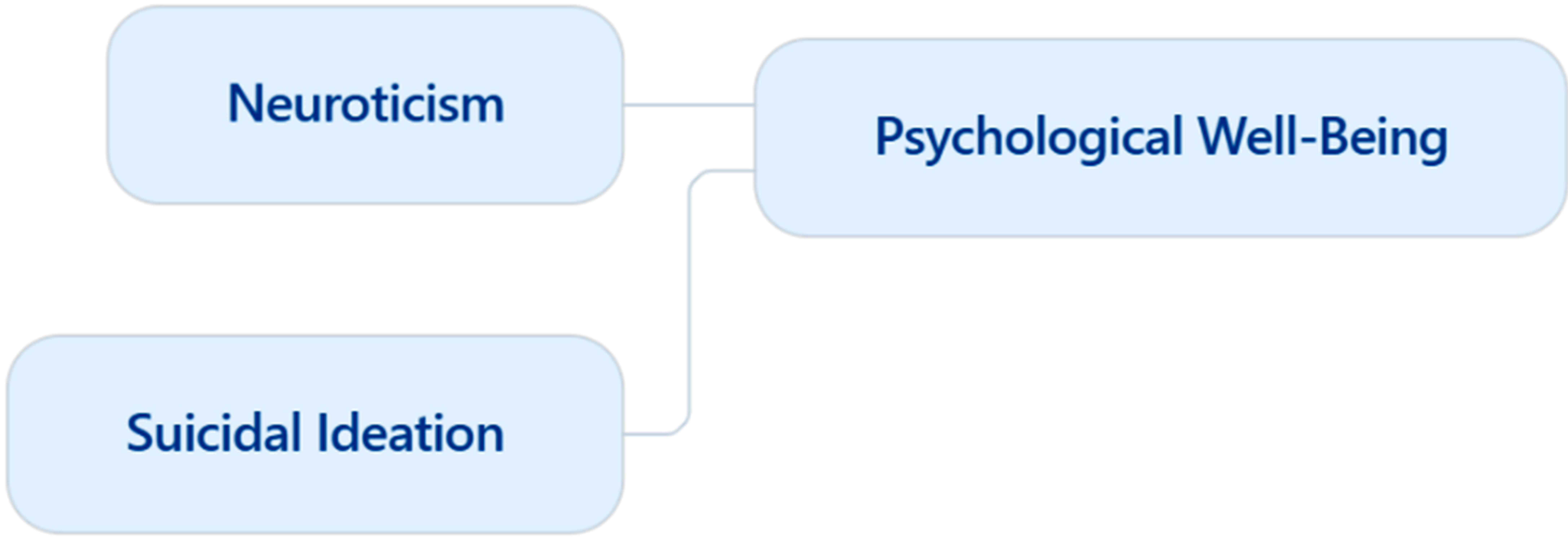
Conceptual framework of the associations examined in the study.
Note. IPV experience represents a defining characteristic of the study population and was not included as a quantitatively measured predictor. The connecting lines indicate hypothesized statistical associations rather than causal pathways.
2. METHODS
2.1. Study Design and Setting
A quantitative, cross-sectional correlational design was used to examine the separate associations of Neuroticism and Suicidal Ideation with psychological well-being among women who had experienced intimate partner violence (IPV). Psychological well-being was conceptualized and assessed as a multidimensional construct within the PERMA framework. The study was conducted between June and December 2025 at a crisis center in Astana, Kazakhstan.
Psychological well-being was assessed using the PERMA-Profiler, Neuroticism was measured using the Freiburg Personality Inventory (FPI), and Suicidal Ideation was assessed using the Beck Scale for Suicide Ideation (BSS). IPV experience was treated as a defining contextual characteristic of the study population rather than as a quantitatively measured predictor. Given the cross-sectional correlational design, the analysis examined statistical associations without establishing their temporal or causal direction.
2.2. Participants and Recruitment
Eligible participants were women who had experienced IPV, reported Suicidal Ideation, and were receiving support services at the participating crisis center in Astana, Kazakhstan. Participants were recruited using purposive sampling based on predefined eligibility criteria.
The inclusion criteria were: (1) being a woman aged 18 years or older; (2) having experienced physical, sexual, psychological, or economic violence perpetrated by an intimate partner; (3) receiving support services at the participating crisis center during the study period; (4) reporting Suicidal Ideation; (5) being able to understand the study procedures and complete the assessment instruments; and (6) voluntarily agreeing to participate.
The exclusion criteria were: (1) being younger than 18 years; (2) reporting no Suicidal Ideation; (3) having a severe cognitive impairment or an acute psychiatric condition that compromised the capacity to provide informed consent or complete the assessment instruments; and (4) declining participation or withdrawing consent.
No a priori sample-size or power calculation was performed. The sample size was determined by the number of eligible and accessible women receiving services at the participating crisis center during the data-collection period. All women who met the predefined inclusion criteria and agreed to participate were invited to take part in the study, resulting in a final sample of 107 participants.
The participating crisis center provided temporary accommodation and multidisciplinary support to adult women and their minor children. The duration of residence generally ranged from one to six months. Crisis-center specialists provided psychological and social support to women and children. Before participant recruitment commenced, a formal agreement authorizing the study was established between the research team and the crisis center.
2.3. Measures
2.3.1. Psychological Well-being
Psychological well-being was assessed using the PERMA-Profiler [40]. The instrument comprises 23 items, including 15 core items measuring the five dimensions of Seligman’s PERMA model: Positive Emotion, Engagement, Relationships, Meaning, and Accomplishment. Each dimension is assessed using three items. The instrument also contains eight supplementary items assessing Negative Emotion, perceived physical Health, Loneliness, and overall Happiness.
All items are rated on an 11-point scale ranging from 0 to 10; however, the verbal response anchors vary according to item content. For example, some items assess frequency, whereas others assess intensity or perceived level. Higher scores on the five PERMA dimensions and the overall PERMA index indicate higher psychological well-being. In contrast, higher scores on Negative Emotion and Loneliness indicate greater emotional distress and perceived social isolation, respectively.
Internal consistency was evaluated using Cronbach’s alpha. The following coefficients were obtained: Positive Emotion (α = 0.81), Engagement (α = 0.78), Relationships (α = 0.83), Meaning (α = 0.87), Accomplishment (α = 0.79), and the overall PERMA index (α = 0.91). These coefficients indicate satisfactory to excellent internal consistency for the respective scales in the present sample.
2.3.2. Neuroticism
Neuroticism was assessed using the Freiburg Personality Inventory (FPI), originally developed by J. Fahrenberg, H. Selg, and R. Hampel. The modified Form B, adapted by A. A. Krylov and T. I. Ronginskaya, was used in the present study [41]. The questionnaire comprises 114 items and assesses 12 personality dimensions: Neuroticism, Spontaneous Aggressiveness, Depression, Irritability, Sociability, Emotional Stability, Reactive Aggressiveness, Shyness, Openness, Extraversion- Introversion, Emotional Lability, and Masculinity- Femininity. Scales I-IX are the primary scales, whereas Scales X-XII are supplementary scales reflecting broader personality characteristics.
FPI responses were scored according to the standardized scoring key for the modified Form B. Each keyed response was assigned one point, and item scores were summed separately for each subscale to obtain raw scores. The raw scores were subsequently converted into standardized scores ranging from 1 to 9 using the conversion tables provided in the FPI-B manual. Scores of 1-3 were interpreted as low, scores of 4-6 as moderate, and scores of 7-9 as high. Higher scores indicated greater expression of the personality characteristic assessed by the corresponding subscale. The Neuroticism subscale score was used in the correlation and regression analyses.
Cronbach’s alpha coefficients for the FPI subscales ranged from 0.71 to 0.85, indicating satisfactory to good internal consistency. The Neuroticism subscale demonstrated good internal consistency in the present sample (α = 0.82).
2.3.3. Suicidal Ideation
Suicidal ideation was assessed using the Beck Scale for Suicide Ideation (BSS) [42]. The instrument consists of 19 core items and two preliminary screening questions designed to identify the presence of suicidal ideation. If a participant responded negatively to both screening questions, the screening result was considered negative, indicating that no suicidal ideation had been identified. Each of the 19 core items was scored on a three-point scale ranging from 0 to 2, with higher item scores indicating greater severity of the relevant manifestation. Item scores were summed to produce a total score ranging from 0 to 38, with higher total scores indicating greater severity of suicidal ideation.
Based on the interpretive thresholds adopted from [43], scores of 0-5 were categorized as indicating no suicidal ideation, scores of 6-9 as mild suicidal ideation, scores of 10-19 as moderate suicidal ideation, and scores of ≥20 as severe suicidal ideation. The BSS demonstrated good internal consistency in the present sample (Cronbach’s α = 0.86).
2.4. Translation and Cultural Adaptation
The Kazakh-language versions of the PERMA-Profiler, FPI, and BSS were reviewed for linguistic clarity, conceptual equivalence, and cultural appropriateness for the target population. The preliminary translated versions were pilot-tested in an independent sample of 142 women who were not included in the main study. Pilot testing focused on the clarity, comprehensibility, and cultural relevance of the items and response options. Based on participant feedback, unclear formulations were linguistically revised without altering the conceptual content of the original items. The finalized versions were subsequently administered to the main study sample.
Following the linguistic review and pilot testing, the internal consistency of each instrument was evaluated using Cronbach’s alpha. These coefficients were interpreted exclusively as indicators of internal consistency reliability and not as evidence of construct or criterion validity.
2.5. Data Collection Procedure
Data collection was conducted at the participating crisis center after institutional authorization had been obtained. Potential participants were approached individually and screened according to the predefined eligibility criteria. Women who met these criteria received detailed information about the study and were invited to participate voluntarily.
After providing oral informed consent, participants completed the study instruments individually in a private setting at the crisis center. They were informed that they could decline to answer any question or discontinue the assessment at any time if they experienced discomfort.
Suicidal Ideation was assessed using the Beck Scale for Suicide Ideation (BSS), psychological well-being was assessed using the PERMA-Profiler, and Neuroticism was measured using the Freiburg Personality Inventory (FPI). Each questionnaire package was assigned a numerical code, and no personally identifiable information was recorded.
2.6. Ethical Considerations
The study protocol was approved by the Ethics Committee of L.N. Gumilyov Eurasian National University, Astana, Kazakhstan (Approval No. 103, May 22, 2025). Institutional authorization was also obtained from the participating crisis center before participant recruitment and data collection commenced.
Before participation, all women received information about the purpose and procedures of the study, the voluntary nature of participation, confidentiality and anonymity safeguards, and their right to decline participation or withdraw at any time without consequences. Participants were informed that their decision regarding participation would not affect the psychological, social, or other support services they received from the crisis center. Oral informed consent was obtained from each participant in accordance with the protocol approved by the Ethics Committee.
Given the sensitive nature of IPV and Suicidal Ideation, data collection was conducted individually in a private and supportive setting. Participants could decline to answer any question or discontinue the assessment if they experienced discomfort. No personally identifiable information was recorded. The collected data were coded and stored securely, and access was restricted to authorized members of the research team.
2.7. Statistical Analysis
Statistical analyses were performed using IBM SPSS Statistics, version 27. Before the main analyses, the data were screened for data-entry errors, missing values, outliers, and distributional characteristics. Descriptive statistics were used to summarize participants’ sociodemographic characteristics and the study variables. Means, standard deviations, minimum values, and maximum values were calculated for continuous variables, whereas frequencies and percentages were calculated for categorical variables.
The internal consistency reliability of the PERMA-Profiler, FPI, and BSS was evaluated using Cronbach’s alpha. Pearson’s correlation coefficients were calculated to examine the bivariate associations of Neuroticism and Suicidal Ideation with psychological well-being, as well as the relationships among the relevant instrument subscales.
Multiple linear regression analysis was conducted to examine the separate statistical associations of Neuroticism and Suicidal Ideation with psychological well-being. The overall PERMA score was entered as the dependent variable, whereas Neuroticism and Suicidal Ideation were entered as predictors.
The regression results were reported using unstandardized coefficients (B), standard errors (SE), standardized coefficients (β), t-statistics, p-values, and 95% confidence intervals. Overall model fit was evaluated using R2, adjusted R2, and the F statistic with the corresponding degrees of freedom and p-value. All statistical tests were two-tailed, and statistical significance was set at p < 0.05.
3. RESULTS
3.1. Sociodemographic Characteristics of Women Survivors of IPV
The sociodemographic characteristics of the sample are presented in Table 1. The study included 107 women aged 30-45 years. Participants’ age at marriage ranged from 16 to 30 years.
| Characteristics | Frequency | n (%) |
|---|---|---|
| Age | - | - |
| 30-35 | 52 | 48,5% |
| 36-40 | 37 | 34,5% |
| 41-45 | 18 | 17% |
| Age of marriage | - | - |
| 16-20 | 42 | 39% |
| 21-25 | 35 | 33% |
| 26-30 | 30 | 28% |
| Education | - | - |
| secondary | 57 | 52,3% |
| secondary vocational | 38 | 35,5% |
| incomplete higher | 11 | 10,3% |
| higher | 2 | 1,9% |
| Marital status | - | - |
| Married | 48 | 44,9% |
| Divorced | 25 | 23,4% |
| Married twice and divorced | 23 | 21,5% |
| Married three times and divorced | 11 | 10,2% |
| Number of children | - | - |
| 1-child | 21 | 19,6% |
| 2-children | 32 | 30% |
| 3-children | 35 | 32,7% |
| 4- children | 7 | 6,5% |
| 5- children | 12 | 11,2% |
| Occupation | - | - |
| In childcare | 46 | 42,9% |
| Not working | 32 | 30% |
| Various jobs | 29 | 27,1% |
| Suicidal ideation | 107 | 100% |
| N=107 | - | - |
Regarding educational attainment, slightly more than half of the participants (53.0%) did not hold a higher education degree. In terms of marital status, 48 women (44.9%) remained legally married while residing at the crisis center, whereas 25 women (23.4%) were divorced.
Regarding family composition, 12 participants (11.2%) had more than five dependent children. With respect to employment status, 46 women (42.9%) identified themselves as homemakers, 32 (30.0%) were unemployed, and 29 (27.1%) were employed in service-sector occupations, including catering and retail. All participants (100%) reported Suicidal Ideation, consistent with the predefined inclusion criteria.
3.2. Psychological Well-being among Women who have Experienced IPV
The PERMA-Profiler was administered to assess the multidimensional psychological well-being of women who had experienced IPV. Descriptive statistics for the PERMA-Profiler dimensions and the overall psychological well-being score are presented in Table 2.
| Scales | N | Minimum | Maximum | Average | Average Standard Deviation |
|---|---|---|---|---|---|
| 1. Positive emotions | 107 | 2,00 | 6,00 | 3,7241 | 1,25062 |
| 2. Engagement | 107 | 3,00 | 6,00 | 4,1379 | 1,09297 |
| 3. Relationships | 107 | 2,00 | 6,00 | 3,6552 | 1,31681 |
| 4. Meaning | 107 | 3,00 | 7,00 | 4,3448 | 1,36998 |
| 5. Achievements | 107 | 1,00 | 5,00 | 3,3103 | 1,39139 |
| 6. Happiness | 107 | 0,00 | 6,00 | 3,8276 | 1,51349 |
| 7. Overall PERMA well-being index | 107 | 3,00 | 6,00 | 3,6897 | 0,89056 |
| 8. Negative emotions | 107 | 5,00 | 9,00 | 6,7241 | 1,09859 |
| 9. Health | 107 | 2,00 | 9,00 | 5,5517 | 1,93808 |
| 10. Loneliness | 107 | 4,00 | 10,00 | 7,3793 | 1,78113 |
The descriptive results indicated relatively high mean scores for Loneliness (M = 7.3) and Negative Emotion (M = 6.7). Because higher scores on these dimensions reflect less favorable psychological states, these findings indicate elevated perceived loneliness and negative emotional experiences among the participants. The mean Health score was 5.5, indicating an intermediate level of perceived physical health.
Lower mean scores were observed for Positive Emotion (M = 3.7), Engagement (M = 4.1), Relationships (M = 3.6), Meaning (M = 4.3), Accomplishment (M = 3.3), and Happiness (M = 3.8). The overall PERMA well-being score was also relatively low (M = 3.6). Collectively, these results indicate that the participants reported lower levels of positive emotional experience, engagement in daily activities, supportive relationships, meaning, accomplishment, and overall psychological well-being.
3.3. Correlations among Psychological Well-being Indicators
Pearson’s correlation analysis was conducted to examine the bivariate associations among the PERMA-Profiler dimensions in women who had experienced IPV. The analysis was performed using IBM SPSS Statistics, version 27. The results are presented in Table 3.
| - | 1 | 2 | 3 | 4 | 5 | 6 | 7 | 8 | 9 | 10 |
|---|---|---|---|---|---|---|---|---|---|---|
| 1. Positive emotions | 1 | - | - | - | - | - | - | - | - | - |
| 2. Engagement | ,760** | 1 | - | - | - | - | - | - | - | - |
| 3. Relationships | ,715** | ,641** | 1 | - | - | - | - | - | - | - |
| 4. Meaning | ,794** | ,655** | ,790** | 1 | - | - | - | - | - | - |
| 5. Accomplishment | ,478** | ,546** | ,642** | ,548** | 1 | - | - | - | - | - |
| 6. Happiness | ,749** | ,637** | ,742** | ,532** | ,775** | 1 | - | - | - | - |
| 7. Overall PERMA well-being index | ,530** | ,753** | ,646** | ,870** | ,951** | ,818** | 1 | - | - | - |
| 8. Negative emotions | -,603** | -,715** | -0,259 | -,643** | -,609** | -0,283 | -,507* | 1 | - | - |
| 9. Health | ,781** | ,707** | ,734** | ,611** | ,735** | ,602** | ,721** | -0,403 | 1 | - |
| 10. Loneliness | -0,435 | -,603** | -0,214 | -0,448 | -,526* | -0,293 | -0,409 | ,525** | -0,116 | 1 |
Note: * Correlation is significant at the 0.05 level (two-sided).
**Correlation is significant at the 0.01 level (two-sided).
As shown in Table 3, the overall PERMA-Profiler score was significantly and positively correlated with Positive Emotion (r = 0.530, p < 0.01), Engagement (r = 0.753, p < 0.01), Relationships (r = 0.646, p < 0.01), Meaning (r = 0.870, p < 0.01), Accomplishment (r = 0.951, p < 0.01), Happiness (r = 0.818, p < 0.01), and Health (r = 0.721, p < 0.01). Thus, higher scores on these dimensions were associated with higher overall psychological well-being in the study sample. However, because the five core PERMA dimensions contribute to the calculation of the overall PERMA score, these coefficients partly reflect part-whole correlations and should be interpreted descriptively rather than as independent associations.
Negative Emotion was significantly and positively correlated with Loneliness (r = 0.525, p < 0.01), indicating that participants reporting higher levels of negative emotional experiences also tended to report greater loneliness. This association may reflect an interconnected pattern of emotional distress and perceived social isolation among women survivors of IPV. However, the cross-sectional data do not establish the direction of this association or indicate that IPV directly produced these psychological experiences.
Overall, lower levels of Positive Emotion, Engagement, Relationships, Meaning, Accomplishment, Happiness, and perceived Health were associated with lower overall psychological well-being. Negative Emotion and Loneliness were also positively associated. These findings demonstrate the relevance of emotional functioning, social connectedness, meaningful activity, perceived health, and personal accomplishment to understanding psychological well-being among women survivors of IPV. These dimensions may represent important areas for psychological assessment and support; however, the effectiveness of specific interventions was not evaluated in the present study.
3.4. Levels of Suicidal Ideation among Women Survivors of IPV
The presence and severity of Suicidal Ideation were assessed using the Beck Scale for Suicidal Ideation (BSS). The distribution of participants across the applied BSS score ranges is presented in Table 4.
| Level of Suicidal Ideation | BSS Score Range | n | % |
|---|---|---|---|
| No Suicidal Ideation | 0-5 | 0 | 0.0 |
| Mild Suicidal Ideation | 6-9 | 11 | 10.2 |
| Moderate Suicidal Ideation | 10-19 | 30 | 28.2 |
| Severe Suicidal Ideation | ≥20 | 66 | 61.6 |
| Total | - | 107 | 100.0 |
Note: BSS = Beck Scale for Suicide Ideation.
No participants were classified within the BSS range indicating no Suicidal Ideation (0-5). Mild Suicidal Ideation (scores of 6-9) was identified in 11 participants (10.3%), moderate Suicidal Ideation (scores of 10-19) in 30 participants (28.0%), and severe Suicidal Ideation (scores of ≥20) in 66 participants (61.7%). Thus, most participants were classified within the severe Suicidal Ideation category.
These findings should be interpreted in light of the eligibility criteria, as the study specifically included women who reported Suicidal Ideation. Therefore, the observed distribution does not represent the prevalence of Suicidal Ideation among all women who have experienced IPV. Moreover, because the BSS was administered at a single assessment point, the findings indicate the severity of current Suicidal Ideation but do not establish its duration or persistence over time.
To examine the psychological characteristics of the participants, personality dimensions were assessed using the Freiburg Personality Inventory (FPI). Subsequent analyses examined the associations among Neuroticism, Suicidal Ideation, and psychological well-being without assuming causal direction.
3.5. Personality Characteristics and their Intercorrelations among Women who have Experienced IPV
The Freiburg Personality Inventory (FPI) was administered to assess the personality characteristics of women who had experienced IPV. Based on the standardized FPI subscale scores, a personality profile of the study participants was constructed. The profile is presented in Fig. (2).
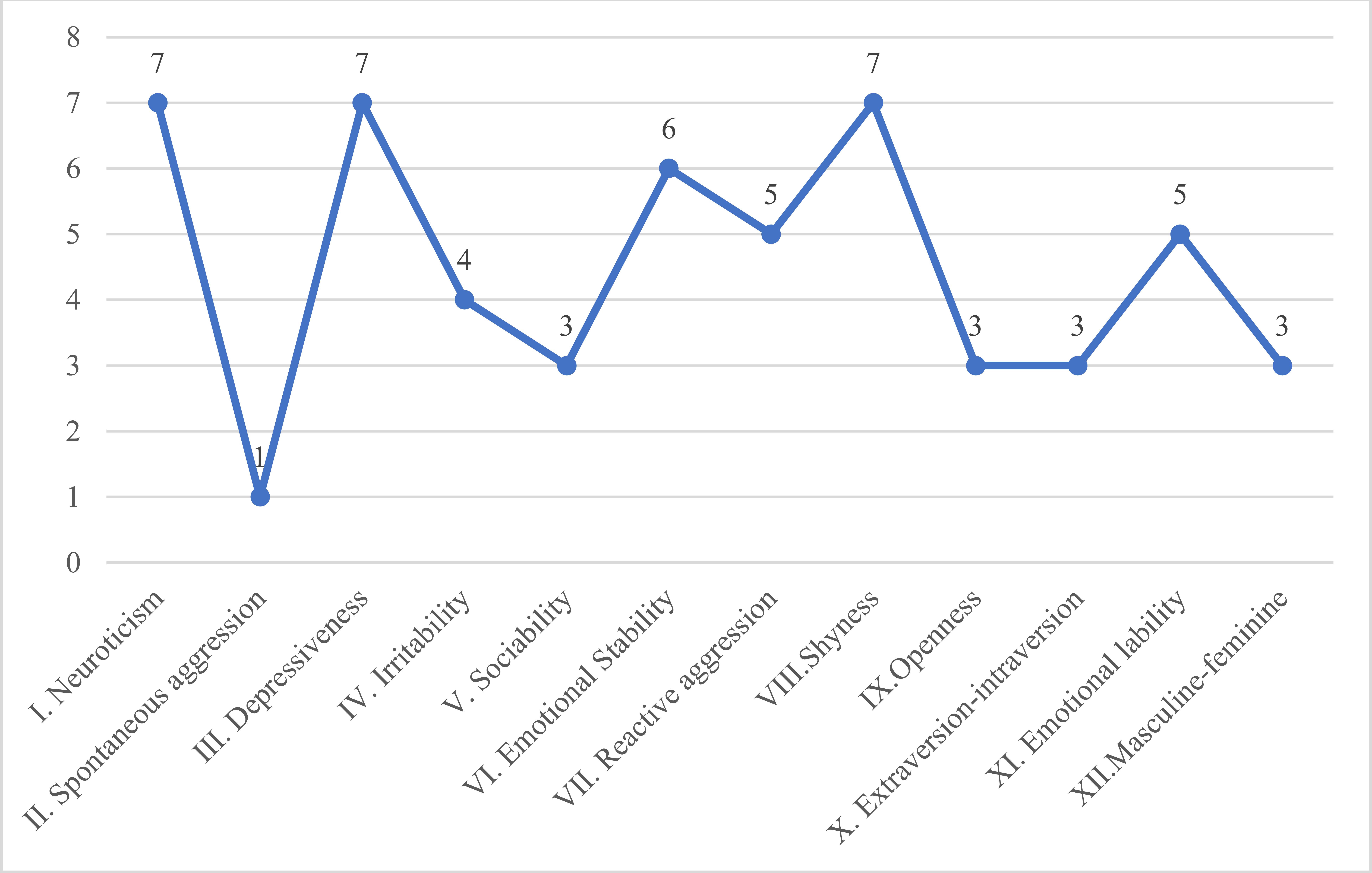
FPI personality profile of women who have experienced IPV.
According to the scoring guidelines for the modified FPI Form B, standardized scores of 1-3 are interpreted as low, scores of 4-6 as moderate, and scores of 7-9 as high. The mean standardized scores obtained for the study sample were interpreted as follows:
- Neuroticism (7; high). The high mean score indicates elevated emotional distress, tension, and susceptibility to stress-related and psychosomatic complaints.
- Spontaneous Aggressiveness (1; low). The low score indicates a limited tendency to express spontaneous or impulsive aggression.
- Depression (7; high). The high score reflects a greater tendency toward depressed mood, pessimism, reduced self-confidence, and emotional withdrawal.
- Irritability (4; moderate). The score indicates a moderate tendency toward emotional excitability and irritability.
- Sociability (3; low). The low score reflects limited social engagement and a lower tendency to initiate or maintain interpersonal contact.
- Emotional Stability (6; moderate). The score indicates a moderate capacity to maintain emotional balance under everyday stress.
- Reactive Aggressiveness (5; moderate). The score reflects a moderate tendency to respond aggressively or defensively to perceived interpersonal pressure or provocation.
- Shyness (7; high). The high score indicates pronounced social inhibition, insecurity in interpersonal situations, and difficulty initiating social contact.
- Openness (3; low). The low score indicates limited willingness to disclose personal experiences and provide candid self-descriptions. This result should be interpreted cautiously because the FPI Openness scale may also reflect response style.
- Extraversion-Introversion (3; low). The score indicates a predominantly introverted orientation characterized by lower social activity and a preference for less intensive interpersonal interaction.
- Emotional Lability (5; moderate). The score indicates a moderate tendency toward fluctuations in emotional state.
- Masculinity-Femininity (3; low). According to the terminology of the FPI version used, the score indicates a stronger orientation toward the feminine pole of this scale. This dimension should be interpreted cautiously because its meaning may be influenced by sociocultural norms and gender-role expectations.
Overall, the most pronounced characteristics in the sample were high levels of Neuroticism, Depression, and Shyness. Low scores were observed for Spontaneous Aggressiveness, Sociability, Openness, Extraversion-Introversion, and Masculinity-Femininity, whereas Irritability, Emotional Stability, Reactive Aggressiveness, and Emotional Lability were within the moderate range. These group-level findings describe the average FPI profile of the sample and should not be interpreted as applying uniformly to every participant or as indicating clinically diagnosed personality disorders.
Pearson’s correlation analysis was subsequently conducted to examine the bivariate associations among the 12 FPI dimensions. The results are presented in Table 5.
| Correlation | ||||||||||||
|---|---|---|---|---|---|---|---|---|---|---|---|---|
| - | I | II | III | IV | V | VI | VII | VIII | IX | X | XI | XII |
| I. Neuroticism | 1 | - | - | - | - | - | - | - | - | - | - | - |
| II. Spontaneous aggression | .282 | 1 | - | - | - | - | - | - | - | - | - | - |
| III. Depression | .811** | ,388 | 1 | - | - | - | - | - | - | - | - | - |
| IV. Irritability | .401 | ,074 | ,394 | 1 | - | - | - | - | - | - | - | - |
| V. Sociability | -.139 | -,146 | ,312 | ,278 | 1 | - | - | - | - | - | - | - |
| VI. Emotional Stability | -.013 | -,095 | -,157 | -,0342 | ,355 | 1 | - | - | - | - | - | - |
| VII. Reactive aggression | .039 | -,001 | ,119 | ,061 | -0,087 | ,013 | 1 | - | - | - | - | - |
| VIII. Shyness | -.026 | -,070 | -,200 | -,543** | ,369 | ,226 | -,357 | 1 | - | - | - | - |
| IX. Openness | .328 | ,282 | ,058 | ,401 | -,139 | -,013 | ,039 | -,026 | 1 | - | - | - |
| X. Extraversion-introversion | -.480* | -,216 | -,175 | -,244 | ,265 | ,297 | ,327 | ,461* | -,480* | 1 | - | - |
| XI. Emotional lability | .019 | ,212 | ,025 | ,036 | -0,274 | -,135 | ,012 | -,350 | ,012 | -,462* | 1 | - |
| XII. Masculine-feminine | -.115 | -,106 | -,118 | -,019 | ,037 | ,525** | -,296 | ,606** | -,115 | ,097 | -0,13 | 1 |
| N=107 | - | - | - | - | - | - | - | - | - | - | - | - |
Note: * Correlation is significant at the 0.05 level (two-sided).
**Correlation is significant at the 0.01 level (two-sided).
As shown in Table 5, Neuroticism was strongly and positively correlated with Depression (r = 0.811, p < 0.01), indicating that participants with higher Neuroticism scores also tended to have higher Depression scores. The magnitude of this correlation indicates substantial overlap between the two FPI subscales.
Shyness was significantly and negatively correlated with Irritability (r = -0.543, p < 0.01). Thus, higher Shyness scores tended to co-occur with lower Irritability scores in the present sample. This statistical association does not indicate that shyness causes participants to suppress anger or impulsive emotions.
The Masculinity-Femininity scale was significantly and positively correlated with Emotional Stability (r = 0.525, p < 0.01) and Shyness (r = 0.606, p < 0.01). These associations should be interpreted in accordance with the scoring direction and theoretical definitions of the FPI subscales.
Overall, these findings indicate patterns of covariation among the FPI personality dimensions in the present sample. Because gender-role beliefs and stereotypes were not directly assessed, no conclusions can be drawn regarding their associations with the measured personality characteristics. Future studies employing validated measures of gender-role beliefs and stereotypes could examine these relationships more directly.
3.6. Multiple Linear Regression Analysis of Factors Associated with Psychological Well-being
Before estimating the final regression model, the relationships among the candidate FPI subscales were examined. A strong positive correlation was identified between the Depression and Neuroticism subscales (r = 0.811, p < 0.01), indicating substantial overlap between these variables. Therefore, Depression was excluded from the simultaneous regression model to reduce potential multicollinearity and improve the interpretability and stability of the regression coefficients.
The final multiple linear regression model included FPI Neuroticism and BSS Suicidal Ideation as predictors, with the total PERMA-Profiler score entered as the dependent variable. The overall model was statistically significant, F(2, 104) = 7.16, p = 0.001, and accounted for 12.1% of the variance in overall psychological well-being (R2 = 0.121, adjusted R2 = 0.104).
As presented in Table 6, Neuroticism was significantly and inversely associated with overall psychological well-being (B = -0.11, SE = 0.05, β = -0.182, t = -2.20, p = 0.030, 95% CI [-0.21, -0.01]). Suicidal Ideation was also significantly and inversely associated with overall psychological well-being (B = -0.03, SE = 0.01, β = -0.179, t = -2.16, p = 0.033, 95% CI [-0.06, -0.00]). Thus, after accounting for the other predictor in the model, higher levels of Neuroticism and Suicidal Ideation were each associated with lower overall psychological well-being among women survivors of IPV.
| Predictors | B | SEB | β | t | p | 95% CI [LL, UL] |
|---|---|---|---|---|---|---|
| (Constant) | 6.42 | 0.48 | - | 13.38 | <0.001 | [5.47, 7.37] |
| Neuroticism (FPI) | -0.11 | 0.05 | -0.182 | -2.20 | 0.030 | [-0.21, -0.01] |
| Suicidal Ideation (BSS) | -0.03 | 0.01 | -0.179 | -2.16 | 0.033 | [-0.06, -0.00] |
Note: N = 107. Dependent variable: overall psychological well-being (PERMA-Profiler total score). R2 = 0.121; adjusted R2 = 0.104; F(2, 104) = 7.16, p = 0.001. B = unstandardized regression coefficient; SE B = standard error of B; β = standardized regression coefficient; t = t-statistic; p = p-value; CI = confidence interval; LL = lower limit; UL = upper limit.
The findings provided support for H1 and H2. Specifically, H1 proposed that higher levels of Neuroticism would be associated with lower psychological well-being, whereas H2 proposed that higher levels of Suicidal Ideation would be associated with lower psychological well-being. However, the standardized regression coefficients were modest, and the model explained a relatively limited proportion of the variance in psychological well-being. This suggests that psychological well-being may also be associated with emotional, interpersonal, social, and socioeconomic factors not included in the present analysis.
4. DISCUSSION
The present study identified two principal findings concerning the psychological well-being of women survivors of IPV receiving crisis-center services in Kazakhstan. First, higher levels of Neuroticism were associated with lower overall psychological well-being, providing support for H1. Second, higher levels of Suicidal Ideation were associated with lower overall psychological well-being, providing support for H2. Both associations were modest, and the regression model explained a relatively limited proportion of the variance. This suggests that psychological well-being in this population may also be associated with a broader range of psychological, interpersonal, social, and contextual factors.
Previous studies have documented depressive and anxiety symptoms and other forms of psychological distress among women survivors of IPV [44]. Neuroticism and compliant interpersonal behavior have also been reported in this population [45, 46], alongside low self-esteem, social isolation, economic and emotional dependency, insecurity, and submissiveness [47]. Studies conducted in Tunisia, Nigeria, and Iran have further reported associations of low self-esteem, Neuroticism, other personality characteristics, and anxious attachment with women’s experiences of IPV [48-51]. Consistent with this literature, the present findings indicate that Neuroticism is associated with lower psychological well-being. However, Neuroticism should be understood as one component of a broader psychosocial framework rather than as the sole factor associated with psychological well-being.
A substantial proportion of participants were classified within the highest BSS category of Suicidal Ideation. This finding is consistent with evidence indicating elevated levels of Suicidal Ideation and other suicide-related outcomes among women exposed to IPV. For example, Cavanaugh et al. (2011) found that approximately one in five women in a diverse sample of 662 adult IPV survivors had threatened or attempted suicide during their lifetime and that greater IPV-related danger was associated with greater suicidality [52]. Nevertheless, direct comparisons should be made cautiously because the present study specifically recruited women who reported Suicidal Ideation and were receiving crisis-center services. Therefore, the distribution observed in this selected sample should not be interpreted as an estimate of the prevalence of Suicidal Ideation among all women survivors of IPV.
Suicidal Ideation is a multidimensional phenomenon that may be associated with depression, low self-esteem, limited social support, difficulties in emotional functioning, and socioeconomic disadvantage [53]. Dewi and Huwae (2025) similarly situated Suicidal Ideation within emotional and relational processes, highlighting difficulties in emotion regulation and interpersonal relationships and identifying adaptive coping and supportive relationships as potential resources for resilience [54]. Although their study involved Indonesian adolescents rather than adult women survivors of IPV, its psychosocial perspective is relevant to the interpretation of the present findings. Supportive relationships and meaning-making may be particularly relevant to the Relationships and Meaning dimensions of the PERMA-Profiler, whereas emotion regulation and adaptive coping may be relevant to Positive Emotion and Engagement. Because these factors were not directly measured in the present study, their specific roles should be investigated in future research.
The findings should also be interpreted within the sociocultural context of Kazakhstan. Expectations concerning family unity, women’s marital and family responsibilities, conformity to gender roles, and the stigma associated with IPV disclosure and help-seeking may shape how women understand, disclose, and respond to violence. Akhmetova et al. (2026) identified the culturally salient concept of uyat (shame) as relevant to the experiences of women survivors of IPV in Kazakhstan and to their interactions with law-enforcement officers and support professionals [55]. When disclosure is perceived as threatening family reputation, social acceptance, or personal safety, women may be more reluctant to disclose their experiences or seek assistance.
Accordingly, the high Shyness score observed in the present sample should not necessarily be interpreted solely as reflecting a stable personality characteristic. It may also be associated with contextually shaped reticence, fear of social judgment, internalized shame, reduced interpersonal trust, and previous experiences of disclosure or help-seeking. These experiences may coexist with social withdrawal, loneliness, helplessness, Neuroticism, Suicidal Ideation, and lower psychological well-being. However, cultural norms, gender-role beliefs, perceived stigma, and help-seeking experiences were not directly measured. These interpretations should therefore be regarded as contextually informed possibilities rather than empirically established relationships. Moreover, the experiences of women in Kazakhstan should not be treated as culturally uniform, as they may vary according to age, ethnicity, socioeconomic position, family structure, place of residence, and access to support services.
The association between Neuroticism and lower psychological well-being may reflect heightened anxiety, emotional instability, sensitivity to stress, and difficulties with adaptive coping. Loneliness, limited supportive relationships, reduced engagement in meaningful activities, and persistent negative emotions may also be relevant to the Positive Emotion, Engagement, Relationships, Meaning, and Accomplishment dimensions of the PERMA framework. Nevertheless, the cross-sectional design does not permit conclusions regarding the temporal or causal direction of these associations.
A broader understanding of psychological vulnerability following adverse experiences is supported by Shalchi et al. (2024), who found that psychological security mediated the association between childhood maltreatment and vulnerability to substance use disorders [56]. Although their study examined a different population and outcome, it highlights the potential relevance of psychological security to responses following adverse experiences. Because childhood maltreatment and psychological security were not assessed in the present study, their relationships with Neuroticism, Suicidal Ideation, and psychological well-being require further investigation.
The elevated severity of Suicidal Ideation observed in this crisis-center sample highlights the importance of routine suicide-risk assessment for women seeking support following IPV. Such assessment may facilitate timely clinical evaluation, safety planning, and referral to specialized mental health services. Consistent with the multicomponent approach proposed by Fakhari et al. (2022), psychological assessment may also consider social support, emotion regulation, coping strategies, economic circumstances, perceived stigma, and access to coordinated psychological, social, and legal assistance [57]. These implications support systematic assessment and comprehensive care but do not provide evidence of the effectiveness of any particular intervention, as intervention outcomes were not evaluated in the present study.
5. STUDY LIMITATIONS
This study contributes to understanding the separate associations of Neuroticism and Suicidal Ideation with psychological well-being among women survivors of IPV. Nevertheless, several limitations should be acknowledged.
First, the sample size was determined by participant availability rather than by an a priori power analysis. The relatively small sample may have limited the statistical power of the analyses. Moreover, the use of purposive sampling and recruitment from a single crisis center limits the generalizability of the findings to women survivors of IPV in other institutions, settings, or regions.
Second, the participants differed in age and sociodemographic characteristics. The available sample size did not permit adequately powered subgroup analyses across specific age or sociodemographic groups. Consequently, the findings should not be considered representative of all age groups or sociodemographic categories of women who have experienced IPV.
Third, reporting Suicidal Ideation was an inclusion criterion. Therefore, the findings cannot be generalized to women survivors of IPV who do not experience Suicidal Ideation. The absence of a comparison group without Suicidal Ideation may also have restricted variability in BSS scores and prevented direct comparisons between women with and without Suicidal Ideation.
Fourth, the study relied exclusively on self-report instruments, which may be susceptible to recall bias and socially desirable responding, particularly given the sensitive nature of IPV and Suicidal Ideation. Furthermore, all principal variables were assessed using self-report measures during the same assessment period, potentially increasing the risk of common-method variance. The study did not employ a standardized instrument to assess the type, frequency, duration, or severity of IPV. IPV was therefore treated as a defining contextual characteristic of the study population rather than as a quantitatively measured predictor. Consequently, the findings do not indicate whether Neuroticism, Suicidal Ideation, or psychological well-being varied according to the type or severity of IPV experienced.
Fifth, the study did not examine whether personality characteristics or the observed associations varied across specific psychological profiles or typologies. Future research involving larger and more diverse samples could investigate these potential differences.
Sixth, the study did not assess childhood exposure to violence or its associations with Neuroticism, Suicidal Ideation, and psychological well-being. Future longitudinal studies should examine how childhood exposure to violence, adult IPV experiences, Neuroticism, Suicidal Ideation, and psychological well-being are related over time.
Finally, the cross-sectional design does not permit conclusions regarding the temporal order or causal direction of the observed associations. Therefore, the findings cannot determine whether Neuroticism and Suicidal Ideation preceded, followed, or developed concurrently with lower psychological well-being. Longitudinal, multisite studies involving larger and more diverse samples are needed to clarify the direction and development of these associations over time. Future research should also use standardized measures of IPV exposure and combine self-report instruments with clinical assessments and, where ethically and practically appropriate, additional sources of information. Such studies would provide a more comprehensive understanding of the relationships among IPV experiences, Neuroticism, Suicidal Ideation, and psychological well-being.
CONCLUSION
This study contributes to understanding the psychological well-being of women survivors of IPV receiving crisis-center services in Kazakhstan. Higher levels of Neuroticism and and Suic Ideation were separately associated with lower overall psychological well-being, providing support for H1 and H2. However, both associations were modest, and the regression model explained a relatively limited proportion of the variance in psychological well-being.
These findings indicate that Neuro and Suic Ideation should be considered distinct psychological correlates of well-being within a broader psychosocial framework. Psychological assessment in crisis-center settings should therefore consider these characteristics alongside emotional functioning, self-esteem, social support, economic circumstances, perceived stigma, and access to appropriate services.
The findings emphasize the importance of comprehensive, multid multidimensional, and culturally sensitive support for women who have experienced IPV. Nevertheless, the cross-sectional design design does not permit establish temporal temporal or or causal relationships or the demonstrate the effectiveness of specific psychological interventions.. Future longitudinal Longitud studies multis studies with larger larger and and more diverse diverse samples are are needed needed to clarify clarify the clarify the direction direction of of the observed associations associations and evaluate interventions designed to support psychological well-being.
AUTHORS’ CONTRIBUTIONS
The authors confirm their contributions to the paper as follows: G.A. and G.M.: Contributed to study concept and design, acquisition of data, analysis and interpretation of data, and administrative, technical, and material support; A.A. and A.M.: were involved in drafting the manuscript, critically revising it for important intellectual content, and supervising the study; G.A.: Performed the statistical analysis. All authors reviewed and approved the final version of the manuscript.
LIST OF ABBREVIATIONS
| IPV | = Intimate Partner Violence |
| FPI | = Freiburg Personality Inventory |
| BSS | = Beck Scale for Suicide Ideation |
ETHICS APPROVAL AND CONSENT TO PARTICÍPATE
This study was approved by the Ethics Committee of L.N.Gumilyov Eurasian National University (Astana, Kazakhstan) (Approval No. 103, dated May 22, 2025).
HUMAN AND ANIMAL RIGHTS
All procedures involving human participants were conducted in accordance with the ethical standards of the committee responsible for human experimentation (institutional and national), and with the Helsinki Declaration of 1975, as revised in 2013.
CONSENT FOR PUBLICATION
Written informed consent was obtained from all participants before data collection. The confidentiality and anonymity of participants were maintained throughout the study.
AVAILABILITY OF DATA AND MATERIALS
The data supporting the findings of this study are available from the corresponding author [G.A.] upon reasonable request.
ACKNOWLEDGEMENTS
Declared none.