All published articles of this journal are available on ScienceDirect.

Mapping Online Harassment through the Lens of Indonesian Digital Natives and their Perceptions of Mitigation
 iD
Gina Lestari3
iD
iD
Gina Lestari3
iD
Authors Info & Affiliations
Abstract
Introduction
Indonesia’s rapid digital transformation has reshaped the social environment, particularly for digital natives. With more than 80% of the population frequently utilizing numerous online platforms, the prevalence of online harassment, including cyberbullying and gender-based violence, doxing, and hate speech, has created a hazardous environment. This paper aimed to investigate the patterns of online harassment that young people in Indonesia are exposed to and to explore the factors they recognize as important for addressing the issue and protecting themselves in the future.
Methods
The research was designed as a descriptive survey, with questionnaire data obtained from 400 university students across Indonesia. The questionnaire measured exposure to types of online harassment, psychological impact, media-use patterns, and perceived mitigation strategies.
Results
TikTok, Instagram, and Twitter/X were most frequently associated with harassment; respondents reported notable psychological harm and technology-facilitated sexual violence. Media literacy and digital-security awareness were only moderate, and Indonesia’s high-context communication norms were associated with underreporting and reactive protection strategies.
Discussion
The participants were highly engaged in online entertainment and social interaction; however, the levels of media literacy and digital security awareness were moderate. Moreover, the study’s findings reveal how cultural behavior, particularly Indonesia’s high-context mentality, may promote low reporting and protection-reactive attitudes.
Conclusion
The data analysis frequently identified risk-reduction procedures favored by young people, such as enhancing digital literacy, improving platform accountability, and establishing peer-supported systems to supplement inadequate online education environments. Additionally, the findings suggest the immediate need to enhance digital security measures and create educational and policy programs to create safer online spaces tailored to the needs of digital natives.
1. INTRODUCTION
The massive advances in science and technology mark an era of disruption. The era of disruption marks a period of innovation and profound societal transformations [1]. The COVID-19 pandemic has been a major catalyst for significant shifts in infrastructure and government policies, leading to the transition of all offline operations to online platforms in early 2020. The digital technology disruption era, as outlined by Tapsell [2], will result in significant changes in identity, knowledge, divergence, and connectivity.
At this point, it is worth noting that this phenomenon has significantly impacted the expansion of public access to cyberspace. Such opportunities include equality in education and free access to information, entertainment, consumer policies, and politics, and many others. Obviously, in addition to the listed positive points, digital technology also provides a powerful channel for the spread of harmful content, including hate speech, intolerance, disinformation, as well as cyberbullying [3-5].
However, adverse side effects are occurring all over the world, even in Indonesia, where it is used. Indonesia is one of the world’s heaviest consumers of the Internet and media. The number of Internet users in Indonesia has expanded to 80% of the total population; over 222 million people reported the Indonesian Internet Provider Association or APJII [6]. Indonesian internet use has surpassed the point of being a “fad” or trend; rather, it has grown into an essential social tool.
Additionally, the Indonesian Internet Provider Association reported that social media use is the most frequently used online activity [6]. On average, people devote more than 8 hours per day. The data indicate Indonesians are extremely intense users of social media. Compared to other countries, Indonesia stands out for its exceptionally strong interest in social media. Social media is a recent worldwide trend that profoundly alters the nature of interpersonal communication, especially among digital natives. Specifically, the group of people aged 15-24 has grown up in an environment of quickly changing digital technology [7, 8]. Consequently, they are not only active social media users but also rely on digital platforms for daily activities, including communication, education, and entertainment.
However, the current users' media literacy does not match the high intensity of their social media use. In the Indonesian case, literacy levels are considered very low. Based on surveys conducted over the last decade, Indonesians have a low literacy rate, with only 17.66% of the population literate [5, 9, 10]. In fact, the study carried out by Miller and McKenna showed that Indonesia was ranked second from the bottom among the world's 61 most literate nations [11].
Subsequently, the lack of response to the media literacy issue has significantly impacted Indonesian social media users. To illustrate the case, Indonesia has the highest rate of cyberbullying, with more than 41 percent. As a result, the percentage of cyberbullied youth in the country has been recorded as the highest in Southeast Asia [12]. Adding fuel to the fire, the Indonesian people's behavior on the Internet has been ranked by Microsoft's Digital Civility Index as one of the world's most disrespectful online communities, due to the high number of Indonesian netizens exposed to harmful and rude online postings [13]. Then, a survey conducted by the National Commission on Harassment Against Women and Children (KPAI) indicates a substantial rise in instances of digital harassment against children and adolescents in Indonesia over the past five years, with victims experiencing severe difficulties in achieving mental recovery [14].
The recent development of Generative AI has indeed intensified this issue. These digital crimes include hidden cameras and false sexual content, in which attackers utilize digital technologies to make phoney and sexually explicit photos and videos without the victim's permission and share them in online communities [15].
Despite the large number of studies on harassment in online media, a comprehensive mapping of harassment on social media through the lens of digital natives remains relevant. Previous studies have demonstrated that, particularly in Indonesia, the primary focus has been on specific forms of harassment, such as cyberbullying, and the cases have been concentrated on the victim being female and the school environment [12, 16-18]. This leaves a gap in understanding how multiple harassment types (cyberbullying, gender-based harassment, hate speech, doxing, and cyberstalking) distribute across contemporary platforms and how digital natives themselves perceive mitigation priorities. Our study fills this gap by providing a cross-platform mapping of five distinct harassment types among a sample of 400 Indonesian university students, and by linking social media platform-specific patterns to cultural communication norms and platform affordances.
Demographically, digital natives are the largest segment of Indonesia’s social media users, and they have a high potential to experience online harassment. There are many underreported cases due to Indonesian culture’s emphasis on avoiding direct conflict or confrontation. Hence, we are confident that by undertaking this project, we can identify the pattern of harassment, present a more comprehensive depiction of digital vulnerability, and raise awareness among Indonesian digital natives to better cope with potential online harassment, as well as offering direct implications as a supporting reference for platform moderation and national digital literacy programs.
This study is fundamentally grounded in three complementary theoretical frameworks. The Uses and Gratifications Theory (UGT) was introduced by Katz, E. et al. who pinpointed that individuals actively use media to fulfill various needs [19]. In this case, it elucidates the reasons digital natives engage with social media, namely for amusement, interaction, and information, and how these motivations influence their exposure to online threats. The Communication Theory of Identity (CTI), as described by Hecht, emphasizes the various dimensions of identity, including personal, performed, relational, and communal [20]. It is relevant to the study because digital natives navigate their online activities, rendering them susceptible to harassment related to self-presentation and social inclusion. Lastly, our study also refers to Social Presence Theory (SPT) by Short et al. who underscores the apparent immediacy and closeness of online interactions, which can amplify both positive engagement and detrimental experiences such as cyberbullying or gender-based abuse [21]. Collectively, these frameworks connect Indonesia's extensive social media usage and inadequate media literacy to the present study's objective: delineating harassment patterns across platforms and developing mitigation techniques that resonate with the lived experiences of digital natives.
Accordingly, we sought to push this line of inquiry further to propose the following two research questions: 1) What patterns of online harassment are most prevalent among Indonesian digital natives? 2) What are the important factors needed to be able to navigate online harassment? We expect that the survey and pattern identification in this study will contribute to digital literacy research, particularly in the country with the highest number of social media users in Southeast Asia.
2. LITERATURE REVIEW
Given that Indonesia is one of the countries with the highest social media use and the highest number of digital natives [1, 22]. It is necessary to conduct a deeper look into the potential forms of online harassment. Online harassment involves not only verbal abuse or intimidation, but also more subtle and hidden forms, as we will elaborate below.
2.1. Online Harassment in its various Forms
With the rapid advancement of digital technology, online harassment continues to evolve and become increasingly complex. Online harassment, including online -based harassment, can occur at any time, in any location, and by any individual, even if the perpetrator is not physically present. This form of harassment can infiltrate an individual's most private areas, even in locations considered physically secure [23]. Furthermore, because online harassment can be committed anonymously and transcend jurisdictional boundaries, online harassment also leaves digital traces that are often difficult to follow. More than half of Internet users in 22 countries report abuse at some level or more common occurrences of abuse. It varies from around 20% in Japan to over 41% in Indonesia [18, 24].
Online harassment is an umbrella term for a variety of online experiences. For this study and as outlined in prior studies, we categorized five types of online harassment: cyberbullying, online gender-based harassment, hate speech, doxing, and cyberstalking, each with distinct characteristics and impacts [24-27].
At present, the term “cyberbullying” is the most globally recognized term for online harassment. Cyberbullying is described as a form of non-physical violence whereby people threaten, intimidate, or repeatedly humiliate other social media users [27, 28]. The second type is online harassment that is based on gender. Online abuse of this kind can be literally understood as targeted harassment against people because of their gender, and its main victims are primarily female. The phenomenon has much in common with usual online harassment or cyberbullying, but these two kinds of online-based violence do not relate to gender-based violence. Much more narrowly, gender-based violence is understood as abuse and discrimination committed against people based on their gender, and mostly on their female gender [1].
As for hate speech, the definitions are often considered vague or contradictory [29]. However, for this study, we summarized a more accepted notion based on concept similarities identified in previous studies. Hate speech is defined as any form of expression that is harmful or contemptuous and that attacks, degrades, or discredits individuals based on their social identities [30, 31]. Furthermore, hate speech deliberately incites discrimination or harm against targeted groups, explicitly assaults collective identities rather than individuals, and is magnified by the internet or social media platforms spreading such content virally [32-34].
Doxing is the act of intentionally disclosing someone else's personal information without their permission. It frequently happens on social media and is carried out by anonymous users. To humiliate, threaten, or intimidate others, this intentional public release involves extracting information from publicly available databases and social media sites, as well as using hacking and social engineering [35].
The other type of online harassment is cyberstalking. Literally, cyberstalking is the act of stalking someone online to obtain personal information, terrorise them, and even harass them. Although there is no physical contact, cyberstalking can cause a lack of self-confidence, trauma, and even cognitive disorders [36].
Technological advances change how people act. Traditionally, there was a saying that read, “Watch your mouth,” but it has since been replaced with “Watch your thumbs.” Many internet users, whether intentionally or unintentionally, engage in various forms of online harassment due to their overreliance on social media and their lack of literacy in assessing their actions on the platform.
2.2. What does this Mean for Indonesian Digital Natives?
In line with the phenomenon, digital natives, regardless of gender, are at greater risk of experiencing online-based harassment compared to other potential victims. Because they openly share who they are online, digital natives become particularly vulnerable to online harassment. However, they often fail to possess the media literacy skills they need. [37, 38]. They are more likely to be victims of online violence like cyberbullying, doxing, or sharing pictures without permission because they spend a lot of time online, and they have a kind of compulsion to always be relevant to issues in the online world [39]. High exposure to online interactions and that type of online social pressure to remain up to date makes them easier targets for many forms of online harassment.
The phenomenon in Indonesia represents a type of global challenge and, despite that, it is shaped by certain peculiarities characteristic of the local socio-cultural distinction [22]. Specifically, high-context countries such as Indonesia, which usually encourage non-confrontational and indirect communication to prevent direct interpersonal confrontation, often become triggers of harassment on social media.
Such behavior finds its seed in social media’s anonymity; thus, online abusers are likely to feel safe as they are not afraid to be challenged. In a real-life environment, they would not do such a thing. Even if they are not the most aggressive or violent citizens, Indonesians have to find alternative ways of expressing their opinion. Due to cultural constraints, they are not allowed to express how they truly feel since high-culture interactions do not allow them to express their opinions and views, leading to a conclusion from previous research indicating that Indonesian citizens are the friendliest people while being one of the most aggressive online citizens [13, 40].
Online harassment in Indonesia has a relatively high rate, which is a serious matter of concern. This phenomenon is on the rise, and it is on the list of the top five countries with online harassment globally, and has continually targeted digital natives [18, 22]. Moreover, with the current low media literacy level among Indonesians, this will continue to happen if media literacy education is weakly promoted to all relevant stakeholders [5, 10].
This rationale supports the need for a study that maps different forms of digital violence as perceived by digital natives. Their experiences in coping with and understanding online violence are varied and complex. Prior studies have shown that firsthand perspectives offer significant insights into the most dangerous forms of violence and the strategies employed to navigate these situations within their social and cultural contexts, yielding authentic understandings from their viewpoint [17, 41]. Eventually, policies or interventions can be more focused and aligned with their needs if we have a better grasp of the many types of violence they encounter.
3. METHOD
This study is quantitative by nature, and the authors conducted a descriptive survey to map the most common types of online harassment among Indonesian digital natives. In collecting the data, the authors employed a single-variable survey method. Hence, a descriptive survey using quantitative techniques can be applied to determine or map a given characteristic, behavior, or fact regarding a population. This definition supports the stated overall objective of cartography to describe the typical forms of online harassment and identify the key factors to address them.
This study aimed at investigating the types of online harassment faced most frequently by Indonesian digital natives. The authors disseminated a structured online questionnaire to a varied sample of student participants living in different regions. The study instrument measured the frequency and the characteristics of online harassment and allowed the participants to reflect on and estimate the characteristics of their experience with the phenomenon. The setting of this cross-sectional study was online in Indonesia, focusing on university students from different provinces. The data were collected from July to September 2025, and were collected through a structured online questionnaire that was sent out through university messaging groups and social media networks, including Instagram and WhatsApp.
Several open-ended questions also contributed to the analysis and results of this study, as they were designed to collect the participants’ perspectives on the factors that contribute to mitigating the issue. To highlight the most salient factors in mitigating online harassment. The authors set the confidence level at 95% and an error margin of 5%. The sample was selected from the accessible population using a voluntary online convenience sample. Eligibility criteria for this study include enrollment at an Indonesian institution, ages 17-24, and frequent social media use (more than 2 hours daily). Public online invitations were posted in university messaging groups and shared via social media networks (Instagram and WhatsApp) and student channels. The survey link was accessible to any eligible student who received the invitation or who received a forwarded link; therefore, the sample is a non-probability convenience sample rather than a simple random sample. The sample size was calculated using Krejcie & Morgan’s formula [42]. Since the university student population in Indonesia exceeds 1 million, the formula yielded a minimum sample size of 384. The researchers collected 400 respondents for this study.
The primary outcomes for this study were the prevalence and patterns of online harassment, especially the frequency of cyberbullying, hate speech, gender-based harassment, doxing, and cyberstalking. Then, perceptions of psychological impacts and mitigation factors (open-ended responses on literacy and platform tools) were also measured. Likert-scale items were used as a measurement tool. As for the exposures and predictors, the authors focus on social media use patterns and potential confounders, including demographic factors such as age and residence.
The questionnaire was developed by the authors using a theory-driven approach that integrates established frameworks on digital communication and online harassment, including Uses and Gratifications Theory, Communication Theory of Identity, and Social Presence Theory. Two main constructs were measured: (1) digital communication characteristics of digital natives (motives, frequency/intensity, and identity representation), operationalized into 22 items; and (2) experiences of cyber harassment (cyberbullying, gender-based harassment, hate speech, doxing, cyberstalking, psychological impacts, etc.), operationalized into approximately 60 items. Items combined multiple-choice, frequency scales, and Likert-type measures, and were aligned with prior literature (e.g., UNICEF [43], Plan International [44]). The instrument was reviewed for content relevance and clarity to ensure that wording reflected the lived experiences of digital natives. The study's reliability was assessed for the attitudinal sub-construct, demonstrating acceptable internal consistency with a Cronbach’s Alpha score of 0.71 (α > 0.70). Simultaneously, the formative sub-constructs were evaluated for validity via content validity, conceptual coherence, theoretical equivalence, and empirical categorization. Comprehensive data concerning the reliability testing have been attached to this manuscript. In addition, the complete questionnaire, which includes item wording, response formats, and construct mapping, is included in the attached instrument for further reference to ensure transparency and research replicability.
During the analysis, we employed descriptive statistics to summarize and understand the most common patterns, such as themes in open-ended question responses. The authors also calculated frequency distributions, which helped us understand the most common categories of online harassment and the corresponding mitigation factors. The findings are presented in the form of tables, bar charts, and other charts to aid comprehension.
Furthermore, to ensure the study is in line with research ethics, the authors keep all respondents’ information confidential and ask for consent before the survey is conducted. The data obtained will only be used for this study, and no other use should come out of it. Also, AI tools utilized in generating background research, such as “Grammarly”, “DeepL” and “Elicit,” played a role in supporting the authors in translating documents and suggesting the quality of the writing style and grammar. The authors affirm that the utilization of AI adhered to institutional guidelines and ethical principles pertaining to academic integrity.
4. RESULTS AND DISCUSSION
In this study, the findings and discussion were intentionally merged for a more comprehensive understanding of the data. Instead of isolating results and discussion, each thematic sector connects interpretive portrayals with the substantive evidence, enabling a thorough and cohesive examination. Initially, the analysis assesses the regularity of internet tools, content, and services utilization. Subsequently, the mapping provides a preliminary assessment of the harassment methods occurring on the internet, describing their typology, prevalence, and psychological consequences. Finally, we investigate the ideal mitigating actions perceived by the respondents in dealing with online harassment.
4.1. Consumption Pattern
The respondents of this research were female, comprising 77.5% of the whole group, and male 22.5% of the entire group. Regarding age, 63.8% of all students were 18-20 and 21-24 years old, and 0.4% of respondents were 15–17 years old. This division was made according to age groups in other studies of digital natives, using parameters such as use of digital technology, social media, and digital literacy.
Emerging adults, 18- to 20-year-olds, who are still adapting to being adults, are still developing a sense of identity and heavily rely on digital media for learning and socialization [45]. Ages 21-24 have generally completed their education or begun a career. This age group has also been shown to have generally better critical thinking and reflection with regard to digital media. During this initial stage, students establish an online identity and are more likely to be influenced by external sources [46].
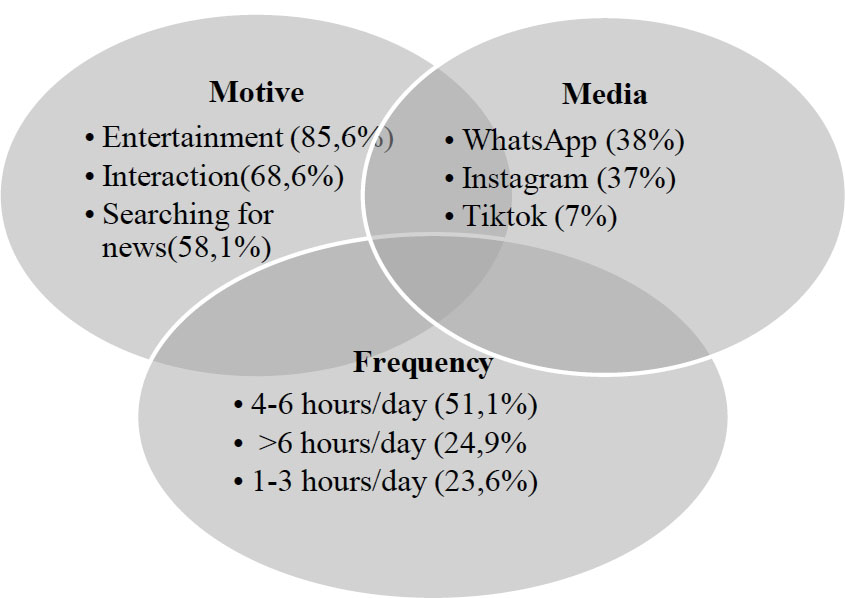
The results concerning the characteristics of digital natives’ media use in cyberspace are based on the regular observation of the intrinsic motivation for communication, its frequency, and communication on social media platforms. The survey data show a preference for synchronous communication social media, including WhatsApp, Instagram, and TikTok, enabling real-time communication with short latency. This result notably exceeds those of asynchronous platforms, such as blogs, YouTube, and online forums, as shown in Fig. (1). These data confirm Taipale’s finding that younger generations exhibit preferences for synchronous communication, such as instant messaging and internet calling, compared to asynchronous platforms, like text-based social networks, blogs, or online discussion forums [47].
Trends in social media use.
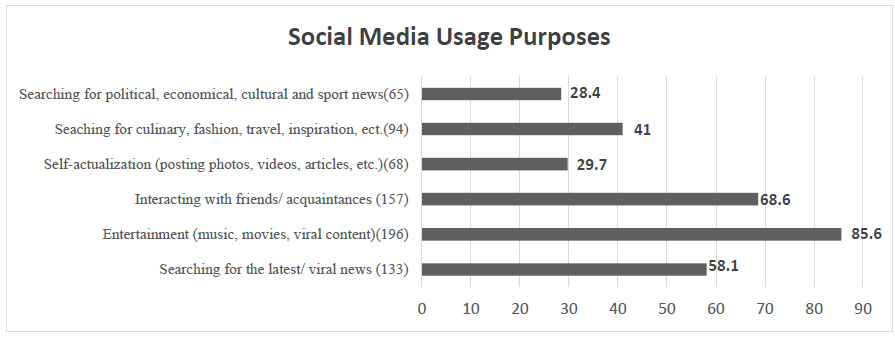
As for the motives of using social media, the following motives were the most dominant. Firstly, 85.6% of the respondents used social media for entertainment, including listening to music, watching movies, checking out viral videos, etc. In addition, 68.6% of the respondents used social media to interact with their friends or people that they already knew. Furthermore, 58.1% of the respondents used social media to be up to date with the news. Other motives were seeking inspiration, 41%, self-actualization, 29.7%, and searching for information related to political, economic, cultural and sports problems, 28.4%. The research findings show that digital natives are using social media not only for social networking and entertainment but also as a source of information and self-expression, as shown in Fig. (2).
Purposes of accessing social media.
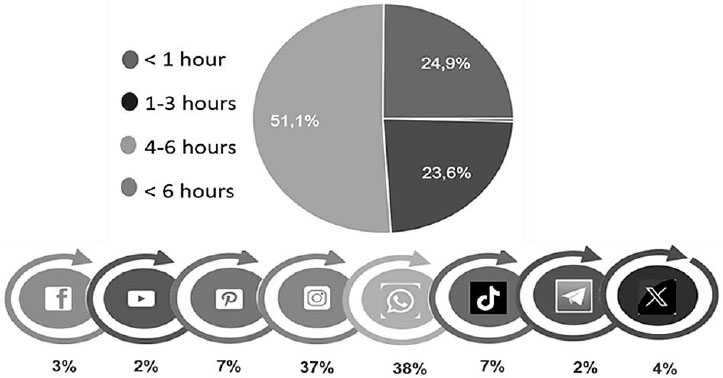
The types of information that digital natives most frequently accessed through social media are the categories associated with entertainment, such as movies, games, videos, music, and others, with a rate of 92.5%. Other important categories were educational ones (67.5%), followed by video explanations or tutorials (53.5%), economy, politics, and culture issues (47.8%), and sports news (13.6%) and religion-based information (11.4%). The most used social media platform among digital natives is WhatsApp (38%) followed by Instagram (37%), TikTok (7%), and some other platforms with a low percentage. The fact that the majority of social media users (51.1%) browse for four to six hours a day on social media indicates that people tend to use social media very often. 23.6% of the users spend one to three hours a day on social media, while 24.9% spend over six hours. The results of this study, shown in Fig. (3) that digital natives mostly appreciate digital platforms as main sources of information and entertainment.
Frequency of social media use.
Respondents’ online personas were made up of their online posting, responding, and engagement activity. To understand these aspects, the CTI-informed study directed by Hecht [20] who identified a model that maps identity through the four interrelated levels of communication -personal, enacted, relational, and communal-and these levels are still applicable in online settings (Table 1).
| Social Media Update (text, photos, videos, etc.) on Social Media | >10 Times a Day 2% |
3 - 5 Times a Day 5.2% |
2 -3 Times a Day 10% |
Several Times a Week 28% |
Several Times a Month 24% |
Very Rarely 30.6% |
|---|---|---|---|---|---|---|
| Comment on other people's content | >10 times a day 2.2% |
3 - 5 times a day 2.2% | 2 -3 times a day 2.6% |
several times a week 28.5% | several times a month 12.7% | very rarely 51.8% |
| Most frequently viewed content | Self-expression 29.4% | Personal activities 37.3% | Achievements/works 4.8% |
Personal values and perspectives 4.8% | Informational and motivational quotes 8.3% |
Entertaining content (memes, funny videos, etc.) 15.4% |
| Reasons for posting on social media | Building a personal image 67.8% | showing achievements 8.4% | inspiring others 16.7% | Poplarity 7% | ||
| Your social media post aligns with real-life conditions. | Strongly Agree 22.4% |
Agree 59.6% |
Disagree 17.1% | Strongly Disagree 0.9% | ||
| Consider self-image before posting. | Always 59.6% | Sometimes 38.6% | Never 1.8% | |||
| most frequently displayed on social media | Selfie/personal photos/videos 38.2% |
Hobby photos/videos 33.8% |
Reflective statuses 9.6% |
Sharing information 18.4% |
||
| Consider people's comments on your posts. | Always 34.2% | Sometimes 53.1% | Never 12.7% | |||
| People's comments influence how you present yourself on social media | Always 21.7% | Sometimes 60.6% | Never 17.7% | |||
The majority of digital natives (30.6%) rarely published or commented on social media content, such as posts, status updates, photos, and videos. Only 2% of respondents reported uploading content more than ten times per day. In comparison, 5.2% posted three to five times daily, while 10% posted two to three times per day. Approximately 28% of respondents uploaded content several times a week, whereas 24% did so only a few times per month. Personal day-to-day activities (37.3%) were the most frequently shared content, followed by self-expression in photos, videos, personal written posts, and sharing personal ideas and thoughts (29.4%), and finally entertainment-related material, e.g., memes and funny videos (15.4%). The desire to create “who I really believe that I am” and to be recognized as a specific image (67.8%), similarly highlighted in visual and textual postings, emerged as respondents’ primary rationale for content selection.
Findings from the current study show that 59.6% were high in self-image mindfulness before posting on social media. The types of posts analyzed and their respective order of frequency were as follows: personal content, e.g., photos and selfie videos (38.2%), hobby-related content (33.8%), informative, i.e., posts with reference information, science or news articles, features and blogs, or other informational posts (18.4%), and reflective status updates (9.6%). The mindfulness score computed from the SIPSIMT-SF in the current study showed that 59.6% were high in self-presentation mindfulness before posting on social media.
Then, 53.1% of participants admitted that they “sometimes” (53.1%) and 34.2% “always” considered comments on social media before posting an item. Furthermore, 82.3% of respondents replied that those comments determined their online self-presentation.
4.2. Online Harassment Pattern
Respondents in this research identified specific platforms that are shown in Fig. (4) are more prone to online violence. TikTok (30.6%), Instagram (27.7%), and Twitter/X (17.5%) were reported as the social media platforms where online harassment, including hate speech, technology-facilitated sexual harassment, and threats of physical violence, is most likely to occur. Respondents also identified Instagram (23%), TikTok (18.4%), Twitter/X (9.7%), and WhatsApp (7.7%) as platforms where cyberbullying, including insults, impersonation, or spreading false information and harmful content such as hoaxes, defamation, or doxing, occurs most frequently. Twitter/X (37.4%), TikTok (34.6%), and Instagram (13.2%) were reported as platforms where suicide tendention, self-harm encouragement, and extreme or graphic violent content are most likely to occur.
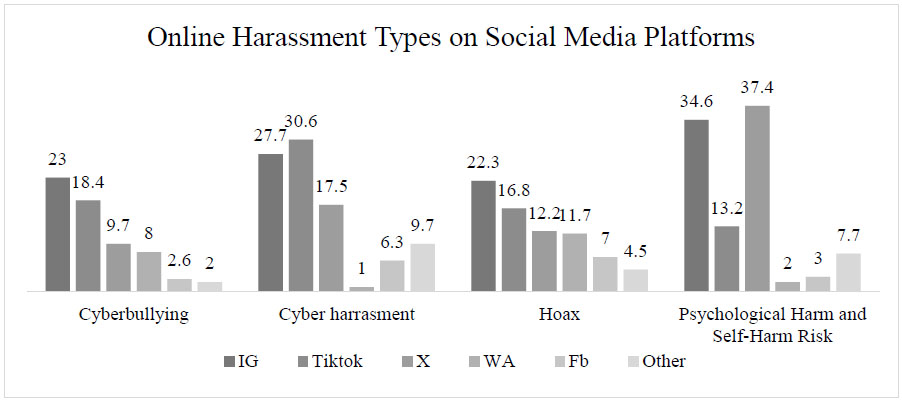
Social media platforms and online harassment types.
Figure 5 illustrates the frequency of online harassment among Indonesian digital natives, with psychological harm and exposure to harmful content being predominant at 67.42% and 61.4%, respectively. Physical threats constitute the lowest percentage at 11.6%, although sexual harassment ranges from 17.8% to 35.2%, and the distribution of harmful information varies between 21% and 30%. These statistics are concerning as they reveal the susceptibility of the younger generation to enduring psychological consequences, such as depression, despite the low incidence of physical threats.
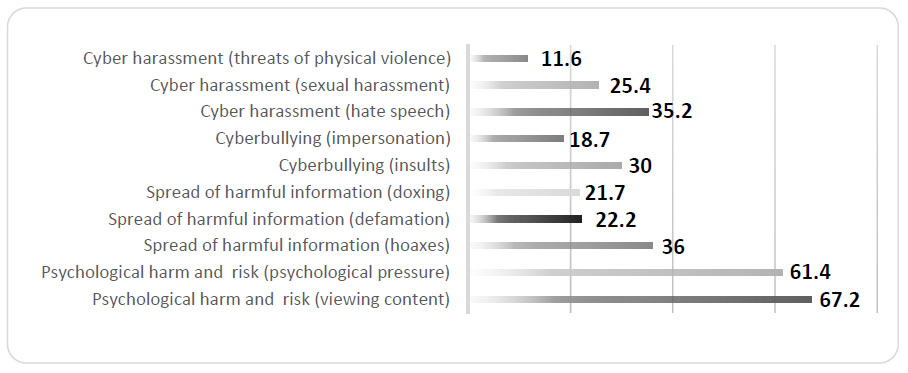
Forms of online harassment on social media against Indonesian digital natives.
The series of questions was developed to capture respondents' lived experiences in confronting various forms of online harassment, such as;
Ex…(23) Have you ever been subjected to hate speech on social media (e.g., derogatory remarks, discriminatory language, blasphemous expressions, or insults)?
Ex…(27) Have you ever experienced sexual harassment on social media (e.g., messages, comments, inappropriate sexual images, or requests to send explicit images)?
Ex….(35) Have you ever been subjected to threats of physical or psychological violence via social media?
Ex…..(42) Have you ever been subjected to bullying on social media? If so, how many times have you experienced online bullying within the last six months?
Ex….(45) Have you ever been subjected to the following types of insults or ridicule?
Ex….(48) Have you ever been subjected to social media account impersonation (such as a fake account created using your name and photo)?”
Ex….(50) Have you ever been subjected to hoaxes, doxing, on social media (multiple responses allowed)?
Ex……(55) Have you ever been subjected to defamation on social media?
Ex……(65) Have you ever encountered content on social media or online platforms that addresses or encourages suicide or self-harm?
Additionally, 35.2% of respondents indicated that they have been a victim of cyber harassment, with hate speech on social media being the most frequent victimization. Such hate speech involved abusive language, disparaging remarks, discriminatory comments, profane references, and personal insults. The underlying factors identified as triggers included physical appearance (21.5%), ethnic or racial background (15.6%), gender (13.3%), religion (8.1%), sexual orientation (5.2%), and other contributing reasons, as shown in Fig. (6).
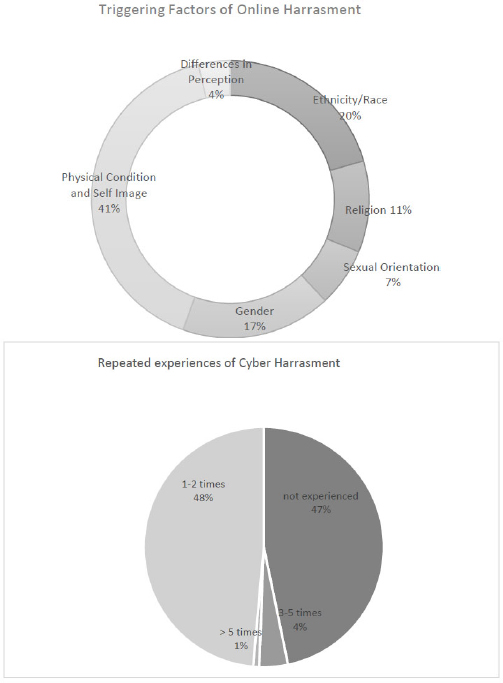
Ground and repeated experiences of cyber harassment.
Persistent types of cyberharassment reported in this study included negative comment spamming (4.9%), sending the same provocative message repeatedly (5.4%), posting material hurtful to the victim (2.2%), encouraging others to harass the victim (4.5%), and other forms (3.6%). The most frequent period for persistent harassment to occur was less than 1 week (20.7%), over 1 month (9.5%) and 1-4 weeks (2.8%) (Fig. 6).
Online threat occurrence has seemed like an important aspect of the results for both physical and psychological online threats the respondents experienced or witnessed while using social media. Exposure to doxing was 7.9%, threats of physical violence were 2.3%, threats against family members were 3.2%, and other threats were 1.4%. Those behind the threats were mainly anonymous (25.8%), strangers (25.8%), and, to a lesser extent, acquaintances (3.3%). The phenomenon of cyberstalking was also identified through respondents’ experiences of being intensively monitored by perpetrators via social media. Forms of cyberstalking included persistent commenting on victims’ posts, repeated messaging despite being ignored, following the accounts of victims’ friends and family, saving and reusing victims’ photos or videos, and using multiple accounts to track victims’ online activity.
The majority of respondents who experienced various forms of cyber harassment, including hate speech, online sexual harassment, repeated harassment, threats of physical or psychological violence, and cyberstalking, chose not to report the incidents to digital platforms or relevant authorities (82%). Only 17.4% of respondents reported the incidents they encountered. The study has also identified forms of cyberbullying against digital natives, such as public insults, mockery, social isolation in digital environments, or impersonation and digital identity violation. Approximately 30% of the respondents said they had been subjected to public insults or ridicule (cyberbullying), and 18.7% reported impersonation, such as fake accounts pretending to be them or someone else.
4.3. Psychological Impact and Mitigation Perception
In terms of how the respondents felt about the security provided by the social media platforms, the findings revealed that the social media platforms remain largely ineffective in the prevention and response to different forms of cyberbullying, including mockery, insults, and impersonation (fake accounts). The different forms of cyberbullying that the respondents received via social media include: being belittled (21.1%), being threatened with physical harm (13.1%), hearing derogatory statements about specific identities (6.6%), and child shaming (3.3%). The majority of the participants, about 30.5%, chose to ignore the cyberbullying they received. Other coping strategies included blocking the offenders (20.1%), and reporting the cases on the social media report page (8.5%).
Turning to psychological effects, it varied based on the reactions of the victims and the gravity of the incidents. Around 5.5% of the respondents have experienced serious stress and depression, 13.4% have felt emotionally disturbed as they continued to recall the incidents, and 31.7% have reported mild psychological disturbance. In addition to verbal and visual types of abuse, the study also noted the occurrence of digital violence in the form of the dissemination of harmful information, which included hoaxes or disinformation, defamation, and doxing (unauthorized disclosure of personal data). The section below presents the results of the analysis of the respondents’ answers, which, in a way is a reflection of the prevalence of information-based violence on social media. A total of 15.8% of the respondents reported having received harmful information or fake news at least once in the past six months. On the other hand, 15.3% of the respondents said they encountered fake news two to three times over the same period. The most prevalent categories of hoaxes were groundless allegations (22.9%) and misinformation (20.1%). In addition to being exposed to fake news, the study has also looked at the respondents’ experiences in terms of defamation on social media.
The results show that strangers (36.1%) and false or anonymous accounts (20.6%) were the most common identified sources of online sexual harassment. Other victims identified harassers from their immediate social circles, such as friends or acquaintances (6.2%), and an additional 37.1% pointed out other actors. In response to online sexual harassment, the majority of respondents chose to block the perpetrator’s account (44.4%), ignore the incident (24.2%), report it to the digital platform (23.2%), share their experience with others (13.1%), or take other actions (28.3%). Approximately 14.3% of respondents reported experiencing severe psychological impacts from online sexual harassment, while 22.4% experienced moderate impacts and 28.6% reported mild impacts.
It is worth noting that in the case of defamation, the respondent was more likely to be targeted by their friends or acquaintances (11.9%) than by a stranger (7.4%). This is different from the previously discussed online violence in the form of hate speech and cyberbullying, in which the offender in most cases was an unknown person. In terms of psychological impact, the above-mentioned forms of online violence are no less serious than traditional violence. Plan International noted that online violence and misinformation can have systematic damaging effects on mental health, feelings of safety, and self-confidence [44]. In this context, the effects, to which respondents, as victims of online violence on social media, were exposed, is described in the following figure by the distribution of the degree of psychological discomfort they have received. Details of psychological impact on online harassment survivors are presented in Fig. (7).
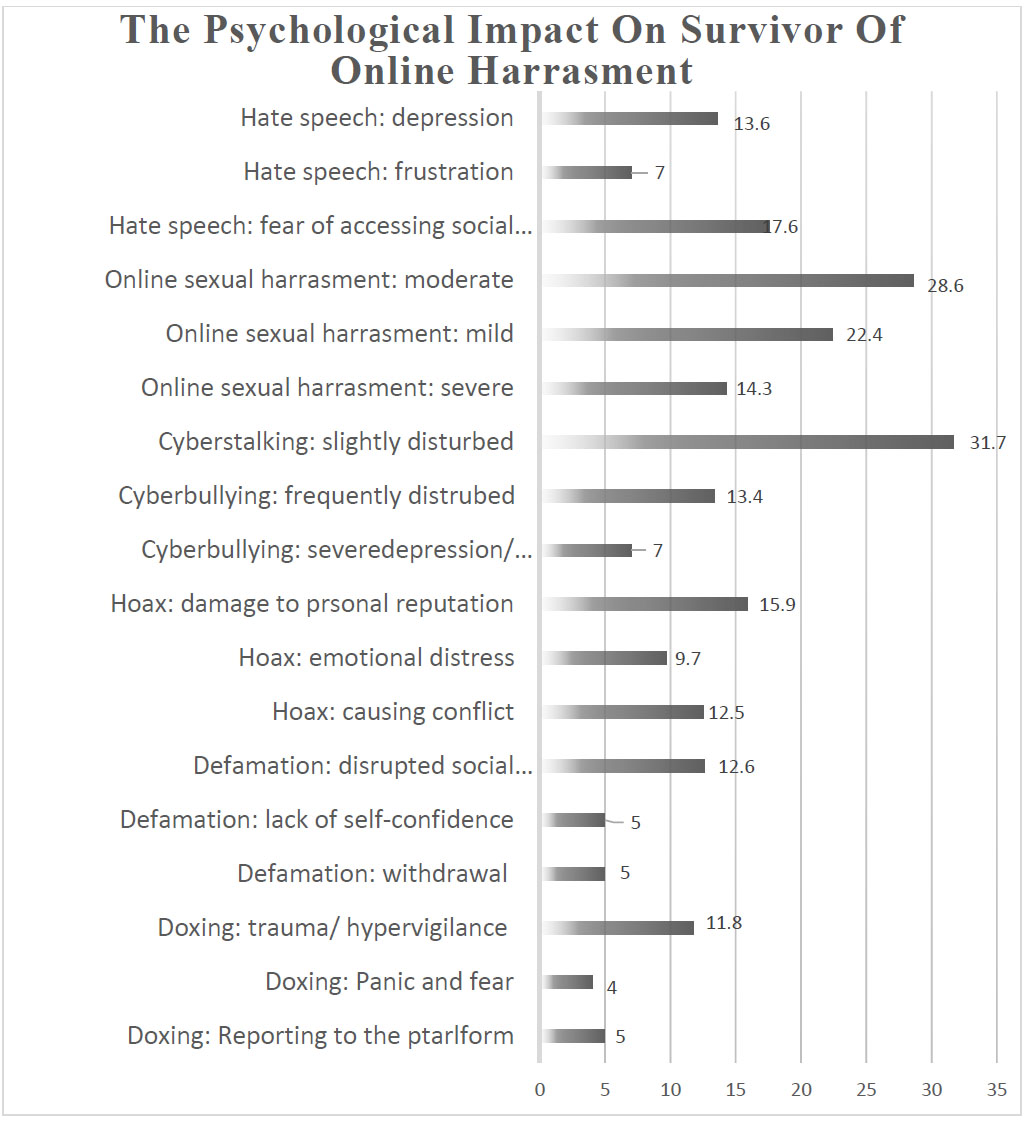
Online harassment psychological impact.
The psychological impact of online violence was reported, with 17.6% of respondents fearing social media use, 13.6% feeling sadness and depression, 6.4% experiencing anger and frustration, and 8.8% reporting other emotional impacts. In addition, 25.4% had faced sexual harassment on social media, including sexually suggestive messages (26.3%), explicit comments (6.8%), obscene images or videos (24.6%), and requests for indecent content (13.6%).
Findings of the impact of online violence showed that, in addition to psychological disturbances, the experience also manifested in changes in the online behavior of the victims. When asked about the reactions they experienced as a result of online hate speech exposure, some victims reported different psychological reactions such as fear of accessing social media (17.6%), feelings of sadness or depression (13.6%), and anger and frustration (6.4%). In the case of online bullying experiences, victims reported different levels of psychological disturbances, from the continuous recollection and feeling bad about what they experienced (13.4%), mild psychological disturbance (31.7%), to extreme stress and depression (5.5%) (Fig. 7).
Accordingly, the authors of the study emphasize the need for additional investigation into the respondents’ experiences concerning exposure to the triggering digital content of self-harm or suicide. This evidence is in line with the results of Alavi et al. [48], which pointed to the history of being bullied as one of the primary predictors of suicidal ideation among adolescents. The experiences of being the target of bullying were related to the elevated risk of suicidal thoughts and other psychological disorders.
In addition, online content that contains graphic visual or textual material regarding suicide or self-harm can negatively impact vulnerable individuals, particularly adolescents and young adults. Exposure to this content, even in the form of viewing or reading, can result in psychological distress and increased suicidal ideation, especially in individuals with a history of trauma or pre-existing mental health conditions [49]. Respondents’ experiences and reactions to self-harm–related content and the psychosocial stress from online bullying are presented in the following paragraphs.
Suicide-related exposure was prevalent within the study sample. 51.8% of participants reported hearing or reading stories about suicide, 45.6% had seen photos or videos of self-harm, and 29.5% reported seeing comments or statements that expressed nihilism or discouragement. Social media exposure to this content can often create significant emotional distress and be particularly burdensome for those with a previous psychological history. Emotional responses to such exposure were measured as well; the majority of respondents reported experiencing feelings of sadness and discomfort (50.8%), 7.4% reported increased anxiety, 1.6% of respondents admitted to being triggered to think about the same thing (suicidal ideation), and 1.1% reported even developing a desire to self-harm after such exposures.
The psychological impact of online harassment is shown in Fig. (8). These findings confirm that digital interactions, especially on social media platforms, serve not just as a means of communication but also as an environment capable of inducing significant psychological distress. Explicit or highly emotional content might elicit adverse reactions, particularly when encountered frequently or during periods of psychological vulnerability. Consistent with these findings, prior research by Sedgwick et al. [49] highlighted that exposure to suicide-related content on the internet can exacerbate suicidal ideation among teenagers and young adults, especially those with a history of trauma, bullying, or mental health issues.
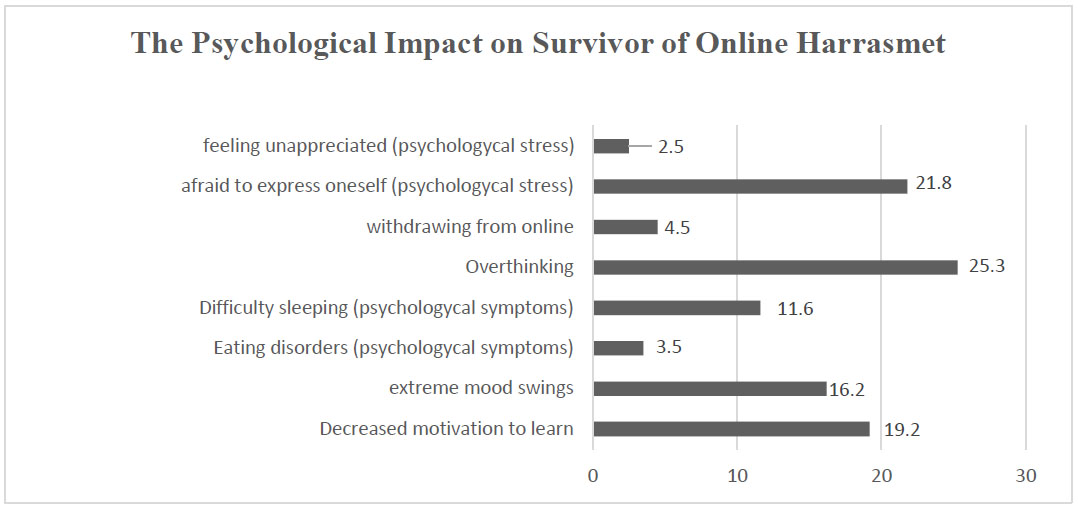
Psychological impact of online harassment.
Then, from the aspect of cyber harassment, exposure to social networks had an important impact on the digital-native participants’ mental health. The percentage of these people who said that thinking (as worrying), was causing them psychological pressure reached to 22.8. It was 21.8 when it comes to worrying about sharing too much personal information or telling personal stories online. In contrast, those (only 4.5%) liked to cut all connections after exposure to violent videos on social media. As a result of the above-stressed general psychological conditions, some specific clinical psychological symptoms resulting from this stress were also studied, such as lack of motivation for studying or daily activities (19.2%), very frequent mood changes (16.2%), difficulties in sleeping or even insomnia (11.6%), and eating disorders (3.5%) (Fig. 8).
From this result, we can notice that even though social media was initially developed to enhance inclusiveness and free virtual communication, overindulgence in virtual modalities could cause emotional detachment and impair authentic human connectivity. This echoes Turkle, who warns that social media not only changes the way we interact but also the quality of our emotional relationships and our deeper self-awareness in everyday life [50]. On the other hand, Prensky argues that students could develop certain types of communication skills in virtual settings that might become transferable to their real life [46].
In terms of how safe the respondents felt using social media, the results show that 17.2% of respondents reported feeling unsafe while browsing social media, while 72.9% reported feeling less safe while using social media to connect with people. However, the study also uncovered a contradiction: 77.2% of people reported having experienced violence and harassment online. In other words, while the most common response was that people generally felt “moderately safe,” they were not naïve about the challenges of platform-based protection. Moreover, more than 60% of respondents believe most people still don’t know enough about the risks of harassment and violence on social media. These results point to the need to continue strengthening digital literacy and collective awareness of ethics and user protection in digital spaces, especially among digital natives.
Similarly, other studies have also underlined that although social media is a tool for communication, it also has potential dangers regarding the mental health of younger users. For example, the Suicide Prevention Resource Center showed that “material that glamorizes or romanticizes suicide or self-harm, in social media may heighten at-risk persons’ emotional fragility and increase the probability of such behavior”. In turn, Harari warned that the twenty-first-century digital society is facing a “tsunami” of information but a scarcity of meaning and, as a result, people may develop coldness and a lack of compassion for others’ suffering in online spaces. Drawing from the thematic analysis of the open questions in our survey, our participants agree that these psychosocial disturbances must be addressed by a dual approach, combining both individual accountability and structural support.
On an individual level, a high degree of digital literacy should be encouraged: digital natives should be taught to be reflexive about their actions online, how they feel, and how to balance their online and offline life. Respondents also suggested that schools should take on the responsibility of educating students about digital literacy and emotional resilience to better prepare them to navigate the online space more consciously and confidently. Another suggestion was for platforms and policymakers to collaborate in implementing effective reporting mechanisms, promoting algorithm transparency, and establishing community guidelines that prioritize user well-being and minimize exposure to harmful content. Additionally, some respondents advocated for the idea of digital detox practices or designated screen-free zones to promote a healthier balance between online and offline interactions, potentially fostering more authentic social connections and emotional well-being. In short, reducing the psychosocial consequences of online violence will likely require a combination of technological interventions and a cultural shift towards more empathetic, mindful, and humane online behavior.
We acknowledge that this study has limitations, yet it offers insight into the patterns of online harassment that digital natives experience as the dominant media consumers. Initially, it is important to note that this study does not encompass the entire demographic. Consequently, we suggest that additional studies be conducted on other demographics, such as elderly users. Secondly, we recognize that, because participants were recruited through voluntary online distribution in university messaging groups and on social media, the sample is non-probability and may overrepresent students who are more active online or more willing to report harassment. This sampling approach limits the generalizability of prevalence estimates to the broader population of Indonesian youth. Future studies should use probability sampling or stratified recruitment across institutions to enhance representativeness. In addition, qualitative research can also be a viable alternative for documenting the strategies used by online harassment victims who are able to survive and manage the pressure they endure.
CONCLUSION
As a closing note to this paper, it is expected that this study contributes to a more comprehensive understanding of Indonesian digital natives’ digital engagement, anchored in how affordances for self-expression may facilitate online harassment that constrains participants’ psychological well-being. We believe that the mapping of communication practices, construction of identity, and experience of harassment based on lived experiences has provided a grounded and nuanced conceptualization of how youth make sense of and navigate digital life. This study set out to answer two significant questions: (1) What are the patterns of online harassment in digital natives’ experiences in Indonesia? Moreover, (2) What are the essential ingredients that need to be in place to address online harassment?
Overall, our findings support the idea that preventing online harassment is not solely a reactive response. Instead, positive digital enablement is central. Respondents, in general, showed an understanding of online risks, but gaps in knowledge and confidence remained concerning identifying, responding to, and reporting harm. Thus, we must promote media and digital literacy as a technical skill as well as a core aspect of digital safety and ethical online practices. Developing digital resilience means providing people with concrete skills to practice privacy, think critically about content, and feel safe and empowered to report online abuse through a more user-friendly reporting channel.
The main contribution of this study lies in its multi-type, platform-level perspective that links harassment frequency and psychological-harm signals to cultural and platform affordances, offering actionable targets for moderation and education. Practically, our findings support prioritizing platform-specific moderation efforts, integrating culturally tailored digital-literacy modules into higher-education curricula, and developing peer-support systems to improve reporting and early response. Routine screening questions about online harassment exposure and psychological impact to identify at-risk students and connect them with timely support. Together, these steps can translate the cross-platform mapping presented here into targeted prevention and evaluation efforts.
Moving forward, institutional accountability and platform responsibility are still crucial baselines for the urgent advancements in internet safety. In fact, respondents as users notice an upsetting paradox: on one hand, more users express partial safety while browsing online; on the other hand, they are not having the kind of empowered personal experience that online platforms can provide in order to feel completely protected. To bridge the existing gap, social media and digital companies should work towards stricter content moderation policies and clearer reporting systems, as well as setting up hotlines or more responsive support centers for people targeted with online harassment. These efforts must also be in sync with legislators, educators, and civil society to work collaboratively in creating a safer online environment.
AUTHORS’ CONTRIBUTIONS
The authors confirm contribution to the paper as follows: K.S.: Study conception and design: S.W.T., G.L.: Data collection; V.S.: Analysis and interpretation of results; V.S., G.L.: Draft manuscript. All authors reviewed the results and approved the final version of the manuscript under the coordination of the corresponding author [V.S].
LIST OF ABBREVIATIONS
| AI | = Artificial Intelligence |
| APJII | = Asosiasi Penyedia Jasa Internet Indonesia/The Indonesian Internet Provider Association |
| CTI | = Communication Theory of Identity |
| COVID-19 | = Corona Virus Disease-19 |
| KPAI | = Komisi Perlindungan Anak Indonesia/The National Commission on Harassment Against Women and Children |
ETHICS APPROVAL AND CONSENT TO PARTICIPATE
The study has received an ethical clearance recommendation letter from the review board at the Faculty of Social Sciences Education, Universitas Pendidikan Indonesia, under letter number 0912/UN40.A2.1/PT.01.00.
HUMAN AND ANIMAL RIGHTS
All human research procedures followed were in accordance with the ethical standards of the committee responsible for human experimentation (institutional and national), and with the Helsinki Declaration of 1975, as revised in 2013.
AVAILABILITY OF DATA AND MATERIALS
The dataset is available in an online repository (https://acesse.one/gtjt90i), and access can be provided upon reasonable request by the corresponding author [V.S].
FUNDING
The study was funded in 2025 by the Directorate of Research and Community Service (DPPM) at Universitas Pendidikan Indonesia under grant number 302/UN40. D/PT.01.01 (Funder ID: 344 (University ID)).
ACKNOWLEDGEMENTS
Declared none.