All published articles of this journal are available on ScienceDirect.

Work Meaningfulness and Employees’ Intention to Stay: A Systematic Review and Preliminary Meta-Analytic Synthesis

Abstract
Introduction/Objective
Employee retention remains an important organisational concern, and work meaningfulness has been proposed as one factor that may encourage employees to remain with their organization. However, direct quantitative evidence on its association with intention to stay remains limited. This study aimed to synthesise the available quantitative evidence on the association between work meaningfulness and employees’ intention to stay through a systematic review and preliminary meta-analysis.
Methods
The review followed the PRISMA 2020 framework. Searches were conducted in EBSCOhost, Emerald Insight, ScienceDirect, and Web of Science. Four eligible studies were included in the quantitative synthesis. Effect sizes were based on zero-order correlation coefficients and synthesised using Fisher’s r-to-z transformation under a random-effects model with the Sidik–Jonkman estimator. Knapp–Hartung adjustment was applied to confidence intervals and statistical inference.
Results
The pooled association between work meaningfulness and intention to stay was positive and statistically significant (r = .526, 95% CI [.227, .734], p = .013). Substantial between-study heterogeneity was observed (Q = 48.695, p < .001; I2 = 94.38%; τ2 = .0456). The 95% prediction interval ranged from −.179 to .874, indicating considerable uncertainty in the magnitude and potential direction of the association across comparable settings.
Discussion
The findings suggest that work meaningfulness is positively associated with employees’ intention to stay, although the substantial between-study heterogeneity indicates that this association may vary across occupational and organisational contexts. The findings should therefore be interpreted cautiously given the small number of included studies and substantial between-study heterogeneity.
Conclusion
The findings provide preliminary evidence of a positive association between work meaningfulness and employees’ intention to stay. However, the small evidence base and substantial heterogeneity warrant cautious interpretation. Further primary research across diverse occupational and organisational contexts is needed to clarify the consistency and boundary conditions of this association. The findings suggest that meaningful work may be considered as one component of broader retention strategies, although the evidence does not establish a causal effect.
1. INTRODUCTION
Employee retention remains a central concern in human resource management because organisational must not only attract and develop employees but also sustain a workforce capable of maintaining organisational knowledge, continuity, and performance. Retaining experienced employees can help organisations preserve accumulated knowledge and organisational capabilities, whereas persistent employee loss may create additional demands for recruitment, replacement, and workforce development [1-3]. The retention problem is also shaped by broader employment conditions, including job insecurity and other work-related factors that may influence employees’ decisions about whether to remain with an organization [1, 4]. Consequently, understanding the factors that encourage employees to remain has become an important issue in organisational and human resource research.
Within the broader retention literature, Intention to Stay (ITS) provides a direct indicator of employees’ willingness to maintain their membership in an organisation. Earlier turnover research has shown that employees’ withdrawal intentions are associated with job satisfaction, organisational commitment, and subsequent turnover behaviour [5, 6]. However, intention to stay represents a positive orientation toward remaining rather than merely the absence of an intention to leave examined employees’ intention to stay as a distinct retention-related outcome, while identifying multiple individual and work-related determinants of nurses’ intention to remain in long-term care settings. More recent research has likewise examined intention to stay in relation to factors such as off-the-job embeddedness and continuance commitment [6-8]. Bloemer and Odekerken-Schröder [9] further conceptualised intention to stay as employees’ willingness to remain with their employer and positioned it as a form of behavioural loyalty. Taken together, this literature supports treating intention to stay as a meaningful retention-related outcome in its own right rather than simply reversing the concept of turnover intention.
Work meaningfulness has increasingly attracted attention as an important aspect of employees’ experience of work. Rather than referring simply to job satisfaction or enjoyment, meaningful work concerns the extent to which employees perceive their work as intrinsically significant and worthwhile. Martela and Pessi [10] conceptualise meaningfulness around three related dimensions: significance, broader purpose, and self-realisation, capturing both the intrinsic value of work itself and the value employees derive from expressing themselves and contributing beyond their immediate interests [10]. This broader conceptualisation is important because meaningful work remains a contested and multidimensional construct, with different studies emphasising different sources and consequences of meaningfulness [11-13]. Empirical research has linked meaningful work with a range of positive employee outcomes, including work attitudes, engagement, well-being, and employees’ decisions about whether to remain or leave their organisations [12-15]. These findings suggest that meaningfulness may be relevant not only to how employees experience their work but also to their longer-term relationship with the organisation.
Several theoretical perspectives provide complementary explanations for why work meaningfulness may be associated with employees’ intention to stay. Job Characteristics Theory proposes that skill variety, task identity, task significance, autonomy, and feedback create conditions through which employees can experience their work as meaningful and develop positive work motivation [16]. Recent evidence continues to support the relevance of job characteristics for meaningful work, while also indicating that the experience of meaningfulness depends on both work conditions and individual psychological conditions [17]. Self-Determination Theory provides a complementary motivational perspective by proposing that autonomy, competence, and relatedness are basic psychological needs that support self-motivation and well-being [18, 19]. Research applying this perspective to meaningful work has similarly highlighted the relevance of autonomy, competence, relatedness, and social purpose in understanding how employees experience meaning in their work [20]. Contemporary research applying SDT to meaningfulness and turnover-related outcomes further suggests that meaningful work can contribute to employees’ decisions about whether to remain or leave [21]. The Job Demands–Resources model adds a work-environment perspective by positioning meaningful work within a motivational process in which job resources can foster meaningfulness and engagement [22], which may subsequently contribute to intention to stay [23]. Finally, Social Exchange Theory provides an organisational-relational explanation, whereby favourable experiences and resources within the employment relationship may generate reciprocal responses and stronger attachment to the organisation [24]. These perspectives are therefore complementary: job characteristics describe potential sources of meaningfulness, SDT explains its motivational significance, JD-R situates meaningfulness within the broader work environment, and SET highlights the relational context in which positive work experiences may be translated into organisational attachment. The present meta-analysis does not test these mechanisms independently; rather, it synthesises the empirical association between work meaningfulness and intention to stay.
Although intention to stay and turnover intention are related retention constructs, they represent different orientations. Turnover intention reflects an employee’s intention or willingness to leave an organisation, whereas intention to stay reflects a positive orientation towards maintaining organisational membership. Therefore, intention to stay should not be interpreted simply as the absence of turnover intention, but as a distinct retention-related attitude.
Empirical research has examined meaningful work in relation to employees’ retention-related attitudes across a range of occupational and organisational settings. Studies have linked meaningful work with positive work attitudes and employee persistence, although the specific pathways and outcomes examined have varied. Willemse and Deacon (2015), for example, reported associations between experiencing a sense of calling, meaningful work, and teachers’ work attitudes [13], while Mostafa (2021) examined meaningfulness in relation to work–family conflict and emotional exhaustion [14]. More directly related to retention, Oprea et al. (2022) found that meaningful work and work engagement played mediating roles in the relationship between job crafting and employees’ intention to leave [15]. Wang et al. [25] likewise linked work meaningfulness with persistent behaviour, suggesting that meaningfulness may influence employees’ willingness to sustain their involvement in work. Together, these studies provide broader evidence that meaningful work is relevant to employees’ work attitudes, engagement, persistence, and withdrawal-related decisions. This broader evidence is also reflected in a previous meta-analysis of meaningful work, which synthesised associations with multiple work and well-being outcomes, including withdrawal intentions [26]. However, such broad outcome-level evidence does not provide a focused pooled estimate of the direct association between work meaningfulness and employees’ intention to stay.
More direct evidence has examined the association between meaningful work and intention to stay. Aboobaker et al. [27] reported that meaningful work was associated with intention to stay among private-sector higher-education teachers in India, with the relationship examined within a Self-Determination Theory perspective. Aboobaker et al. [28] similarly examined meaningful work and intention to stay among employees in Indian educational institutions, drawing on Social Exchange Theory to explain how meaningful work and connectedness may contribute to pro-organisational responses [28]. Popaitoon [29] examined Generation Z employees in Thailand and found that job characteristics such as skill variety, autonomy, and task significance were related to experienced meaningfulness and intention to stay [29]. Sánchez-Cardona et al. [23] examined employees in Puerto Rico using the Job Demands–Resources framework and found that meaningful work formed part of a motivational process linking job resources and work engagement with intention to stay [23]. These studies provide direct empirical grounds for expecting a positive association between work meaningfulness and intention to stay, but they also differ in theoretical framing, occupational composition, geographical setting, and measurement approach.
Despite this growing body of evidence, the relationship between work meaningfulness and intention to stay may not be equally strong across employees and organisational settings. Meaningfulness can be experienced differently according to the nature of work, professional identity, work demands, opportunities for autonomy, and the extent to which employees can see the broader value of their contribution [7, 13, 14]. Differences in job characteristics and individual conditions may likewise shape how employees respond to meaningful aspects of their work [30-32]. Recent research has continued to examine meaningful work in relation to organisational support and well-being-oriented HR practices, suggesting that organisational conditions may shape whether meaningful work is sustained and translated into retention-related outcomes [33, 34]. This variation is also evident in the studies considered in the present review. The four studies were conducted in different occupational and geographical settings and used different measures of work meaningfulness and intention to stay. They also approached the relationship from different theoretical perspectives: Self-Determination Theory in Aboobaker et al. [27], Social Exchange Theory in Aboobaker et al. [28], Job Characteristics Theory in Popaitoon [29], and the Job Demands–Resources model in Sánchez-Cardona et al. [23]. Although these studies generally point toward a positive association, their differences in measurement, population, context, and theoretical framing make it difficult to determine from individual studies alone how strong and consistent the association is across settings.
The existing evidence, therefore, leaves an important quantitative question unresolved: how strong is the overall association between work meaningfulness and employees’ intention to stay when findings from different studies and contexts are considered together? Previous research has provided valuable theoretical and empirical explanations, but the direct association has remained dispersed across individual studies rather than being synthesised into a pooled estimate. A focused meta-analysis can address this gap by integrating the available correlation-based evidence while accounting for differences between studies. Such a synthesis can also clarify whether the observed positive association is sufficiently consistent across contexts or whether substantial between-study variation needs to be taken into account.
Accordingly, this systematic review and meta-analysis aimed to synthesise the available quantitative evidence on the association between work meaningfulness and employees’ intention to stay. The study estimated the pooled association across eligible studies and examined between-study heterogeneity, the stability of the pooled estimate through leave-one-out sensitivity analyses, and potential small-study effects. By bringing together evidence from different occupational and geographical settings, this review seeks to provide a quantitative estimate of the association while maintaining appropriate caution regarding its generalisability and interpretation [2, 3].
1.1. Study Purpose
This study aimed to synthesise the available quantitative evidence on the association between work meaningfulness and employees’ intention to stay. Specifically, it sought to estimate the pooled association across eligible studies, assess between-study heterogeneity, and examine the stability of the pooled estimate through sensitivity and influence analyses. The guiding research question was: What is the overall association between work meaningfulness and employees’ intention to stay across the available empirical evidence?
2. METHODS
2.1. Review Design
This study was designed as a systematic review with a preliminary meta-analytic synthesis. The reporting followed the PRISMA 2020 statement [35]. Because the number of eligible studies was small, the meta-analytic results are presented as an initial estimate rather than a definitive summary of the field.
2.2. Protocol and Registration
The review protocol and study procedures were publicly registered on the Open Science Framework (OSF) on 20 May 2024 (https://osf.io/4f5cx/). The registration describes the review scope, study design, eligibility criteria, data extraction procedures, and planned meta-analytic approach. Because the registration was completed following analysis of the data, it is reported as a transparent record of the review procedures rather than as prospective preregistration.
2.3. Search Strategy
A systematic literature search was conducted in April 2024 using four electronic databases: EBSCOhost, Emerald Insight, ScienceDirect, and Web of Science. These databases were selected to provide coverage across multidisciplinary, management, organisational, and applied social science literature relevant to work meaningfulness and employee retention. The search strategy was developed using the PEO framework (Table 1), with employees as the population, work meaningfulness as the exposure, and intention to stay as the outcome. The search terms combined variations of work meaningfulness and intention to stay using Boolean operators, as detailed in Table 2. Database-specific search terms were adapted to the syntax and indexing conventions of each database while retaining the two core concepts. The database-specific search terms and the number of records retrieved from each database are reported to facilitate reproducibility.
| Population | Exposure | Outcome |
|---|---|---|
| Employees | Work meaningfulness | Intention to stay |
| Database | Search terms | Result |
|---|---|---|
| Web of Science | “Work meaningful” OR “Meaningful work” AND “Intent to stay” | 301 |
| Emerald Insight | “Work meaningful” OR “Meaningful work” AND “Intent to stay” | 285 |
| ScienceDirect | “Work meaningfulness” OR “Meaningful work” AND “Intention to stay” | 439 |
| EBSCOhost | “Work meaningful” OR “Meaningful work” AND “Intent to stay” | 350 |
| Total | - | 1,375 |
The searches were conducted without restricting the search to a particular occupational group, while records were limited to English-language publications at the eligibility stage. All retrieved records were exported to Zotero for initial duplicate management and subsequently imported into Rayyan for screening. Citation searching of reference lists and forward citation tracking were not conducted systematically beyond the database searches. Grey literature was not included because the review focused on peer-reviewed empirical studies with sufficient methodological and statistical information to support quantitative synthesis. Scopus and other potentially relevant databases were not searched because access was not available to the review team. This limitation may have reduced the comprehensiveness of the search and is considered when interpreting the small evidence base.
2.4. Inclusion and Exclusion Criteria and Data Extraction
Studies were included if they were published in English, examined employees’ work meaningfulness and intention to stay, provided quantitative evidence that allowed the extraction or calculation of an effect size, and were available in full text. Studies that did not meet these criteria were excluded.
For each eligible study, data were extracted on the first author, publication year, country, participant characteristics, sample size, occupational group, measures used to assess work meaningfulness and intention to stay, reported reliability coefficients, and the zero-order correlation between work meaningfulness and intention to stay. The extracted data were subsequently checked against the original full-text reports before the quantitative synthesis, with particular attention to sample size, measurement instruments, reliability coefficients, and the zero-order correlation used as the effect size. The verification and correction of extracted study information are provided in Supplementary Table S1.
2.5. Study Selection and Quality Assessment
The study selection process followed the PRISMA 2020 framework. Following duplicate removal, records were screened by title and abstract, followed by full-text assessment of potentially eligible reports. Two reviewers independently screened the titles and abstracts and subsequently assessed the full texts of potentially eligible reports. Disagreements were discussed between the reviewers and resolved by consensus before the final inclusion decisions were made.
Methodological quality was assessed using the Joanna Briggs Institute (JBI) Critical Appraisal Checklist for Analytical Cross-Sectional Studies [36]. The appraisal considered the clarity of inclusion criteria, description of participants and setting, measurement of exposure and outcomes, identification and management of confounding factors, strategies to address confounding, and appropriateness of statistical analysis. The JBI appraisal was conducted by one reviewer and was used to inform the interpretation of the methodological strengths and limitations of the included evidence rather than to determine study weights in the meta-analysis.
2.6. Data Analysis
The effect size used in this review was the zero-order correlation coefficient (r) between work meaningfulness and intention to stay. Correlations were transformed to Fisher’s z before synthesis and back-transformed to r for interpretation. A random-effects model was fitted using the Sidik–Jonkman estimator because the included studies differed in participants, occupational settings, geographical contexts, and measurement approaches, making variation in the underlying association across studies plausible. Given the small number of included studies, confidence intervals and statistical inference were additionally adjusted using the Knapp–Hartung method.
Statistical heterogeneity was assessed using Cochran’s Q, I2, and τ2. A 95% prediction interval was also calculated to indicate the range within which the underlying association might be expected in a comparable setting. Study-level random-effects weights were examined as part of the synthesis. The pooled estimate and confidence interval were back-transformed from Fisher’s z to the correlation (r) scale for presentation and interpretation.
Leave-one-out sensitivity analyses were conducted by sequentially removing each study and recalculating the pooled association using the same random-effects specification. Influence diagnostics were examined to identify potentially influential observations, including studentised residuals and Cook’s distance. Because only four studies were included, formal moderator analyses were not conducted.
Potential small-study effects were assessed using a funnel plot and the Begg–Mazumdar rank correlation and Egger’s regression tests. Given the small number of studies (k = 4), these assessments were treated as exploratory and were not considered conclusive evidence for or against publication bias. All analyses were conducted using Jamovi version 2.4.7.0. Detailed data extraction and meta-analytic inputs for the included studies are presented in Supplementary Table S2.
3. RESULTS
3.1. Study Distribution Data
The database search identified 1,375 records. from four databases: EBSCOhost (n = 350), Emerald Insight (n = 285), ScienceDirect (n = 439), and Web of Science (n = 301). After duplicate removal in Zotero, 999 records remained. A further three duplicate records were identified and removed in Rayyan, leaving 996 records for title and abstract screening. Of these, 991 records were excluded at the title and abstract stage, and five reports were sought for full-text assessment. All five reports were retrieved and assessed for eligibility. One report was excluded because it was not an empirical study, resulting in four studies [23, 28, 29, 37] being included in the final review and meta-analysis (Fig. 1).
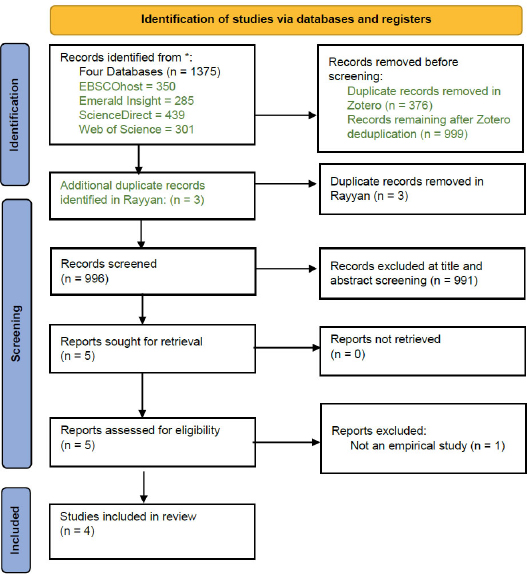
PRISMA 2020 flow diagram showing the selection process of studies included in the review.
3.2. Characteristics of the Included Studies
The four included studies were published between 2019 and 2022 and represented samples from India, Thailand, and Puerto Rico. Work meaningfulness was measured using instruments developed by Arnold et al. [38], May et al. [39], and Milliman et al. [40]. Intention to stay was measured using scales by Price and Mueller [41] and Bloemer and Odekerken-Schröder [9]. Sample sizes ranged from 217 to 746 participants. The studies included teachers and general employees and examined the association between work meaningfulness and intention to stay using established measurement instruments. The reported zero-order correlations ranged from .366 to .674 and were positive across all four studies. Aboobaker et al. [27] examined teachers in India, whereas Aboobaker et al. [28] examined general employees in India. Popaitoon [29] examined general employees in Thailand, and Sánchez-Cardona et al. [23] examined general employees from organizations in Puerto Rico. The characteristics of the included studies and the effect sizes extracted for the meta-analysis are presented in Table 3.
| Study | Country | Participants | WM Measure | ITS Measure | N | r | SE (z) | WM Reliability | ITS Reliability | Source Page/table |
|---|---|---|---|---|---|---|---|---|---|---|
| Aboobaker et al. [27] | India | Teachers | Milliman et al. | Bloemer and Odekerken-Schröder | 350 | .674 | .054 | α = .875 | α = .910 | p. 6, Table I |
| Popaitoon [29] | Thailand | General employees | May et al. | Price and Mueller | 746 | .620 | .037 | α = .93 | α = .87 | p. 7, Table 2 |
| Aboobaker et al. [28] | India | General employees | Milliman et al. | Bloemer and Odekerken-Schröder | 308 | .366 | .057 | CR = .833 | CR = .952 | p. 217, Table II |
| Sánchez-Cardona et al. [23] | Puerto Rico | General employees | Arnold et al. | Price and Mueller | 217 | .380 | .068 | α = .86 | α = .86 | p. 9, Table 1 |
3.3. Quality Assessment of Included Studies
Table 4 summarises the methodological appraisal of the four included studies using the JBI criteria. Overall, all four studies were considered suitable for inclusion. The studies generally provided clear descriptions of their participants, settings, measurement procedures, and statistical analyses. However, the reporting and treatment of potential confounding factors varied across studies. These methodological differences were considered when interpreting the pooled evidence.
| JBI Appraisal Item | Aboobaker et al. [27] | Popaitoon [29] | Aboobaker et al. [28] | Sánchez-Cardona et al. [23] |
|---|---|---|---|---|
| Q1 Inclusion criteria was clearly defined | Yes | Yes | Yes | Unclear |
| Q2 Participants and setting are described | Yes | Yes | Yes | Yes |
| Q3 Exposure was measured validly and reliably | Yes | Yes | Yes | Yes |
| Q4 Objective/standard criteria for measurement | N/A | N/A | N/A | N/A |
| Q5 Confounding factors were identified | No | Yes | No | Yes |
| Q6 Strategies to address confounding | No | Yes | No | Yes |
| Q7 Outcome measured validly and reliably | Yes | Yes | Yes | Yes |
| Q8 Appropriate statistical analysis | Yes | Yes | Yes | Yes |
| Overall appraisal | Include | Include | Include | Include |
3.4. Preliminary Meta-Analytic Synthesis
A random-effects meta-analysis was conducted using Fisher’s r-to-z transformed correlation coefficients and the Sidik–Jonkman estimator. Four studies were included in the synthesis. The pooled association between work meaningfulness and intention to stay was positive and statistically significant, r = .526, 95% CI [.227, .734], p = .013. Substantial between-study heterogeneity was observed, Q (3) = 48.695, p < .001, I2 = 94.38%, and τ2 = .0456. The 95% prediction interval ranged from approximately −.179 to .874, indicating considerable variability in the magnitude and potential direction of the association across settings. Thus, although the pooled estimate indicates a positive association, the substantial heterogeneity warrants cautious interpretation.
The forest plot in Fig. (2) presents the individual study estimates and the pooled random-effects estimate. The study-level effects were displayed on Fisher’s r-to-z scale used for the meta-analytic synthesis, whereas the pooled association is reported in the text and Table 5 after back-transformation to the correlation (r) scale.
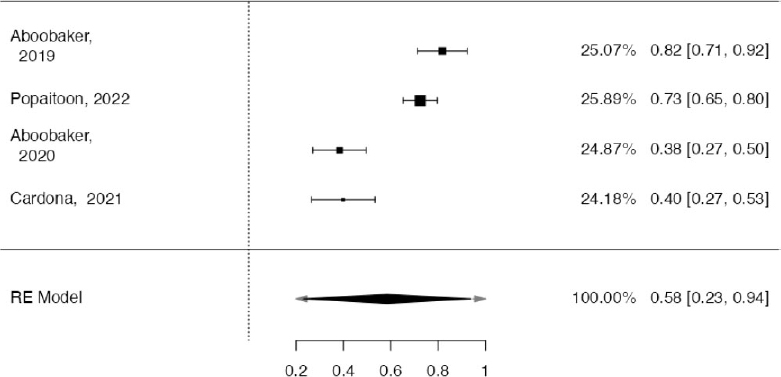
Forest plot of the association between work meaningfulness and employees’ intention to stay. Effect sizes are presented on the Fisher’s r-to-z scale and were synthesised using a random-effects model with the Sidik–Jonkman estimator and Knapp–Hartung adjustment. Study-level percentages represent model-fitting weights.
| Model | k | Pooled r | 95% CI | p | Q | I2 | τ2 | 95% PI |
|---|---|---|---|---|---|---|---|---|
| Random-effects, Knapp–Hartung adjusted | 4 | .526 | .227 to .734 | .013 | 48.695 | 94.38% | .0456 | −.179 to .874 |
3.5. Sensitivity and Influence Analysis
Leave-one-out sensitivity analyses were conducted by removing each study sequentially from the meta-analysis. The pooled associations remained positive across all four analyses, although statistical significance varied depending on the study removed. When Aboobaker et al. [27] was removed, the pooled correlation was r = .469 (95% CI [.024, .758], p = .046). Removing Popaitoon [29] resulted in r = .490 (95% CI [−.078, .817], p = .064). When Aboobaker et al. [28] was removed, the pooled correlation was r = .573 (95% CI [.112, .831], p = .035), whereas removal of Sánchez-Cardona et al. [23] produced r = .567 (95% CI [.079, .837], p = .039). Thus, the direction of the pooled association remained positive across all leave-one-out analyses, but statistical significance was sensitive to the removal of individual studies, particularly Popaitoon [29]. These findings warrant cautious interpretation given the small number of included studies. The detailed results of the leave-one-out sensitivity analysis are presented in Table 6.
Influence diagnostics did not indicate an excessively influential study. The studentised residuals did not identify observations exceeding the prespecified outlier threshold, and Cook’s distance diagnostics did not indicate an overly influential study. The funnel-plot asymmetry tests were also not statistically significant (rank correlation, p = .750; regression test, p = .339).
3.6. Publication Bias Considerations
Publication bias could not be assessed reliably because only four studies were included in the meta-analysis. A funnel plot was examined as an exploratory visual assessment of potential small-study effects (Fig. 3). The Begg–Mazumdar rank correlation test and Egger’s regression test were not statistically significant (p = .750 and p = .339, respectively). However, given the small number of included studies, both the visual assessment and formal asymmetry tests have limited ability to detect small-study effects and should not be interpreted as conclusive evidence for the presence or absence of publication bias. Accordingly, the possibility of selective availability of evidence should be considered when interpreting the pooled association.
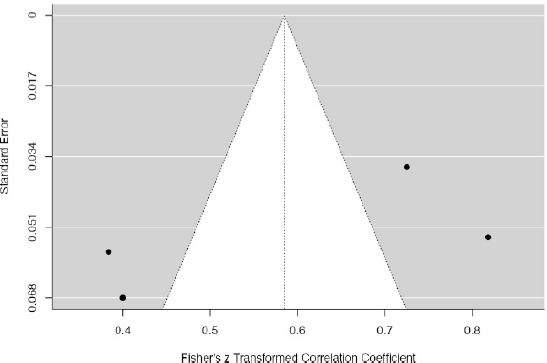
Funnel plot of the association between work meaningfulness and employees’ intention to stay. The plot is presented as an exploratory visual assessment of potential small-study effects. Given the small number of included studies (k = 4), visual asymmetry should not be interpreted as conclusive evidence for the presence or absence of publication bias.
Influence diagnostics did not indicate an excessively influential study. The studentised residuals did not identify observations exceeding the prespecified outlier threshold, and Cook’s distance diagnostics did not indicate an overly influential study.
4. DISCUSSION
4.1. Purpose and Key Findings
The contribution of this synthesis lies not only in providing quantitative evidence of a positive association between work meaningfulness and intention to stay, but also in showing that this association should be understood as context-dependent. Previous research has frequently examined meaningful work in relation to broader positive outcomes, such as engagement, well-being, and organisational commitment. The present review extends this literature by focusing specifically on intention to stay as a proactive retention-related orientation and by quantifying the magnitude of the association across different empirical settings. However, the substantial heterogeneity indicates that meaningful work is unlikely to operate as a universal retention mechanism independent of occupational, organisational, and measurement contexts.
This review examined whether experiencing work as meaningful is associated with employees’ intention to stay with their organisation. Across the four eligible studies, the pooled association was moderate and positive (r = .526, 95% CI [.227, .734], p = .013). This suggests that employees who perceive greater meaning in their work may be more willing to remain with their organisation. However, the finding should not be interpreted as a fixed or universal relationship, particularly given the substantial heterogeneity across the included studies and the small evidence base.
The positive association is consistent with the direction of the findings observed in the included studies. Aboobaker et al. [27], Popaitoon [29], Aboobaker et al. [28], and Sánchez-Cardona et al. [23] all reported positive zero-order associations between work meaningfulness and intention to stay, although the magnitude varied across studies. This pattern is also consistent with more recent research indicating that meaningful and intrinsically motivating work conditions can be linked to employee retention and related forms of organisational attachment. For example, recent evidence suggests that intrinsic work conditions can contribute to employee retention through organisational pride, while research on workplace happiness similarly highlights the importance of meaning and purpose within broader employee well-being and retention processes [42, 43]. The present meta-analysis extends this emerging evidence by providing a quantitative estimate of the association while also demonstrating substantial between-study heterogeneity.
Self-Determination Theory provides one plausible explanation for why experiencing work as meaningful may be associated with employees’ intention to stay. Ryan and Deci [18] proposed that autonomy, competence, and relatedness are basic psychological needs whose satisfaction supports self-motivation, psychological integration, and well-being [18]. In the work context, meaningful experiences may be more sustainable when employees have opportunities to exercise choice, experience effectiveness in what they do, and maintain supportive relationships with others. Recent research similarly suggests that contextual resources such as developmental feedback can enhance work meaningfulness through the satisfaction of autonomy and relatedness needs. Thus, meaningful work may be associated with intention to stay not simply because employees like their jobs, but because meaningful work can reflect a broader experience of psychological need fulfilment and self-endorsed motivation. However, these mechanisms were not directly tested in the present meta-analysis and should therefore be regarded as theoretically plausible explanations rather than demonstrated causal pathways.
Job Characteristics Theory offers a complementary explanation by locating meaningfulness partly in the design of work itself. Hackman (1980 proposed that skill variety, task identity, and task significance contribute to employees’ experienced meaningfulness, while autonomy and feedback contribute to responsibility and knowledge of results [16]. This perspective suggests that meaningful work is not solely an individual psychological preference but can also emerge from how jobs are structured and experienced. Contemporary work-design research continues to support the relevance of these core characteristics while emphasizing that their effects may depend on individual and contextual conditions. In relation to the present findings, employees may be more inclined to remain when their jobs allow them to see the significance of their contribution, exercise appropriate discretion, use a range of capabilities, and receive useful information about their performance [44]. However, because the present meta-analysis did not examine job characteristics as moderators, these mechanisms should be regarded as plausible theoretical explanations rather than direct empirical tests of the pathways underlying the pooled association.
Taken together, these perspectives suggest that meaningful work represents a multilevel phenomenon rather than a purely individual psychological experience. It may emerge from job design, be sustained through psychological need fulfilment, and be translated into organisational attachment through supportive employment relationships.
At the same time, the pooled association should be interpreted with caution. The substantial between-study heterogeneity and the 95% prediction interval of approximately −.179 to .874 indicate considerable uncertainty about the magnitude and potential direction of the association that might be observed in another comparable setting. Although the pooled estimate was positive, the prediction interval includes values close to zero and extends into the negative range. This suggests that the association between work meaningfulness and intention to stay may not be uniformly positive across contexts. Accordingly, meaningful work should be considered one potentially relevant factor associated with employees’ intention to stay rather than a stand-alone determinant of retention.
4.2. Possible Sources of Heterogeneity
The substantial heterogeneity observed in the meta-analysis (I2 = 94.38%) suggests that the association between work meaningfulness and intention to stay may vary across characteristics of the included studies. One plausible source is measurement variation. The four studies did not use identical instruments to assess work meaningfulness or intention to stay. Work meaningfulness was operationalised using measures derived from Milliman et al. [40], May et al. [39], and Arnold et al. [38], whereas intention to stay was assessed using measures based on Price and Mueller [41] and Bloemer and Odekerken-Schröder [9]. Such differences may capture somewhat different aspects of meaningfulness and employees’ intention to stay. Arnold et al. [38], For example, conceptualised meaningful work in terms of purpose and significance beyond extrinsic work outcomes, whereas other measures place greater emphasis on the perceived value and meaningfulness of work activities. These measurement differences provide a plausible explanation for part of the heterogeneity observed in the present synthesis, although the small number of studies does not permit formal moderator testing.
Occupational and geographical context may also contribute to the observed heterogeneity. The included evidence came from India, Thailand, and Puerto Rico and included both teachers and general employees. The sources of meaningfulness may differ across these settings. For teachers and other helping-oriented occupations, meaningfulness may be particularly connected to perceived contribution to others and the social value of the work, whereas employees in other occupational settings may place greater emphasis on autonomy, personal development, recognition, or alignment between work and personal goals. Such contextual variation is also evident in the included evidence. Popaitoon [29], for example, examined Generation Z employees in Thailand and found that skill variety, autonomy, and task significance were associated with experienced meaningfulness, while meaningfulness was linked to intention to stay. These differences suggest that a one-size-fits-all interpretation of the association between meaningful work and intention to stay may be inappropriate. Therefore, the high heterogeneity observed in this meta-analysis should not be interpreted simply as statistical inconsistency, but also as an indication that meaningful work may acquire different meanings and retention implications depending on how work is structured and experienced.
The broader organisational context may further shape how meaningful work relates to employees’ intention to stay. Social Exchange Theory provides a complementary perspective by emphasising reciprocity in relationships between employees and organisations [24]. When employees perceive that their organisation values their contribution, supports their well-being, and provides conditions that enable meaningful work, they may be more likely to reciprocate through stronger attachment and intention to stay. Meaningful work may therefore be more sustainable when it is supported by favourable organisational conditions rather than experienced as an isolated individual perception. Recent evidence also points to the relevance of this organisational support and well-being-oriented human resource practices in explaining meaningful work and retention-related outcomes [33]. These perspectives suggest that the association identified in the present meta-analysis may depend partly on whether organisational conditions enable employees to sustain meaningful work experiences and develop stronger attachment to the organisation [33].
4.3. Publication Bias and Sensitivity Considerations
Publication bias could not be assessed reliably because only four studies were included in the meta-analysis. A funnel plot and formal tests of funnel-plot asymmetry were therefore treated as exploratory rather than conclusive assessments of potential small-study effects. The funnel plot is presented in Fig. (3), while the Begg–Mazumdar rank correlation and Egger’s regression tests were not statistically significant (p = .750 and p = .339, respectively). However, these results should be interpreted cautiously because the small evidence base substantially limits the ability of such procedures to detect asymmetry. Accordingly, the present review does not conclude that publication bias is either present or absent.
The leave-one-out analysis provides an important qualification to the pooled finding. The direction of the association remained positive across all four analyses, with pooled correlations ranging from r = .469 to .573. However, statistical significance was not fully stable: removing Popaitoon [29] resulted in a non-significant pooled estimate (r = .490, 95% CI [−.078, .817], p = .064), whereas the other leave-one-out estimates remained statistically significant. This pattern suggests that the positive direction of the association was relatively consistent, but the statistical evidence was sensitive to the small number and characteristics of the included studies. Accordingly, the pooled estimate should be interpreted as preliminary evidence rather than as a definitive estimate that is insensitive to study composition.
4.4. Strengths and Practical Implications
A strength of this review is its specific focus on intention to stay rather than treating it simply as the opposite of turnover intention. By synthesising direct quantitative evidence, the review provides an initial estimate of the association between work meaningfulness and employees’ intention to stay.
4.4.1. Practical Implication
The findings have several implications for organisational practice. Organisations may consider meaningful work as one component of broader retention strategies as an element of job design rather than as an employee characteristic that can be addressed independently of the work environment. Consistent with Job Characteristics Theory, opportunities to use diverse skills, complete identifiable pieces of work, perceive the significance of one’s contribution, exercise appropriate autonomy, and receive useful feedback can strengthen employees’ experience of meaningfulness [16]. Evidence from the included studies supports this perspective. Popaitoon [29] found that skill variety, task significance, and autonomy were positively associated with work meaningfulness, which in turn was associated with intention to stay. Sánchez-Cardona et al. [23] similarly showed that job resources were related to meaningful work and that meaningful work formed part of a motivational process associated with intention to stay. These findings suggest that retention-oriented HR practices may benefit from redesigning aspects of work that allow employees to experience purpose, contribution, autonomy, and personal significance.
Retention strategies should also consider the psychological and relational conditions through which meaningful work is experienced. Self-Determination Theory emphasises autonomy, competence, and relatedness as basic psychological needs supporting self-motivation and well-being [18]. Organisations can therefore support meaningful work by providing appropriate discretion, opportunities to develop competence, and constructive interpersonal relationships. These conditions should be accompanied by organisational support and recognition because meaningful work may be more sustainable when employees perceive that their contributions are valued. From a Social Exchange Theory perspective, supportive organisational relationships may encourage reciprocal attachment and willingness to remain employees’ intention to stay [24]. The practical implication is therefore not simply to encourage employees to “find meaning” in their work, but to create organisational conditions that make meaningful experiences possible and sustainable.
4.4.2. Theoretical Implication
Theoretically, the findings suggest that meaningful work can be situated within a broader explanation of employee retention that integrates individual motivation, job design, and organisational relationships. Self-Determination Theory helps explain how meaningful work may relate to psychological need fulfilment and self-endorsed motivation, while Job Characteristics Theory explains how features of the work itself can generate experienced meaningfulness. Social Exchange Theory adds an organisational-relational perspective by highlighting the role of reciprocity and perceived value within the employee–organisation relationship. These perspectives are complementary rather than competing explanations. However, the present meta-analysis did not directly test these mechanisms or compare the explanatory power of the theories. Future research should therefore examine integrated models in which job characteristics, psychological need fulfilment, organisational support, and meaningful work are tested jointly as potential pathways to intention to stay.
By synthesising evidence across these perspectives, the present review does not propose a new theoretical model but provides quantitative evidence that meaningful work represents an important, although context-sensitive, component within broader explanations of employee retention.
5. LIMITATIONS AND RECOMMENDATIONS FOR FUTURE RESEARCH
The main limitation is the small number of studies included in the synthesis. Only four studies met the eligibility criteria, limiting the precision and generalisability of the pooled estimate. Substantial heterogeneity was also observed (I2 = 94.38%). The included studies differed in country, participant group, occupational context, and measurement instruments. The findings should therefore be regarded as an early synthesis of the available evidence rather than a definitive estimate. Future research should expand the evidence base and examine potential moderators such as occupation, country, job characteristics, and organisational conditions.
The review was limited to English-language publications and full-text reports available through four databases. Scopus was not included in the original search because access was unavailable to the review team, and citation searching was not conducted systematically. These factors may have reduced the comprehensiveness of the evidence base. Future reviews should broaden database coverage and, where feasible, include additional databases, citation searching, grey literature, institutional repositories, dissertations, and multilingual sources.
Finally, the included studies were predominantly correlational and therefore do not establish that meaningful work causes employees to remain with their organisations. Longitudinal and experimental research is needed to clarify temporal and causal relationships and to determine whether organisational interventions designed to enhance meaningful work can contribute to employee retention.
CONCLUSION
This review synthesised the available quantitative evidence on the association between work meaningfulness and employees’ intention to stay. Across the four included studies, the preliminary meta-analysis indicated a moderate positive association (r = .526, 95% CI [.227, .734], p = .013). However, substantial between-study heterogeneity was observed (I2 = 94.38%), and the 95% prediction interval (−.179 to .874) indicates considerable uncertainty about the magnitude and potential direction of the association across comparable settings. The leave-one-out analyses showed that the direction of the association remained positive, although statistical significance was not fully stable across study removals.
The findings therefore provide preliminary quantitative evidence that work meaningfulness is associated with employees’ intention to stay, while suggesting that the strength of this association may vary across occupational and organisational contexts. The findings should not be interpreted as evidence that meaningful work alone determines employees’ decisions to remain. Further research using larger and more diverse evidence bases, longitudinal designs, and more consistent measurement approaches is needed to clarify when and under what organisational conditions meaningful work is most strongly associated with employees’ intention to stay.
AUTHORS’ CONTRIBUTIONS
The authors confirm contribution to the paper as follows: Y.Z.: Conducted the review and meta-analytic synthesis and prepared the initial manuscript draft; F.F. and S.H.: Supervised the research and contributed to manuscript review and editing.
LIST OF ABBREVIATIONS
| ITS | = Intention to Stay |
| PRISMA | = Preferred Reporting Items for Systematic Reviews and Meta-Analyses |
| JBI | = Joanna Briggs Institute |
AVAILABILITY OF DATA AND MATERIALS
The data supporting the findings of this study are derived from previously published studies included in the systematic review and meta-analytic synthesis. The extracted data and supporting materials are available from the corresponding author upon reasonable request.
ACKNOWLEDGEMENTS
The authors thank all researchers whose published studies were included in this review.